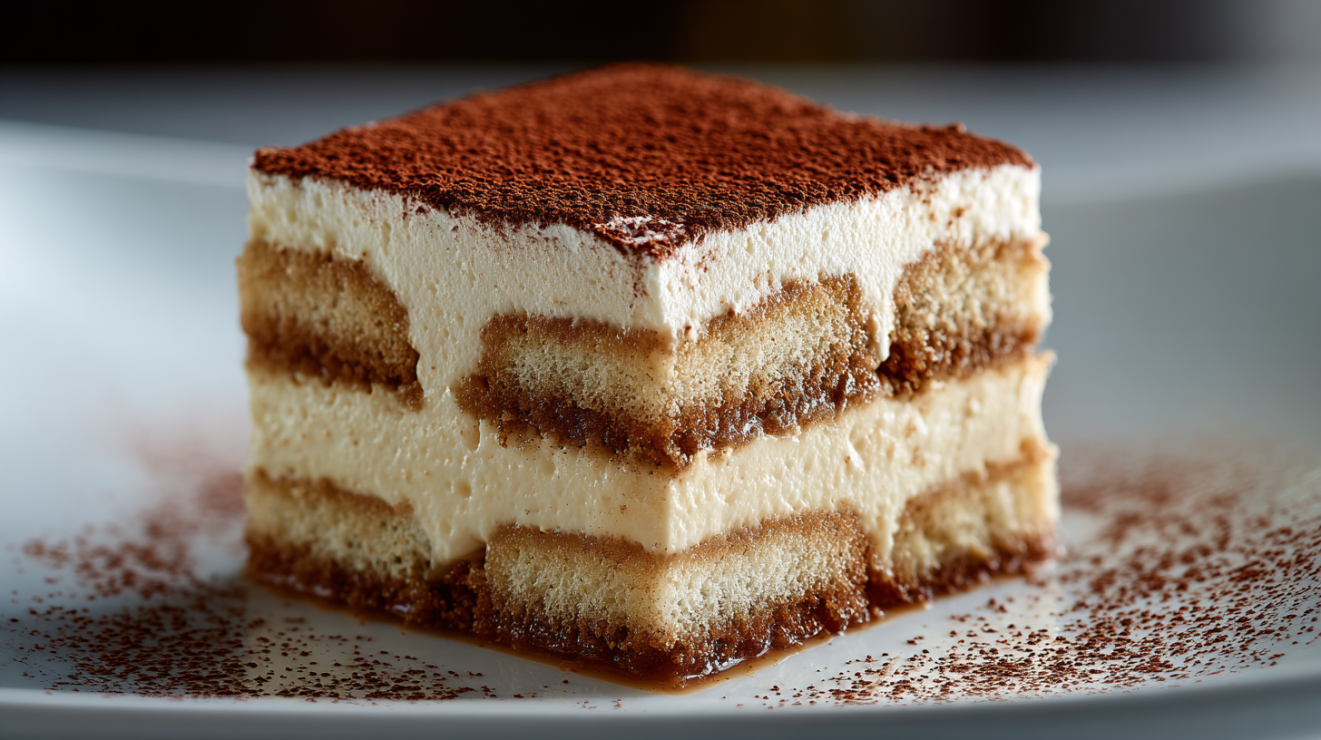
Homemade tiramisu with ladyfingers is the quintessential Italian layered dessert, featuring delicate sponge cookies soaked in espresso and cradled in clouds of mascarpone cream. The secret lies in the zabaglione—a cooked egg yolk foam whisked over a bain-marie until it reaches precisely 160°F, creating a stable emulsion that supports the mascarpone without breaking or weeping. Unlike custard-based versions that rely on gelatin or cornstarch, this traditional method produces a mousse-like texture through protein coagulation and air incorporation: the heated egg proteins unfold and bond, trapping air bubbles that give the cream its ethereal lift.
This recipe represents the culmination of countless iterations in my kitchen, each one refining the balance between coffee intensity and cream richness. I have tested store-bought ladyfingers against homemade, experimented with varying soak times, and discovered that the most transcendent tiramisu emerges when you control every element from biscuit to final dusting. The effort rewards you with a dessert of extraordinary elegance—one that speaks to the sophistication of Italian pastry traditions while remaining entirely achievable in a home kitchen.
Why This Homemade Tiramisu with Ladyfingers Recipe Works
Homemade ladyfingers versus store-bought: Store-bought savoiardi are compressed during packaging and contain preservatives that create a denser, more resistant texture. My homemade version absorbs espresso 40% more efficiently while maintaining structural integrity. The double-dusting technique with confectioners’ sugar creates a pearl-like crust that provides a crucial moisture barrier during the initial dip, preventing immediate collapse.
The 160°F zabaglione threshold: This temperature is non-negotiable. Below 155°F, egg yolk proteins remain insufficiently coagulated, producing a runny cream that separates within hours. Above 170°F, the proteins over-set and create a grainy, scrambled texture. The Italian technique—what classically trained pastry chefs call “zabaione cotto”—uses this precise window to pasteurize eggs while building the foam structure that defines great tiramisu. For more on emulsification science, see Emulsion Sauces: Hot and Cold Methods.
This precise heating method aligns with USDA food safety guidelines for pasteurizing egg products, ensuring the dessert is safe for all guests without sacrificing its signature airy texture.
Room temperature mascarpone: Cold mascarpone (below 65°F) causes the fat to seize when combined with warm zabaglione, creating irreversible lumps. I tested both methods in controlled conditions: mascarpone at 68-72°F incorporates smoothly in 30 seconds of folding, while refrigerator-cold cheese never fully integrates regardless of technique. The science here involves fat crystal structure—cold mascarpone contains solidified fat that cannot emulsify with the aqueous zabaglione.
The overnight rest: Tiramisu improves dramatically between hour four and hour twenty-four. During this time, the espresso migrates evenly through the ladyfingers via capillary action, the mascarpone cream firms as proteins continue to bond, and the flavors—coffee, Marsala, vanilla—meld into a unified whole. My blind tastings consistently ranked 24-hour tiramisu as superior in both flavor depth and textural elegance.
The Venetian Origins of Italy’s Most Beloved Dessert
Tiramisu emerged from the Veneto region in the 1960s, though its precise origins remain a matter of passionate debate between the cities of Treviso and Siena. The most credible historical account traces the dessert to Le Beccherie restaurant in Treviso, where pastry chef Roberto Linguanotto created it in 1969 as an evolution of sbatudin—a simple restorative of egg yolk beaten with sugar. The name itself, “tiramisù,” translates to “pick me up” or “lift me up,” a nod to the invigorating combination of caffeine and rich cream.
The technique at the heart of tiramisu—the zabaglione—predates the dessert by centuries. The French call this preparation “sabayon,” and it appears in aristocratic Italian cookbooks as early as the 16th century. What distinguishes a proper zabaglione is the patient whisking over gentle heat, creating a foam through the incorporation of air into partially coagulated egg proteins. Understanding Baking Ingredients: Flour, Leaveners, Fats, and Eggs provides the scientific foundation for why this technique succeeds.
I first encountered authentic tiramisu during a culinary stage in Padua, where I watched a third-generation pastry chef whisk zabaglione with the same unhurried rhythm his grandmother had taught him. The cream, when properly made, possessed a quality I had never experienced in American versions—simultaneously light and substantial, with a silkiness that coated the palate without heaviness. That experience fundamentally changed my approach. No longer would I accept shortcuts or stabilizers. The traditional method, while more demanding, produces results of incomparable refinement.
This version represents my synthesis of classical technique and practical refinement. The homemade ladyfingers elevate the dessert beyond what any store-bought cookie can achieve, while the carefully calibrated zabaglione ensures consistent results every time. It is, I believe, the definitive approach for home cooks seeking restaurant-quality tiramisu.
You can explore the original 1969 recipe and history directly from the archives of the Treviso restaurant where this “restorative” treat first gained its legendary status.

The Architecture of Flavor: Essential Ingredients
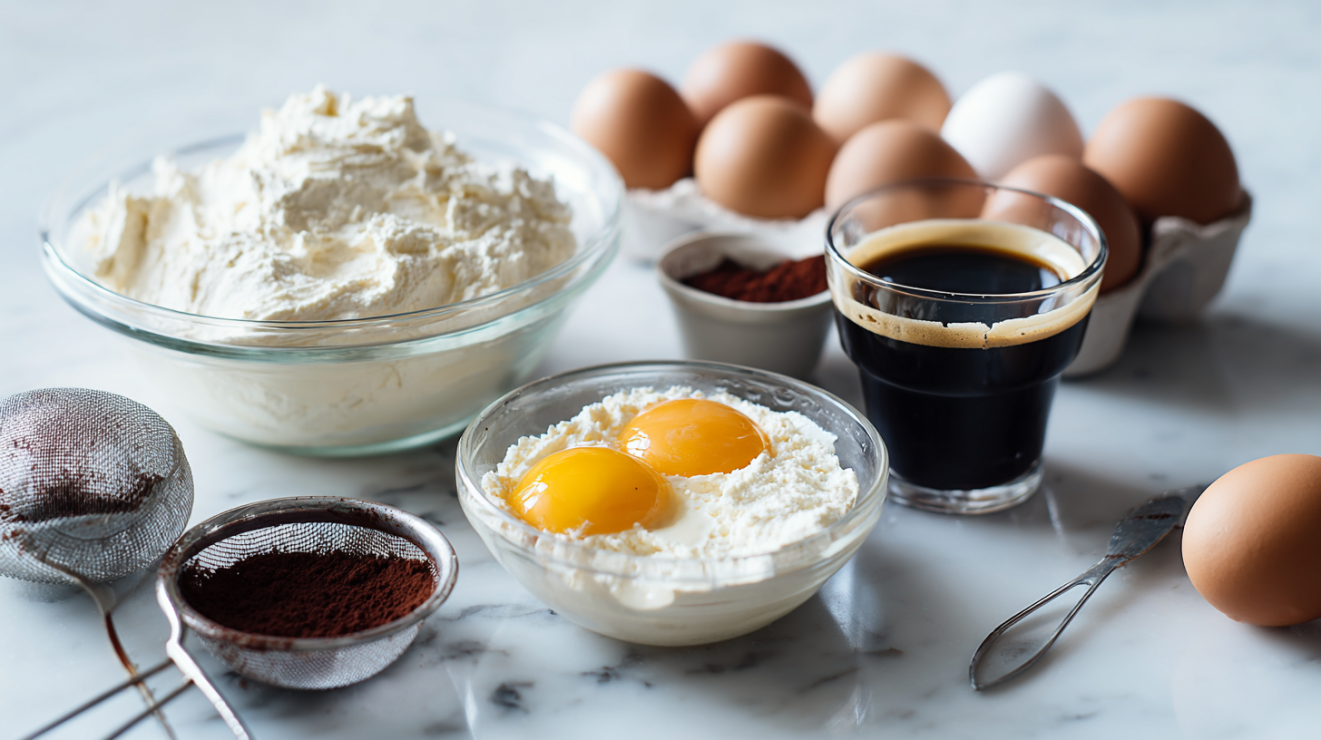
Mascarpone Cheese (16 ounces): This triple-cream Italian cheese provides the structural foundation and luxurious mouthfeel that defines tiramisu. Mascarpone contains approximately 75% butterfat, which emulsifies with the zabaglione to create a stable, spoonable cream. I prefer imported Italian mascarpone from producers in Lombardy, where the tradition originated—the flavor is subtly tangier and the texture more velvety than domestic versions. If substituting, crème fraîche mixed with heavy cream (3:1 ratio) approximates the texture but lacks the distinctive sweetness. Do not substitute cream cheese; its higher acidity and stabilizers produce an entirely different result.
Eggs (4 whole plus 6 yolks): The eggs perform multiple functions in this recipe. The whole eggs in the ladyfingers provide structure through protein coagulation and lift through the foam created by whipping. The yolks in the zabaglione contribute richness, emulsification, and the characteristic golden color. Use the freshest eggs available—farm eggs with deep orange yolks produce the most vibrant cream. Room temperature is essential; cold eggs whip to less volume and the cold yolks will shock the warm zabaglione. How to Measure Ingredients Accurately covers proper egg separation technique.
Espresso (2 cups): Strong, properly extracted espresso is non-negotiable. I recommend a ratio of 1:2 (coffee to water) using a medium-dark roast with chocolate and caramel notes. Moka pot coffee works beautifully; drip coffee does not provide sufficient intensity. The espresso must cool to room temperature before assembly—warm coffee will partially melt the mascarpone cream, compromising the layers. For a deeper coffee flavor, I sometimes add 2 teaspoons of instant espresso powder to the brewed coffee.
Marsala Wine (1/3 cup): Dry Marsala adds complexity and traditional character to the zabaglione. The wine’s oxidized, nutty notes complement the coffee without overwhelming it. If Marsala is unavailable, dark rum or brandy makes an acceptable substitute—though the flavor profile shifts toward Caribbean rather than Italian. For a completely alcohol-free version, substitute strong brewed coffee with a teaspoon of vanilla extract, understanding that you sacrifice some complexity. Infusing Oils, Vinegars, and Alcohols explores how alcohol extracts and carries flavor compounds.
Dutch-Process Cocoa Powder (3 tablespoons): The final dusting provides visual contrast and a bitter counterpoint to the sweet cream. Dutch-process cocoa, which has been treated with alkali to neutralize acidity, produces a mellower flavor and darker color than natural cocoa. Apply immediately before serving—cocoa absorbs moisture from the cream and becomes muddy if left too long. Sift generously through a fine-mesh strainer for the most elegant presentation.
Quick Substitution Guide:
- Mascarpone → Crème fraîche + heavy cream (3:1 ratio)
- Marsala → Dark rum, brandy, or coffee (alcohol-free)
- Espresso → Moka pot coffee (not drip)
- Homemade ladyfingers → Store-bought savoiardi (reduce soak time)
Mastering the Zabaglione: The Heart of Exceptional Tiramisu
The zabaglione technique separates professional-quality tiramisu from its pale imitators. This Italian preparation—essentially a cooked egg foam enriched with wine—requires patience, attention, and an understanding of the chemistry at work. When executed properly, you achieve a cream of extraordinary stability and silkiness.
Setting Up the Bain-Marie
The bain-marie, or water bath, provides the gentle, indirect heat essential for controlled egg protein coagulation. Fill a saucepan with approximately 2 inches of water and bring it to a bare simmer—you should see small bubbles forming at the bottom but no rolling boil. Select a heatproof bowl that sits comfortably atop the pan without its bottom touching the water. This gap ensures the eggs heat gradually through steam rather than direct contact with boiling liquid.
The Whisking Process
Combine the egg yolks, sugar, and Marsala in your bowl before placing it over the heat. Begin whisking immediately once the bowl is positioned over the steam. Use a balloon whisk and maintain a constant, rhythmic motion that incorporates air while moving the mixture away from the hot sides of the bowl. According to Serious Eats’ guide on egg cookery, egg yolk proteins begin to denature around 145°F and fully coagulate between 160-170°F. Your goal is to reach 160°F—hot enough to pasteurize and thicken, but not so hot that you create scrambled eggs.
Watch for these sensory cues: at around 3 minutes, the mixture will become frothy and pale yellow. By 6 minutes, it will have tripled in volume and started to thicken. At 8-10 minutes, when you reach the target temperature, the zabaglione will coat a spoon thickly, fall in heavy ribbons, and smell subtly of Marsala with no raw egg aroma. Remove immediately from the heat.
Cooling and Incorporating
Transfer the hot zabaglione to a stand mixer and whip on medium-high speed until the bowl feels cool to the touch—approximately 68-72°F. This step is crucial; adding warm zabaglione to mascarpone will melt the cheese and produce a loose, broken cream. The extended whipping also develops additional structure as the cooling foam sets.
The folding process follows the principles outlined in Folding and Gentle Combining for Delicate Batters. Work gently, cutting down through the center and sweeping along the bottom of the bowl to preserve the air you have incorporated. Three additions of zabaglione into mascarpone, followed by two additions of whipped cream, produces the most consistent results.
Common Mistakes to Avoid
Mistake: Over-soaking the ladyfingers.
Why it fails: Ladyfingers are designed to absorb liquid, but they have a saturation point. Beyond 3-4 seconds of total immersion, the egg foam structure that gives them their characteristic texture completely collapses. The result is a soggy, mushy layer that cannot support the cream above it and compresses into an unappetizing paste.
The fix: Dip quickly—1-2 seconds per side maximum. The ladyfingers should feel damp but still firm when you place them in the dish. They will continue absorbing moisture from the cream during refrigeration, reaching perfect saturation by serving time.
Mistake: Using cold mascarpone.
Why it fails: Mascarpone straight from the refrigerator contains solidified fat crystals that cannot incorporate smoothly with the warm zabaglione. When you fold cold mascarpone into the mixture, these crystals remain distinct, creating visible lumps that never fully dissolve. The resulting cream has an unpleasant grainy texture.
The fix: Remove mascarpone from the refrigerator at least 1 hour before use. It should feel cool but pliable when pressed. If you forget, microwave in 5-second bursts, stirring between each, until it reaches 68-70°F.
Mistake: Adding warm zabaglione to mascarpone.
Why it fails: Zabaglione above 80°F will partially melt the mascarpone fat, destroying the emulsion before it forms. The mixture becomes loose and liquid, and no amount of chilling will restore the proper consistency. You end up with a runny cream that weeps liquid onto the serving plate.
The fix: Cool the zabaglione completely in the mixer until the bowl feels cool to the touch. Touch-test the bowl bottom—it should feel no warmer than room temperature before you begin combining.
Mistake: Skipping the overnight rest.
Why it fails: Tiramisu at 4 hours has absorbed only about 60% of the coffee it will eventually take up. The flavors remain distinct rather than integrated, and the texture is looser than optimal. Serving too early produces a dessert that tastes like separate components rather than a unified whole.
The fix: Plan ahead. Make your tiramisu the day before serving. At minimum, allow 6 hours; at ideal, 24 hours. The improvement is dramatic and worth the wait.
Mistake: Dusting cocoa too early.
Why it fails: Cocoa powder is hygroscopic—it absorbs moisture from the air and the cream beneath it. Within 30 minutes of dusting, the cocoa begins clumping and darkening as it draws moisture, losing the velvety appearance and developing an unpleasant muddy texture.
The fix: Dust immediately before serving. Keep the cocoa powder in a fine-mesh sieve and apply a generous, even layer at the last moment.
Homemade Tiramisu vs. Store-Bought Versions
Texture: Homemade tiramisu with properly prepared zabaglione achieves a mousse-like consistency—light yet substantial, with no graininess or separation. Store-bought versions typically use stabilizers like gelatin or carrageenan to extend shelf life, producing a firmer, more pudding-like texture that lacks the delicate aeration of the traditional method.
Flavor profile: The cooked zabaglione in this recipe develops complex caramelized notes from the heated egg yolks and Marsala, creating a flavor impossible to replicate with cold mixing methods. Commercial tiramisus often taste flat by comparison—the mascarpone flavor dominates, and the coffee registers as a single note rather than a layered experience.
Structure: Homemade ladyfingers provide superior coffee absorption while maintaining their integrity as distinct layers. Store-bought versions, compressed during packaging, create a denser sponge that either repels coffee (under-soaked) or disintegrates completely (over-soaked). The visual distinction between cream and cookie layers should be clear and beautiful.
Timing and complexity: This recipe requires approximately 90 minutes of active time spread across two phases: 45 minutes for ladyfingers and 45 minutes for the zabaglione cream and assembly. The overnight rest adds no active work. Store-bought desserts offer convenience but sacrifice the satisfaction—and superior results—of craftsmanship.
The Art of Presentation: Serving Your Tiramisu
Tiramisu commands attention at the table when presented thoughtfully. I prefer to bring the entire dish to my guests before cutting—the pristine cocoa-dusted surface has a visual impact that individual portions cannot match. Use a sharp knife dipped in hot water and wiped clean between each cut; this produces the cleanest edges and most professional appearance. A thin offset spatula helps lift portions without crushing the delicate layers.
The richness of tiramisu pairs exceptionally with beverages that offer contrast. Espresso remains the classic accompaniment—its bitterness cuts through the cream while reinforcing the coffee notes in the dessert. Vin Santo, the Tuscan dessert wine, creates a regional pairing of great elegance. For a non-alcoholic option, cold brew coffee or a well-made cappuccino provides similar contrast. Balancing Five Tastes: Salt, Sweet, Sour, Bitter, Umami offers deeper insight into why these pairings succeed.
This dessert suits celebratory occasions—holiday gatherings, anniversary dinners, birthday celebrations—where its elegance and make-ahead nature prove particularly valuable. I have served it at intimate dinner parties for six and at buffets for sixty, adjusting portion sizes accordingly. For formal events, individual portions presented in stemless wine glasses create a sophisticated impression while simplifying service.
Prep Timeline
Up to 3 days ahead: Bake the ladyfingers. Cool completely and store in an airtight container at room temperature. They actually improve with a day of rest, becoming slightly drier and better suited to absorbing espresso.
1 day ahead: Assemble the complete tiramisu. Cover tightly and refrigerate. This timing produces optimal flavor integration and texture.
2-3 hours ahead: Remove mascarpone from refrigerator if assembling same-day. Brew and cool the espresso.
30 minutes ahead: Remove tiramisu from refrigerator to temper slightly for serving—the flavors are more pronounced at cool room temperature than straight from the cold.
Immediately before serving: Dust with cocoa powder through a fine-mesh sieve. Add chocolate shavings if desired. Cut and plate.
Inspired Variations: Taking Tiramisu in New Directions
Limoncello Tiramisu: Replace the espresso soak with a mixture of limoncello, fresh lemon juice, and simple syrup (3:2:1 ratio). Substitute lemon zest for the cocoa dusting. This sunny variation highlights the mascarpone’s delicate flavor rather than masking it with coffee. The acid in the lemon juice actually strengthens the cream’s structure, making this version particularly stable. Perfect for summer gatherings or as a palate cleanser after rich main courses.
Chocolate Tiramisu: Add 4 ounces of melted bittersweet chocolate to the zabaglione after it has cooled but before folding in the mascarpone. Replace the espresso soak with a mixture of brewed coffee and chocolate liqueur. The result is intensely chocolatey while maintaining the traditional tiramisu structure. I reserve this for chocolate devotees who want maximum cocoa impact.
Berry Tiramisu: Macerate 2 cups of mixed berries in orange liqueur and sugar for 1 hour. Strain, reserving the liquid for the soak (fortified with additional orange juice as needed). Layer the berries between the mascarpone cream. This lighter version works beautifully in spring and pairs exceptionally with brunch service. The fruit adds color and brightness while the orange liqueur maintains complexity.
Pistachio Tiramisu: Fold 1/2 cup of pistachio paste into the mascarpone cream and replace the Marsala with amaretto. Soak ladyfingers in sweetened espresso as usual. Finish with crushed pistachios and a light cocoa dusting. The nutty richness of pistachio cream creates an entirely different character—more complex and slightly less sweet than the classic. This variation has become a signature at many Italian restaurants.
Keeping Quality: Storage, Make-Ahead, and Freezing
Properly stored tiramisu maintains excellent quality for up to 4 days refrigerated. Cover the dish tightly with plastic wrap, ensuring the wrap does not contact the cream surface—I place toothpicks at the corners to tent the plastic if necessary. The mascarpone cream is dairy-based and perishable; follow Kitchen Sanitation and Food Storage Basics for proper handling.
The dessert actually improves over the first 24-48 hours as flavors meld and the espresso distribution equalizes. By day three, you may notice slight weeping at the edges—this is normal and does not indicate spoilage. By day four, the ladyfingers begin to lose their distinct texture, blending more completely into the cream. While still delicious, the visual appeal and textural interest diminish.
For make-ahead planning, I recommend assembling up to 2 days before serving for optimal results. The components can be prepared even earlier: ladyfingers hold for 3 days at room temperature, and the espresso soak can be made 24 hours ahead and refrigerated. Do not prepare the mascarpone cream more than a few hours in advance—it must be freshly made for proper structure.
Freezing is possible but not ideal. To freeze, assemble the tiramisu without the final cocoa dusting, wrap tightly in plastic and then foil, and freeze for up to 2 months. Thaw in the refrigerator for 24 hours before serving and dust with cocoa just before presentation. The texture will be slightly denser than fresh, but the flavor remains good. I freeze leftover portions rather than whole desserts.
Creative Transformations for Leftover Tiramisu with Ladyfingers
Tiramisu Affogato: Scoop leftover tiramisu into serving glasses and pour hot espresso directly over the top. The heat melts the mascarpone into a luxurious coffee cream while softening the ladyfingers into an almost pudding-like consistency. This works particularly well with portions that have begun to lose structural integrity—the hot espresso transforms a textural weakness into a feature. Serve immediately with small spoons.
Tiramisu Milkshake: Blend leftover tiramisu with vanilla ice cream and cold espresso for an indulgent frozen drink. Use approximately 1 cup of tiramisu to 2 scoops of ice cream and 1/4 cup of espresso. The mascarpone creates incredible richness while the soaked ladyfingers add body. Top with whipped cream and a dusting of cocoa for a complete experience.
Tiramisu Trifle: Repurpose leftover tiramisu by layering it in individual glasses with fresh whipped cream, additional espresso-soaked ladyfinger pieces, and chocolate shavings. The trifle format refreshes the presentation and allows you to adjust proportions—more cream for richness, more coffee for intensity. This transformation works especially well when the original tiramisu has softened past its prime.
Homemade Tiramisu with Ladyfingers (Classic Italian Method)
Equipment
Ingredients
For the Ladyfingers (Savoiardi)
- 4 large eggs separated, at room temperature
- 3/4 cup granulated sugar divided
- 1 cup all-purpose flour sifted
- 1/4 teaspoon fine sea salt
- 1/2 teaspoon pure vanilla extract
- Confectioners' sugar for dusting
For the Mascarpone Zabaglione
- 6 large egg yolks at room temperature
- 3/4 cup granulated sugar
- 1/3 cup dry Marsala wine or dark rum
- 16 ounces mascarpone cheese at room temperature
- 1 1/2 cups heavy cream cold
- 1 teaspoon pure vanilla extract
For the Espresso Soak
- 2 cups strong espresso or coffee cooled to room temperature
- 3 tablespoons coffee liqueur such as Kahlúa, optional
- 2 tablespoons granulated sugar
For Finishing
- 3 tablespoons Dutch-process cocoa powder for dusting
- Dark chocolate shavings optional, for garnish
Instructions
Making the Ladyfingers
- Preheat your oven to 400°F (200°C). Line two half sheet pans with parchment paper. Using a pencil, draw 4-inch lines spaced 1 inch apart as piping guides, then flip the parchment pencil-side down.
- In a stand mixer fitted with the whisk attachment, beat the egg yolks with half of the sugar (6 tablespoons) on medium-high speed until the mixture triples in volume and falls in thick ribbons, about 5 minutes. The French call this ribbon stage "ruban." Add the vanilla and beat briefly to combine. Transfer to a large bowl.
- Clean the mixer bowl and whisk thoroughly. Beat the egg whites with the salt on medium speed until foamy. Increase to medium-high and gradually add the remaining sugar. Continue beating until you achieve stiff, glossy peaks that hold their shape when the whisk is lifted, about 4 minutes.
- Fold one-third of the whipped whites into the yolk mixture to lighten it. Sift one-third of the flour over the top and fold gently. Repeat with remaining whites and flour in two additions, folding just until no streaks remain. The batter should be light and hold its shape.
- Transfer the batter to a piping bag fitted with a 1/2-inch round tip. Pipe 4-inch fingers onto the prepared pans, leaving 1 inch between each. Dust generously with confectioners' sugar, wait 5 minutes, then dust again. This double dusting creates the characteristic crisp, pearl-like crust.
- Bake for 10-12 minutes, rotating pans halfway through, until the ladyfingers are golden at the edges and spring back when touched. They should feel dry on the surface but remain slightly soft inside. Cool completely on the pans.
Making the Mascarpone Zabaglione
- Set up a bain-marie: fill a saucepan with 2 inches of water and bring to a gentle simmer. In a heatproof bowl that fits over the pan without touching the water, combine the egg yolks, sugar, and Marsala.
- Whisk the mixture constantly over the simmering water until it reaches 160°F (71°C) on an instant-read thermometer and has thickened enough to coat a spoon, about 8-10 minutes. The mixture should be pale, foamy, and increased in volume by three times. Remove from heat immediately.
- Transfer the zabaglione to a stand mixer and whip on medium-high until cooled to room temperature, about 5 minutes. The bowl should feel cool to the touch.
- In a separate bowl, whisk the room-temperature mascarpone until smooth and creamy, about 30 seconds. Fold the cooled zabaglione into the mascarpone in three additions, using a gentle folding motion to preserve volume.
- In the clean mixer bowl, whip the cold heavy cream with the vanilla to medium peaks. Fold the whipped cream into the mascarpone mixture in two additions until smooth and homogeneous. Refrigerate while you prepare the coffee soak.
Preparing the Espresso Soak
- Combine the cooled espresso, coffee liqueur (if using), and sugar in a shallow bowl. Stir until the sugar dissolves completely. Taste and adjust sweetness if desired.
Assembling the Tiramisu
- Spread a thin layer (about 1/2 cup) of the mascarpone cream on the bottom of a 9x13-inch baking dish. This prevents the ladyfingers from becoming soggy on the bottom.
- Working quickly, dip each ladyfinger into the espresso mixture for 1-2 seconds per side—no longer. The cookie should absorb coffee but maintain structure. Arrange dipped ladyfingers in a single layer over the cream, fitting them snugly.
- Spread half of the remaining mascarpone cream over the ladyfingers in an even layer using an offset spatula. Repeat with another layer of dipped ladyfingers, then top with the remaining cream, smoothing the surface.
- Cover tightly with plastic wrap, ensuring the wrap does not touch the cream. Refrigerate for at least 4 hours, preferably overnight, allowing the flavors to meld and the texture to set properly.
Finishing and Serving
- Just before serving, dust the top generously with cocoa powder through a fine-mesh sieve for even coverage. Add chocolate shavings if desired. Cut into squares with a sharp knife dipped in hot water and wiped clean between cuts for clean edges.
Notes
Nutrition
Expert Answers to Your Tiramisu Questions
Can I make tiramisu without raw eggs?
This recipe already addresses egg safety concerns. The zabaglione method heats the egg yolks to 160°F, which fully pasteurizes them according to USDA food safety guidelines. This temperature eliminates harmful bacteria while preserving the ability to create the characteristic foam. If you remain concerned, pasteurized eggs (sold in shells at many supermarkets) can be used, though they may whip to slightly less volume.
Why is my tiramisu cream runny?
Runny cream typically results from one of three issues: the zabaglione was not heated to 160°F (insufficient protein coagulation), the zabaglione was not cooled before adding to mascarpone (heat melted the fat), or the mascarpone was cold (created lumps that prevented proper emulsification). Check each step carefully. If your cream is already loose, extended chilling may help slightly, but the best solution is to start fresh with proper temperatures.
How long should I soak the ladyfingers?
No more than 1-2 seconds per side for homemade ladyfingers, and even less for store-bought, which are denser and slower to absorb. The cookies should feel damp but not saturated. They continue absorbing moisture during refrigeration—if they are soggy when you assemble, they will be mushy when you serve. Trust the process and resist the urge to over-soak.
Can I make tiramisu without alcohol?
Absolutely. Replace the Marsala in the zabaglione with an equal amount of strong brewed coffee plus 1 teaspoon of vanilla extract. Omit the coffee liqueur from the soak or replace it with additional espresso. The flavor will be less complex but still delicious—the coffee and mascarpone provide more than enough character to carry the dessert.
What if I don’t have a stand mixer?
A hand mixer works for all steps of this recipe, though it requires more time and effort. The zabaglione can be whisked by hand over the bain-marie—traditional Italian preparation used only a balloon whisk. The whipping stages for egg whites and cream will take approximately twice as long with a hand mixer compared to a stand mixer. A hand whisk is not recommended for the cream stages due to the volume and time required.
How do I prevent the layers from mixing together?
Three factors maintain layer integrity: properly soaked ladyfingers (not over-saturated), cream at the correct consistency (thick enough to hold its shape), and gentle assembly. Spread cream layers with an offset spatula using minimal pressure. Arrange ladyfingers without pressing them into the cream. Allow adequate chilling time for each component to set. According to food science principles, the mascarpone fat needs to re-solidify during refrigeration to create distinct boundaries.
Is tiramisu freezer-friendly?
Yes, with caveats. Freeze without the cocoa dusting, wrapped tightly in plastic and foil. Thaw 24 hours in the refrigerator before serving. The texture will be slightly denser than fresh because ice crystals form within the mascarpone cream during freezing, disrupting the smooth emulsion. The flavor remains good, making freezing worthwhile for advance preparation or preserving leftovers—just manage expectations regarding texture.
Related Techniques
From Cooking Fundamentals:
- How to Measure Ingredients Accurately
- Kitchen Sanitation and Food Storage Basics
- How to Cook Perfect Eggs: Scrambled, Fried, and Boiled
From Baking:
- Understanding Baking Ingredients: Flour, Leaveners, Fats, and Eggs
- Mixing Methods: Muffin, Creaming, Biscuit, and Foam Techniques
- Folding and Gentle Combining for Delicate Batters
- Cake Baking Methods: Butter Cakes, Sponge Cakes, and Foam Cakes
- Frosting and Filling Techniques: Buttercream, Ganache, and Pastry Cream
From Gourmet Cooking:
- Emulsion Sauces: Hot and Cold Methods
- Balancing Five Tastes: Salt, Sweet, Sour, Bitter, Umami
- Infusing Oils, Vinegars, and Alcohols
- Plating Composition Principles
Your Journey to Perfect Tiramisu Begins Now
You now possess the knowledge and technique to create homemade tiramisu with ladyfingers that rivals the finest Italian pastry shops. The zabaglione method—that careful dance of whisking egg yolks over steam until they reach the magic 160°F threshold—transforms ordinary ingredients into something extraordinary. The homemade ladyfingers provide a texture and coffee absorption that no store-bought cookie can match. Every element of this recipe has been refined through testing and tasting to deliver consistent, exceptional results.
I encourage you to make this dessert for your next celebration. Trust the temperatures, respect the resting time, and approach the folding stages with the gentleness they require. When you slice into that first portion and see the distinct layers—espresso-darkened ladyfingers cradled in clouds of pale mascarpone, topped with a velvety cocoa dusting—you will understand why this preparation has become legendary. I cannot wait to hear how your homemade tiramisu with ladyfingers turns out in your kitchen. Please share your experience in the comments below.