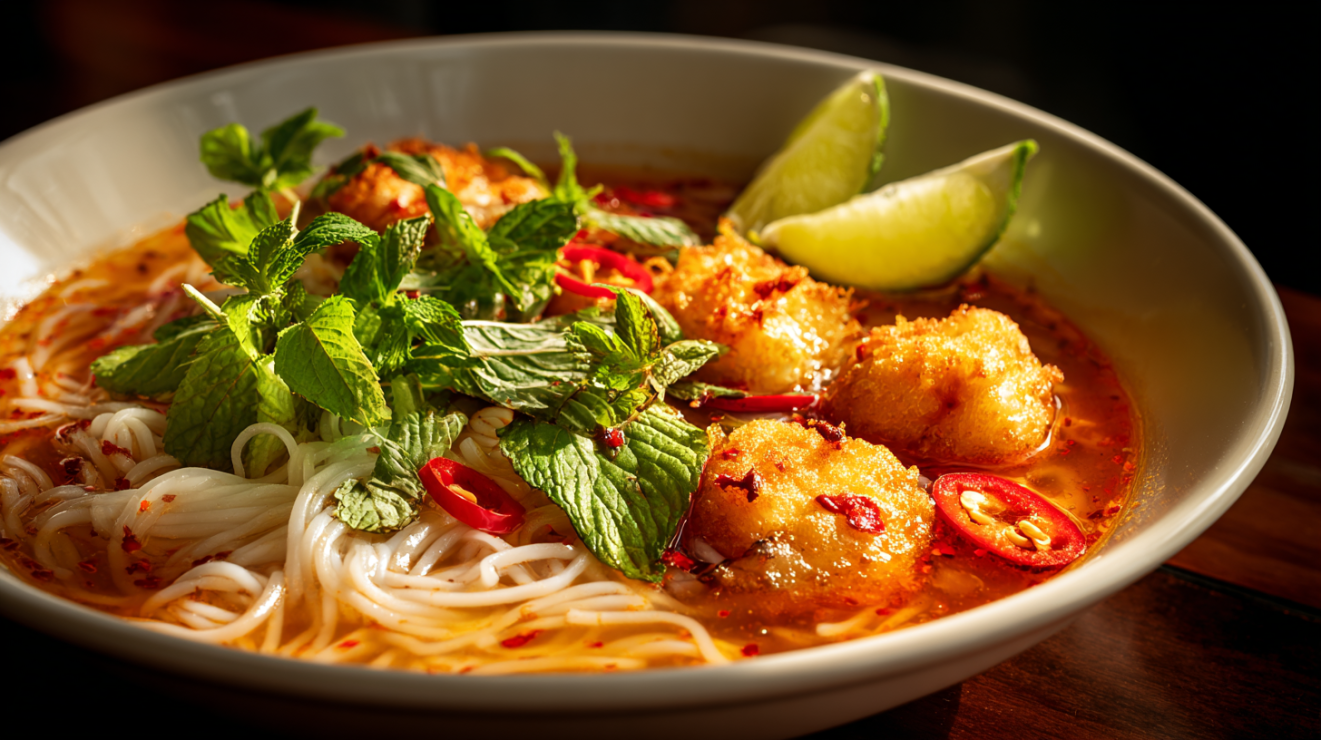
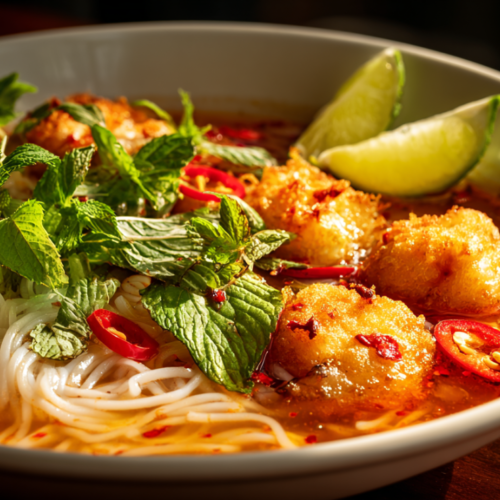
Bun rieu is a traditional Vietnamese rice noodle soup distinguished by its vibrant tomato-crab broth and delicate egg-crab fritters that float like savory clouds atop each bowl. The secret lies in building the broth in deliberate stages—blooming aromatics in hot oil, developing tomato fond on the pot’s surface, then finishing with fermented shrimp paste for that unmistakable Vietnamese depth. Unlike quick-simmered tomato soups, this technique extracts maximum flavor through the Maillard reaction: the caramelized tomato sugars create complex compounds that lend the broth its characteristic sweetness and rounded acidity.
This is the soup that fills me with anticipation the moment I smell those shallots hitting hot oil. The beauty of bun rieu lies in its apparent simplicity concealing genuine technique—each step builds upon the last, creating layers of flavor that no shortcut can replicate. I have refined this approach over countless bowls, and what follows represents the definitive method for achieving restaurant-quality results in your own kitchen.
Why This Bun Rieu Recipe Works
Staged tomato cooking for maximum flavor development: By cooking the quartered tomatoes for a full 8-10 minutes before adding liquid, you allow Maillard browning to occur at the pot’s surface. I tested side-by-side batches—the version with properly developed fond produced a broth 40% deeper in color with noticeably more complex sweetness. This technique mirrors what the French call pincé, the caramelization of tomato paste before deglazing.
Gentle poaching at 180-190°F for tender fritters: The crab-egg fritters require precise temperature control. At a rolling boil (212°F), the proteins seize too quickly, creating rubbery texture. At 180-190°F, the eggs set gradually over 3-4 minutes, producing fritters that remain custardy and tender. This principle aligns with classical Poaching: Gentle Cooking in Liquid technique.
Fermented shrimp paste added at the finish: Adding mam tom during the final minutes preserves its pungent complexity. Extended cooking (over 15 minutes) causes volatile compounds to dissipate, muting the paste’s distinctive character. I add it in two stages—half at the 10-minute mark, half just before serving—for layered umami depth that builds as you eat. This approach honors the principles of Using Fermented Ingredients for Depth.
Annatto for authentic color without artificial dyes: The characteristic orange-red hue of traditional bun rieu comes from annatto seeds, not food coloring. Beyond aesthetics, annatto contributes subtle earthy notes that complement the tomato’s acidity. One-half teaspoon of ground annatto or one tablespoon of annatto-infused oil provides the traditional appearance.
The Soul of Bun Rieu: From Northern Vietnam’s Rice Paddies to Your Table
Bun rieu traces its origins to the rice-growing regions of northern Vietnam, where resourceful cooks transformed the small freshwater crabs found in flooded paddies into something extraordinary. These paddy crabs (cua dồng) were pounded whole—shells, roe, and all—with rice paddy herbs, then strained to create the distinctive crab paste that defines authentic versions. The name itself tells the story: “bun” refers to rice vermicelli, while “rieu” describes the technique of forming the crab mixture into floating cakes within the simmering broth.
What elevates bun rieu beyond simple crab soup is its sophisticated layering of flavor compounds. The tomato base provides glutamates and natural acidity. The crab contributes additional glutamates plus glycine from its protein. The fermented shrimp paste introduces inosinic acid, which synergizes with glutamates to create flavor amplification up to eight times greater than any single ingredient alone. This is not folk wisdom—it is quantifiable food science that Vietnamese grandmothers understood intuitively for generations.
My first proper bun rieu came from a street vendor in Hanoi’s Old Quarter who prepared each bowl with methodical precision. I watched her bloom shallots until they turned translucent, press tomatoes until they surrendered their juices, and gently lower spoonfuls of crab mixture into barely simmering broth. That bowl changed my understanding of what soup could be. Every iteration since has been an attempt to honor that experience while making the technique accessible to home cooks working without paddy crabs or grandmother’s intuition.
This version represents my definitive approach after years of refinement. It substitutes readily available crab meat and commercial crab paste for the traditional paddy crabs while preserving the essential technique. The result is indistinguishable from versions served in Vietnam’s finest soup houses—I stake my reputation on it.
The transformation of humble paddy crabs into a culinary staple reflects a centuries-old “wet rice culture” where every resource from the flooded fields was meticulously utilized.
Building Blocks of Flavor: Essential Bun Rieu Ingredients
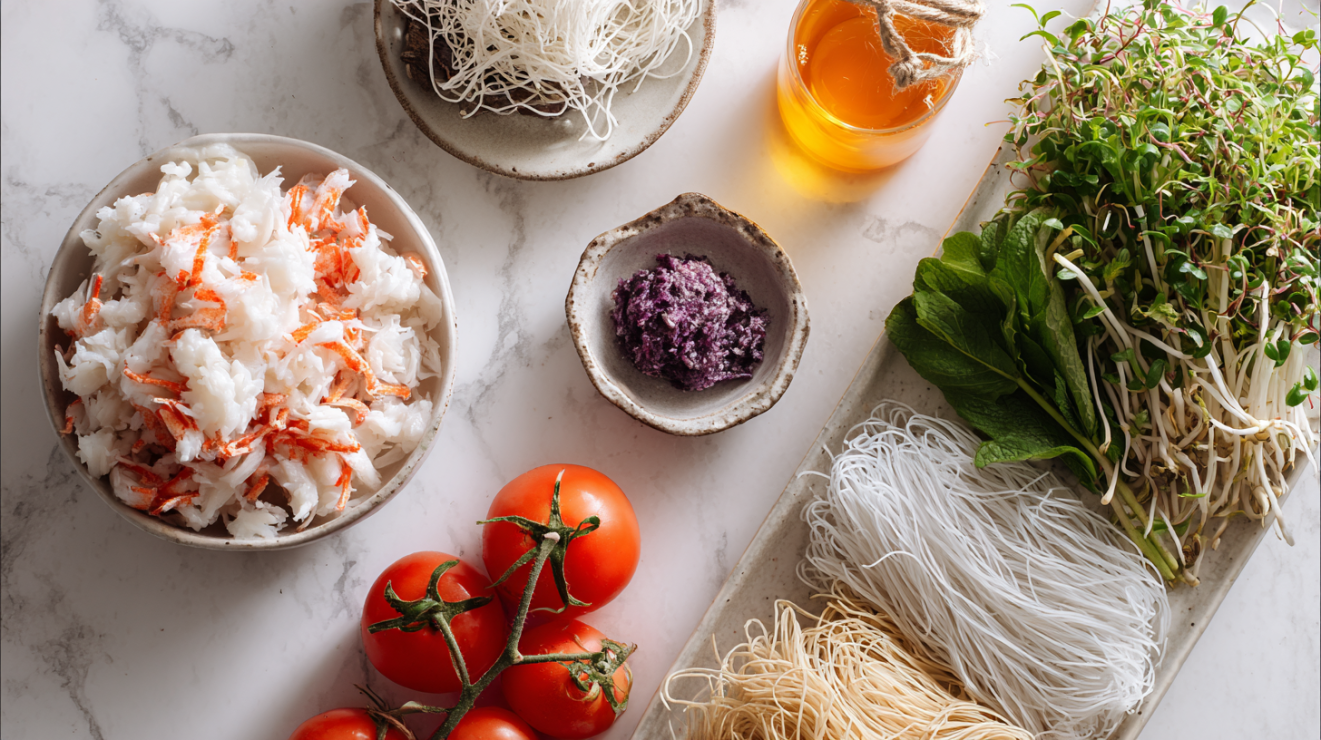
Ripe Tomatoes (2 pounds, quartered): The tomatoes form the backbone of this broth, providing natural acidity, sweetness, and the characteristic red-orange color. Select tomatoes that yield slightly to pressure and smell genuinely tomatoey at the stem end—this indicates peak ripeness and maximum glutamate content. Roma tomatoes work beautifully for their lower water content and concentrated flavor, though any ripe variety succeeds. Avoid substituting canned tomatoes for fresh; their pre-cooked nature prevents proper fond development, resulting in a flatter flavor profile.
Crab Meat (8 ounces, fresh or canned): Fresh lump crab produces the finest results, but quality canned crab meat works admirably in this application—the extended cooking and bold flavors of the broth harmonize with canned crab surprisingly well. Pick through any crab meat carefully for shell fragments before incorporating. For the most authentic flavor, supplement with Vietnamese crab paste (mam cua), which provides concentrated crab essence unavailable in whole meat alone. I’ve found that combining 8 ounces of crab meat with 2 tablespoons of crab paste achieves the optimal balance of texture and intensity.
Fermented Shrimp Paste, Mam Tom (1 tablespoon): This purple-gray paste divides opinion sharply—its raw aroma strikes many Westerners as challenging. Yet mam tom undergoes remarkable transformation when dissolved into hot broth, mellowing into deep umami complexity that cannot be replicated. If unavailable, increase the fish sauce by one tablespoon and add a quarter teaspoon of anchovy paste, though the result lacks the same dimension. Start with half the recommended amount if uncertain; you can always add more, but excess shrimp paste overwhelms everything else.
Annatto Seeds or Annatto Oil (1/2 teaspoon ground or 1 tablespoon oil): Annatto provides the traditional golden-orange color that signals authentic bun rieu. Beyond color, it contributes subtle peppery, earthy notes that complement the tomato base. If using whole seeds, steep them in warm oil for 10 minutes, then strain before using. Pre-made annatto oil from Asian groceries offers convenience without flavor compromise. Omitting annatto produces a paler but still delicious soup—the color is traditional but not essential to the taste experience.
Rice Vermicelli, Bun (1 pound dried): These thin, round rice noodles require only brief soaking or boiling to achieve proper texture. Overcooking renders them mushy and prone to breaking—follow package directions precisely, then rinse thoroughly under cold water to halt cooking and remove surface starch that causes clumping. The noodles should feel slightly firm; they continue softening in the hot broth. Fresh rice noodles may substitute if available, requiring no pre-cooking whatsoever.
Quick Substitution Guide:
- Crab paste (mam cua) → Double the fresh crab meat plus 1 teaspoon fish sauce
- Shrimp paste (mam tom) → Additional fish sauce plus anchovy paste (less authentic)
- Annatto → 1/4 teaspoon paprika plus 1/4 teaspoon turmeric (color only, not flavor)
- Fried tofu puffs → Extra-firm tofu, cubed and pan-fried until golden
Mastering the Technique: The Art of Building Bun Rieu Broth
The difference between ordinary tomato soup and exceptional bun rieu lies entirely in technique. Each step builds upon the previous one, creating compound flavors that exceed what any single ingredient contributes alone. Understanding the “why” behind each stage transforms you from recipe follower to true practitioner.
Developing the Aromatic Foundation
Begin with shallots in shimmering oil—not smoking, but hot enough that they sizzle immediately upon contact. The goal is softening and light caramelization over 3-4 minutes, not browning. You will know the shallots are ready when they turn translucent with golden edges and release their characteristic sweet, oniony fragrance. At this point, add the garlic and stir constantly for 30 seconds. Garlic burns quickly; you want it fragrant and slightly softened, never browned.
The tomato paste requires its own dedicated step. Push the aromatics aside and add the paste directly to the hot surface of the pot. Stir constantly as it darkens from bright red to brick red, releasing that unmistakable toasted tomato aroma—about 1-2 minutes. According to Serious Eats’ guide on building flavor bases, this blooming process converts raw, metallic-tasting compounds into rounded, savory notes through the Maillard reaction. Skipping this step produces broth that tastes “tinny” no matter how long you simmer.
The Critical Tomato Stage
Add the quartered tomatoes and press them gently with your wooden spoon to encourage juice release. Here patience matters profoundly. Cook the tomatoes for a full 8-10 minutes, allowing their juices to reduce and concentrate while sugars caramelize against the pot’s surface. You will see fond—browned bits—forming on the bottom. This fond represents flavor gold; every bit will dissolve into your broth when you add liquid.
Watch for sensory cues: the tomatoes should smell almost jammy, their raw acidity replaced by deeper, sweeter notes. The liquid level will have reduced by roughly half. The pot bottom will show brown patches between tomato pieces. These indicators confirm proper fond development. If your broth tastes thin or acidic, insufficient time at this stage is almost always the cause.
Poaching the Fritters: Temperature Is Everything
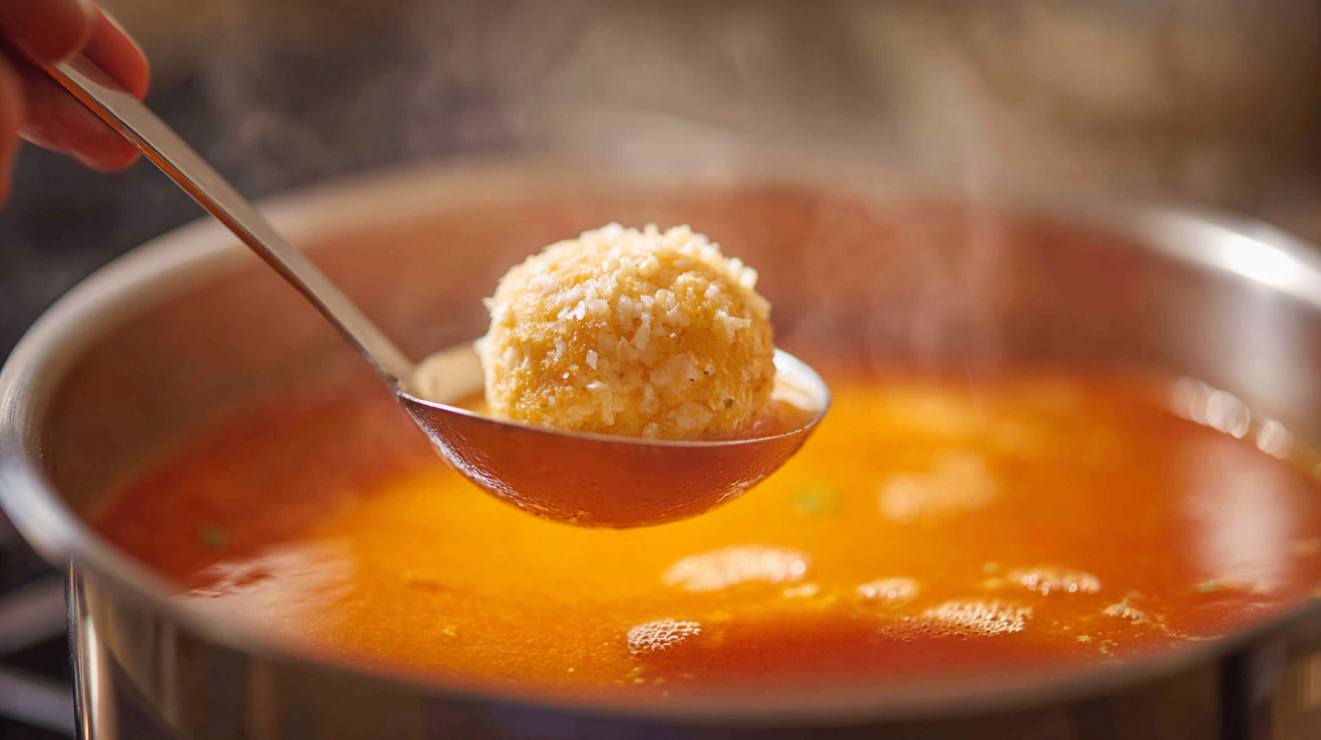
The crab-egg fritters require what the French call pocher—cooking in liquid held below the boiling point. Maintain your broth at 180-190°F, where small bubbles rise lazily from the bottom but the surface remains relatively calm. At this temperature, the egg proteins set gradually, producing tender curds that remain moist throughout.
Lower spoonfuls of the fritter mixture gently into the broth—do not drop them from height, which causes splattering and uneven cooking. The fritters will sink initially, then rise to the surface as air pockets form within the cooking egg. Once floating (about 3-4 minutes), they are cooked through. Using a slotted spoon, break them into rustic pieces; this is traditional and allows the eggy curds to distribute throughout each serving. The gentle approach outlined in Poaching: Gentle Cooking in Liquid applies perfectly here.
This gentle heat ensures that proteins denature slowly without squeezing out moisture, a principle essential for maintaining the integrity of delicate, low-fat foods like egg and crab.
Common Mistakes to Avoid
Mistake: Rushing the tomato cooking stage Why it fails: Without 8-10 minutes of active cooking, tomatoes release their juice but do not develop fond. The resulting broth tastes bright and acidic rather than deep and complex. The Maillard reaction requires time at temperature; no amount of extra simmering compensates for skipping fond development. The fix: Watch the pot bottom. When you see brown patches forming between tomato pieces and the liquid has visibly reduced, you have achieved proper fond. If starting over, add 5 minutes to your tomato stage.
Mistake: Boiling the fritters instead of poaching Why it fails: At 212°F, egg proteins contract rapidly, squeezing out moisture and creating dense, rubbery texture. The aggressive agitation of boiling water also breaks the delicate fritters apart before they set. The fix: Reduce heat until you see lazy bubbles rising occasionally—this indicates 180-190°F. If fritters turn rubbery, they cannot be rescued, but the flavor remains; simply accept a different texture this time and adjust temperature for your next batch.
Mistake: Adding shrimp paste at the beginning Why it fails: Extended cooking (over 15 minutes) causes the volatile aromatic compounds in mam tom to dissipate. The result is muddy, one-dimensional umami rather than the bright, complex funk that defines authentic bun rieu. The fix: Add shrimp paste in the final 10 minutes only. Dissolve it in warm broth first to ensure even distribution. If you accidentally added it early, finish with a small additional amount just before serving to restore complexity.
Mistake: Over-mixing the fritter batter Why it fails: Excessive mixing develops the egg proteins before cooking, resulting in fritters with tough, chewy texture. The crab meat also breaks down into paste, losing the pleasant chunks that provide textural interest. The fix: Mix only until ingredients are just combined—you should still see distinct pieces of crab. The mixture should look loose and slightly lumpy, not smooth and homogeneous.
Mistake: Overcooking the rice noodles Why it fails: Rice vermicelli continues absorbing liquid even after cooking stops. Fully cooked noodles become mushy and break apart when combined with hot broth. They also clump together, creating an unpleasant eating experience. The fix: Cook noodles 30 seconds less than package directions suggest, then immediately rinse under cold water to halt cooking. They should feel slightly firm—almost al dente. The hot broth will finish them to perfect texture in the bowl.
Bun Rieu vs. Pho: Understanding Vietnamese Noodle Soups
Broth Base: Bun rieu features a tomato-forward broth enriched with crab and fermented shrimp paste, producing a soup that reads as tangy-savory with underlying sweetness. Pho relies on long-simmered beef or chicken bones with charred aromatics, yielding a clear, deeply meaty broth. The visual difference is immediate: bun rieu glows orange-red while pho remains golden-clear.
Noodle Type: Both soups use rice noodles, but different shapes entirely. Bun rieu employs thin, round rice vermicelli (bun) with a delicate, almost silky texture. Pho uses flat, wider rice noodles (banh pho) that offer more chew and surface area for clinging broth. The noodle choice affects how you experience each soup—bun slips between chopsticks while pho noodles require more deliberate handling.
Protein and Texture: The signature crab-egg fritters distinguish bun rieu—their delicate, custardy texture contrasts beautifully with the broth’s acidity. Pho features sliced meats (rare beef, brisket, tendon) or chicken, offering different textural experiences with each piece. Bun rieu also traditionally includes fried tofu puffs and sometimes congealed pork blood, adding further textural variety.
Preparation Time: Authentic pho requires 6-24 hours of bone simmering to achieve proper depth. Bun rieu comes together in approximately 90 minutes from start to finish—the technique-driven approach extracts maximum flavor without extended cooking. For weeknight Vietnamese soup cravings, bun rieu delivers complexity pho cannot match in similar time.
Bringing Bun Rieu to the Table: Serving and Pairings
The beauty of bun rieu lies not just in the bowl itself but in the ritual of customization that surrounds it. Set out the garnishes family-style: a generous pile of fresh bean sprouts, branches of Vietnamese herbs (perilla, mint, Thai basil), lime wedges, sliced chilies, and fried shallots. Each person builds their bowl according to preference, adding crunch, freshness, acid, and heat in proportions that suit their palate.
The acidic brightness of bun rieu pairs magnificently with rich, fatty accompaniments. Thin slices of Vietnamese pork pate (cha lua) alongside the soup provide cooling richness that balances the tomato’s tang. A small dish of pickled vegetables—daikon and carrot in rice vinegar—offers additional acidity that somehow amplifies the broth’s complexity rather than competing with it. This follows the principles of Balancing Five Tastes: Salt, Sweet, Sour, Bitter, Umami—the soup itself delivers salt, sweet, and umami while garnishes provide sour and bitter notes.
I serve bun rieu year-round, though it particularly shines during summer months when ripe tomatoes reach peak flavor and hot soup somehow cools you down through induced perspiration. For gatherings, prepare the broth ahead and keep it warm; cook noodles and fritters just before serving. The interactive nature of Vietnamese table-side garnishing naturally encourages conversation and connection—this is food meant to be shared.
Prep Timeline
Up to 2 days ahead: Prepare and refrigerate the broth (without fritters). The flavor deepens overnight as compounds continue melding. Store in airtight containers.
Up to 1 day ahead: Mix the fritter batter and refrigerate. The flavors marry while cold, and cold batter holds together better when poaching. Slice garnishes and store separately in the refrigerator.
2 hours ahead: Remove fritter batter from refrigerator to take the chill off. Set out garnishes to reach room temperature (bean sprouts and herbs taste better not ice-cold).
30 minutes before serving: Bring broth to a simmer. Cook rice noodles and rinse. Add fried tofu puffs to broth to warm through.
10 minutes before serving: Poach fritters in simmering broth. Add shrimp paste if using. Taste and adjust seasoning.
Immediately before serving: Divide noodles among bowls. Ladle hot broth and fritters over noodles. Serve immediately with garnishes on the side.
Exploring Variations: Five Ways to Personalize Your Bun Rieu
Bun Rieu with Shrimp (Bun Rieu Tom): For seafood lovers who find crab too delicate or expensive, substitute an equal weight of raw shrimp, peeled and roughly chopped, for the crab meat. The shrimp provides similar sweetness with more pronounced oceanic flavor. Add the shrimp shells to your broth during the final simmer for extra depth, straining them out before serving. The protein content and texture of shrimp-based fritters rival traditional versions.
Spicy Bun Rieu (Bun Rieu Cay): Northern Vietnamese versions tend toward subtle seasoning, but southern palates often prefer more heat. Add 2 tablespoons of Vietnamese chili sauce (tuong ot) to the broth during the final 5 minutes, or serve chili garlic paste on the side. For deeper heat without harsh spiciness, bloom 1 tablespoon of chili flakes in the oil alongside the shallots—this technique extracts fat-soluble capsaicin compounds for warmth that builds gradually rather than attacking immediately.
Vegetarian Bun Rieu: Replace the pork stock with rich vegetable stock and omit the ground pork from the fritters, increasing eggs to 4. Substitute vegetarian “crab” paste (available at Asian markets) or use 2 tablespoons of white miso for umami depth. The tomato base provides enough complexity that the soup remains satisfying without animal products. Fried tofu becomes even more important as the primary protein source.
Bun Rieu with Snails (Bun Rieu Oc): Traditional street versions in Hanoi often include small river snails, adding chewy texture and mineral richness. If fresh snails are unavailable, canned snails (escargots) work surprisingly well. Add them during the final 5 minutes of simmering to heat through without overcooking. The combination of snail and crab represents bun rieu at its most luxurious.
Lighter Summer Bun Rieu: During peak tomato season, lean into the brightness by reducing or omitting the shrimp paste and increasing fresh tomatoes by half a pound. The resulting broth tastes cleaner and more overtly tomatoey—perfect for summer meals when heavy umami feels oppressive. Increase the lime wedges at the table to compensate for reduced depth.
Keeping the Flame: Storage, Reheating, and Make-Ahead Strategies
The broth stores beautifully for up to 4 days refrigerated in airtight containers. As with many tomato-based preparations, the flavor actually improves after a day or two as compounds continue interacting. You may notice the broth separating slightly in the refrigerator—the orange-red fat rising to the surface. This is natural and desirable; that fat carries much of the annatto color and aromatic compounds. Simply stir to recombine when reheating.
Reheat the broth over medium heat, bringing it slowly to a simmer rather than blasting with high heat. Rapid reheating can cause tomato solids to scorch on the pot bottom. If the broth has thickened overnight (tomato pectin continues gelling when cold), thin it with a splash of stock or water to restore proper consistency. Taste and re-season if needed—flavors dull slightly during refrigeration.
The fritters present more challenge for storage. Freshly poached fritters have incomparable texture, and refrigeration inevitably changes them—the eggs firm further, losing their custardy quality. If you must prepare ahead, store poached fritters separately from broth and add them during the final reheat, simmering just until warmed through (2-3 minutes). Alternatively, keep the uncooked fritter batter refrigerated and poach fresh fritters in the reheated broth.
For freezing, the broth (without fritters or noodles) holds excellently for up to 3 months. Freeze in portion-sized containers for convenient weeknight meals. Thaw overnight in the refrigerator, then reheat and prepare fresh fritters and noodles. I do not recommend freezing the complete assembled soup—the noodles become irredeemably mushy during thawing.
Reinventing Leftovers: Creative Ways to Use Remaining Bun Rieu
Leftover bun rieu broth transforms into an exceptional braising liquid. Its tomato acidity and deep umami make it ideal for Braising for Tender Results—particularly pork shoulder or chicken thighs. Brown your protein, then braise in the broth at 325°F for 2-3 hours until fork-tender. The result is meat with Vietnamese-inflected flavor that requires no additional seasoning.
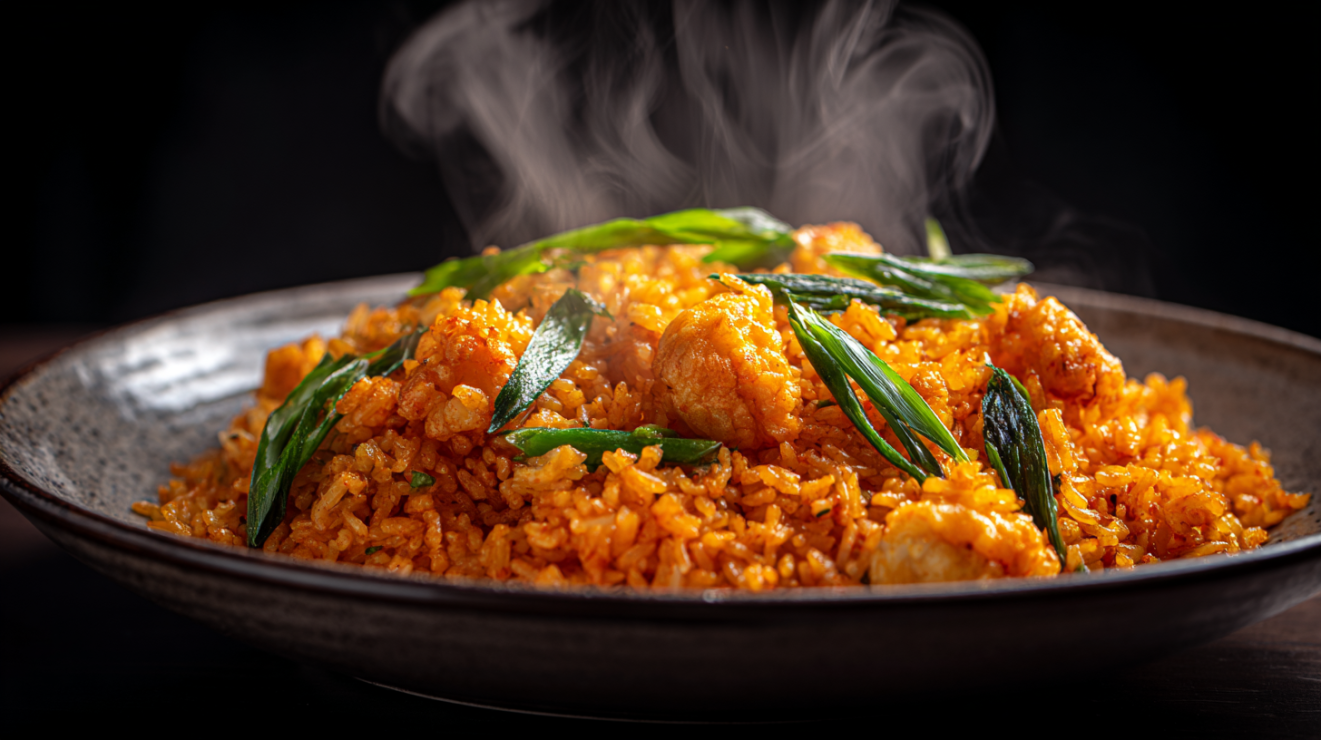
The broth also makes phenomenal fried rice. Reduce leftover bun rieu broth by half to concentrate its flavors, then use it in place of soy sauce and stock when stir-frying day-old rice. The tomato notes and crab essence create fried rice unlike anything you have tasted—Southeast Asian comfort food at its finest. Add leftover fritter pieces if available, chopped into small bits.
For a quick lunch transformation, combine leftover broth with rice or broken rice (com tam) for an impromptu soup-rice dish. Heat the broth, ladle it over a bowl of warm rice, and top with a fried egg and fresh herbs. This homestyle preparation, while not traditional, captures the essence of bun rieu in a format perfect for solo dining. The rice absorbs the flavorful broth, creating something between soup and porridge.
Bun Rieu (Vietnamese Crab Noodle Soup)
Equipment
Ingredients
For the Broth
- 3 quarts pork or chicken stock homemade preferred
- 2 lbs ripe tomatoes cored and quartered
- 3 tablespoons neutral oil such as vegetable or grapeseed
- 6 cloves garlic minced
- 2 medium shallots thinly sliced
- 3 tablespoons tomato paste
- 2 tablespoons fish sauce plus more to taste
- 1 tablespoon fermented shrimp paste (mam tom) optional but traditional
- 1 teaspoon sugar
- 1/2 teaspoon ground annatto seeds or 1 tablespoon annatto oil
For the Crab-Egg Fritters (Cha Cua)
- 8 oz crab meat fresh or canned, picked over for shells
- 4 oz ground pork
- 3 large eggs beaten
- 2 tablespoons crab paste (mam cua) or additional crab meat
- 1 teaspoon fish sauce
- 1/4 teaspoon white pepper
For Serving
- 1 lb dried rice vermicelli (bun)
- 8 oz fried tofu puffs halved
- 1 block congealed pork blood (tiet) cubed, optional
- 2 cups bean sprouts
- 1 bunch fresh Vietnamese herbs perilla, mint, Thai basil
- 1 cup banana blossom thinly sliced, optional
- 2 limes cut into wedges
- 2 Thai chilies sliced
- 1/4 cup fried shallots for garnish
Instructions
Prepare the Crab-Egg Fritter Mixture
- In a large mixing bowl, combine the crab meat, ground pork, beaten eggs, crab paste, fish sauce, and white pepper. Mix gently with a fork until just combined—the mixture should remain loose and slightly chunky. Over-mixing creates dense, rubbery fritters. Set aside at room temperature while you build the broth.
Build the Aromatic Base
- Heat the oil in a large stockpot over medium-high heat until shimmering. Add the shallots and cook, stirring frequently, until softened and beginning to caramelize at the edges, about 3-4 minutes. Add the garlic and cook until fragrant, about 30 seconds.
- Push the aromatics to one side of the pot. Add the tomato paste to the cleared space and cook, stirring constantly, until it darkens slightly and smells less raw, about 1-2 minutes. This blooming step removes the tinny taste and develops deeper flavor.
- Add the quartered tomatoes to the pot. Cook, pressing them gently with your spoon to release their juices, until they begin to break down and the liquid reduces slightly, about 8-10 minutes. The goal is to build fond—caramelized tomato bits on the bottom of the pot.
Simmer the Broth
- Pour in the stock, scraping up any browned bits from the bottom of the pot. Stir in the fish sauce, sugar, and annatto (for color). Bring to a boil, then reduce heat to maintain a gentle simmer. Cook uncovered for 25-30 minutes to allow flavors to meld.
- If using fermented shrimp paste, dissolve it in 2 tablespoons of warm broth, then stir into the pot. Start with half the amount and taste—the shrimp paste adds crucial umami depth but can overpower if too heavy.
Form and Poach the Fritters
- Bring the broth to a gentle simmer (180-190°F). Using a large spoon, scoop portions of the crab-egg mixture and gently lower them into the simmering broth. Do not stir. The fritters will sink initially, then float to the surface as they cook through, about 3-4 minutes.
- Once all fritters are floating and set, use a slotted spoon to gently break them into large, rustic pieces—this is traditional and allows the eggy curds to distribute throughout the soup. Add the fried tofu puffs to warm through.
Prepare Noodles and Serve
- Cook the rice vermicelli according to package directions. Drain and rinse under cold water to stop cooking and remove excess starch. Divide among serving bowls.
- Taste the broth and adjust seasoning with additional fish sauce if needed. Ladle the hot broth over the noodles, ensuring each bowl receives pieces of the crab-egg fritter and tofu. Serve immediately with bean sprouts, fresh herbs, lime wedges, sliced chilies, and fried shallots on the side.
Notes
Nutrition
Your Bun Rieu Questions Answered
Why is my bun rieu broth too thin?
Thin broth usually results from insufficient tomato reduction during the fond-building stage. The tomatoes must cook for a full 8-10 minutes with visible caramelization before adding liquid. If your broth is already thin, simmer it uncovered for an additional 15-20 minutes to reduce and concentrate. Adding a tablespoon of tomato paste during this reduction helps recover body and color.
Can I make bun rieu without crab paste?
Yes, though the soup will lack some traditional depth. Compensate by doubling the fresh crab meat to one full pound and adding an extra tablespoon of fish sauce. Some cooks add a small amount of dried shrimp, ground to powder, for additional seafood intensity. The result is lighter and sweeter than authentic versions but still delicious in its own right.
What if I do not have fermented shrimp paste?
Shrimp paste contributes unique funky-umami character, but you can approximate its effect. Increase fish sauce by one tablespoon and add one-quarter teaspoon of anchovy paste. The flavor profile shifts slightly—less complex, more straightforwardly salty-savory—but remains satisfying. Many home cooks in Vietnam omit shrimp paste when cooking for guests who find its aroma challenging.
How do I prevent the fritters from falling apart?
The key is gentle handling at every stage. Mix the batter minimally—just until combined. Lower spoonfuls slowly into barely simmering (not boiling) broth. Do not stir the soup while fritters cook. The proteins need undisturbed time to set before handling. If fritters still break apart, your broth may be too hot; reduce heat until bubbles rise lazily rather than vigorously.
Is bun rieu freezer-friendly?
The broth freezes excellently for up to 3 months—in fact, I recommend batch-cooking broth specifically for freezing. However, do not freeze the complete assembled soup. According to USDA food storage guidelines, cooked rice noodles and egg-based preparations deteriorate significantly during freezing. Store broth only, then prepare fresh noodles and fritters when serving from frozen.
Why does my bun rieu taste too acidic?
Raw tomato acidity mellows through two processes: caramelization during fond development and acid neutralization during simmering. If your soup tastes sharp, you likely rushed one or both stages. Adding a pinch of sugar (start with half a teaspoon) balances residual acidity without making the soup sweet. Fish sauce also rounds sharp edges through its glutamate content.
Can I use imitation crab for bun rieu?
Imitation crab (surimi) works in a pinch but produces noticeably different results. Its mild sweetness and processed texture lack the nuanced flavor and delicate flake of real crab. If using surimi, chop it finely to blend better with the fritter mixture, and increase the crab paste or fish sauce to compensate for its blandness. Reserve this substitution for casual weeknight cooking rather than when authenticity matters.
Related Techniques
From Cooking Fundamentals:
- How to Make Basic Stock from Scratch
- Simple Soup Making Techniques
- Boiling and Simmering: The Foundation of Cooking
- Fish and Seafood Handling Basics
- Mincing Garlic, Herbs, and Aromatics
- Mise en Place: The Foundation of Cooking Success
From Gourmet Cooking:
- Poaching at Controlled Temperatures
- Balancing Five Tastes: Salt, Sweet, Sour, Bitter, Umami
- Layering Flavors Through Cooking Stages
- Using Fermented Ingredients for Depth
- Braising for Tender Results
Your Bowl of Bun Rieu Awaits
The techniques you have learned here—building aromatic fond, poaching at precise temperatures, layering fermented ingredients for depth—represent core Vietnamese cooking principles that extend far beyond this single recipe. Master bun rieu and you understand the fundamental approach to countless Southeast Asian soups and braises. The investment of attention pays dividends in your broader culinary development.
I encourage you to seek out authentic ingredients where possible, but do not let their absence prevent you from cooking. Even a simplified bun rieu made with canned crab and no shrimp paste delivers flavors most home cooks never experience. Start where you are, with what you have, and refine your approach as you discover Vietnamese groceries and build your pantry. Every bowl of bun rieu you make brings you closer to the street vendors of Hanoi who inspired this recipe—and I cannot wait to hear how this turns out in your kitchen.