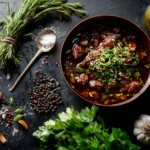
Transforming Raw Proteins into Cooking-Ready Ingredients
Learning Objectives
By the end of this course, you will be able to:
- Trim excess fat and silverskin from beef, pork, and lamb cuts while preserving adequate fat for flavor and moisture
- Portion chicken breasts to even thickness for uniform cooking using butterflying and pounding techniques
- Handle raw proteins safely following cross-contamination prevention protocols from Course 1
- Pat meat completely dry before cooking to enable proper Maillard browning reactions
- Identify and remove tendons, bloodlines, and other components that compromise texture or appearance
- Determine grain direction in muscle tissue for proper slicing after cooking
Skill Ontology Classification
| Ontology Category | Classification |
| Skill Type | Food Preparation > Protein Prep > Meat and Poultry Handling |
| Technique Categories | Trimming (fat removal, silverskin removal), Portioning (butterflying, pounding), Surface Preparation (drying, tempering), Safety Protocols (cross-contamination prevention) |
| Quality Outputs | Cooking-ready proteins, uniform thickness for even doneness, proper surface for browning, food safety compliance, optimal fat-to-meat ratio |
| Cooking Interactions | Maillard reaction (dry surface required), Even cooking (uniform thickness), Tenderness (silverskin removal, grain identification), Flavor (appropriate fat retention) |
| Prerequisite Skills | Course 1 (Kitchen Safety—cross-contamination, safe temperatures), Course 2 (Essential Tools—knives, cutting boards), Course 6 (Knife Handling), Course 11 (Vegetable Prep—yield maximization principles) |
| Unlocks Skills | Course 13 (Fish and Seafood Prep), Course 35 (Searing Meat), Course 44 (Cooking Chicken), Course 46 (Basic Steak Techniques), Course 48 (Cooking Pork) |
Essential Meat Preparation Terminology
| Term | Definition |
| Silverskin | Thin, silvery-white connective tissue membrane covering certain muscles, particularly pork tenderloin and beef tenderloin—does not break down during cooking and becomes unpleasantly chewy; must be removed before cooking |
| Grain | The direction of muscle fibers running through a piece of meat, visible as parallel lines or striations on the meat surface—cutting against the grain (perpendicular to fibers) produces more tender results than cutting with the grain |
| Butterflying | Cutting a thick piece of meat horizontally almost through, then opening it like a book to create a thinner, more uniform piece—enables faster, more even cooking of thick cuts like chicken breasts or pork chops |
| Pounding | Using a meat mallet or heavy pan to flatten meat to uniform thickness—creates even cooking, tenderizes through mechanical breakdown of muscle fibers, and enables breading for cutlets |
| Tempering | Allowing refrigerated meat to rest at room temperature before cooking (typically 30-60 minutes)—reduces temperature differential between surface and center, promoting more even cooking throughout the protein |
| Marbling | Intramuscular fat distributed throughout meat in white streaks or flecks—adds flavor and moisture during cooking; desirable and should be preserved during trimming, unlike external fat caps which may be partially removed |
| Fat Cap | Layer of external fat covering one side of certain cuts like pork shoulder or beef brisket—may be partially trimmed to 1/4 inch for balance between flavor/moisture and rendered fat; thick caps can prevent browning |
| Bloodline | Dark red tissue found along the spine of fish and occasionally in poultry near bones—has stronger, sometimes unpleasant flavor and different texture; often removed for refined preparations |
| Spatchcocking | Removing the backbone from whole poultry and flattening the bird for faster, more even roasting—exposes more surface area to heat and eliminates the problem of breast overcooking before thighs reach safe temperature |
Visual Reference Index
| Type | Concept | Description for Visual Asset Creation |
| [Diagram] | Silverskin Identification | Close-up of pork tenderloin: silvery membrane highlighted with arrows, knife angle for removal shown at 15 degrees; visual cue: translucent sheen distinguishing silverskin from fat |
| [Video] | Silverskin Removal | Complete technique: blade insertion under membrane, angle against cutting board, pulling motion while blade holds stationary; visual cue: membrane peeling away in strips |
| [Diagram] | Grain Direction | Three cuts shown: flank steak (obvious parallel lines), chicken breast (subtle striations), pork loin (moderate visibility); arrows indicating grain direction and correct cutting angle |
| [Video] | Butterflying Technique | Chicken breast: hand placement for stability, horizontal knife entry, cutting motion stopping 1/2 inch from edge, opening motion; visual cue: even thickness after opening |
| [Diagram] | Pounding Setup | Cross-section: meat between plastic wrap layers, mallet contact point, outward stroke direction from center; visual cue: thickness reduction from 1.5 inches to 1/2 inch shown with measurements |
| [Video] | Fat Cap Trimming | Pork shoulder: measuring fat thickness, knife angle parallel to surface, leaving 1/4 inch cap; visual cue: ruler showing before/after thickness |
| [Diagram] | Cross-Contamination Zones | Kitchen workspace overhead: raw protein zone (red), ready-to-eat zone (green), handwashing station, sanitizer location; visual cue: workflow arrows showing safe movement patterns |
| [Video] | Spatchcocking Technique | Whole chicken: kitchen shears positioning along backbone, cutting motion, backbone removal, flipping and pressing to flatten; visual cue: before/after profile showing height reduction |
Frequently Asked Questions
Should I rinse raw chicken before cooking?
No. The USDA advises against rinsing raw poultry because water splashes spread bacteria up to three feet around your sink, contaminating surfaces, utensils, and nearby foods. Cooking to proper temperature (165°F) kills all bacteria; rinsing does not. Pat dry with paper towels instead.
How long can meat sit at room temperature for tempering?
30-60 minutes is safe for most cuts. The food safety danger zone (40-140°F) becomes concerning after 2 hours total exposure. Thick roasts benefit from longer tempering (up to 1 hour); thin steaks need only 20-30 minutes. Never exceed 2 hours at room temperature.
How much fat should I trim from steaks?
Preserve marbling (intramuscular fat) completely—it provides flavor and moisture. Trim external fat cap to 1/4 inch maximum to prevent flare-ups while retaining flavor. Remove any silverskin completely. When in doubt, leave more fat than less; you can always trim after cooking.
Why does my chicken breast cook unevenly—dry on the thin end, undercooked on the thick end?
Chicken breasts have naturally uneven thickness—the tapered end cooks much faster than the thick center. Solution: Butterfly and pound to uniform thickness (covered in Part 3), or use a two-zone cooking method. Even thickness is the single most important factor for properly cooked chicken breast.
Welcome to Course 12 of the Chefts culinary education system. At Chefts, we teach you to think like a chef—and professional chefs know that protein preparation determines cooking success before heat is ever applied. This course builds directly on the vegetable preparation principles from Course 11, applying the same systematic approach—trimming, cleaning, and preparing for cooking—to the more demanding requirements of meat and poultry. The food safety protocols from Course 1 become critically important here, as raw proteins carry higher contamination risks than vegetables.
Raw meat arrives from the butcher or grocery store in varying states of preparation. Some cuts are ready to cook; others have silverskin that will ruin texture, excessive fat that will cause flare-ups, or uneven thickness that guarantees overcooking some portions while undercooking others. The preparation techniques in this course transform purchased proteins into cooking-ready ingredients—trimmed appropriately, portioned for even cooking, surfaces dried for proper browning, and handled safely throughout the process.
The challenge of meat preparation is balancing multiple competing objectives. You want to remove silverskin (which never tenderizes) while preserving fat (which provides flavor). You want even thickness for uniform cooking while minimizing waste. You want room-temperature meat for even cooking while respecting food safety time limits. Understanding these tradeoffs—not just following rules—enables intelligent preparation decisions based on the specific cut, intended cooking method, and desired outcome.
This comprehensive guide covers the complete spectrum of meat and poultry preparation: trimming techniques for different cuts, portioning methods that ensure even cooking, surface preparation that enables proper browning, and safety protocols that prevent foodborne illness. You will develop the judgment to assess each protein’s preparation needs, the technique to execute that preparation efficiently, and the awareness to maintain food safety throughout the process.
Part 1: Food Safety Protocols for Raw Protein Handling
Non-Negotiable Practices That Prevent Foodborne Illness
Safety Protocol: Raw meat and poultry carry significantly higher food safety risks than vegetables. Salmonella, E. coli, Campylobacter, and other pathogens present on raw proteins can cause serious illness if transferred to ready-to-eat foods or consumed in undercooked meat. The cross-contamination prevention principles from Course 1 are not optional refinements—they are essential practices that must become automatic habit. Every technique in this course assumes you are following these protocols.
The Cross-Contamination Prevention System
Cross-Contamination—the transfer of harmful bacteria from raw proteins to surfaces, utensils, hands, or ready-to-eat foods. This transfer happens invisibly; you cannot see, smell, or taste bacterial contamination. Prevention requires systematic practices that assume contamination is present and prevent its spread.
Dedicated Equipment: Use a cutting board reserved exclusively for raw proteins—ideally color-coded (red is the industry standard for raw meat). This board should never contact ready-to-eat foods. If you have only one cutting board, prep all vegetables first, then prep raw proteins last, then wash the board with hot soapy water and sanitize before any other use. The essential tools discussion in Course 2 recommended multiple cutting boards; this is why.
Hand Washing Protocol: Wash hands with soap and warm water for 20 seconds before handling raw proteins, after handling raw proteins, and before touching anything else. This includes refrigerator handles, spice containers, faucets, and any surface that will later contact your hands or food. The moment you touch raw meat, your hands are contaminated until washed.
Surface Sanitation: After raw protein contact, wash cutting boards, counters, and utensils with hot soapy water, then sanitize with a diluted bleach solution (1 tablespoon per gallon of water) or commercial sanitizer. Soap removes visible debris; sanitizer kills invisible bacteria. Both steps are necessary. The kitchen sanitation principles from Course 5 apply with heightened importance here.
Utensil Management: The tongs, fork, or spatula that touched raw meat cannot touch the same meat after cooking without transferring bacteria back onto the cooked surface. Either use separate utensils for raw and cooked stages, or wash utensils between uses. This applies especially to grilling, where the same tongs often handle raw meat going on and cooked meat coming off.
Temperature Control and Storage
The Danger Zone: Bacteria multiply rapidly between 40°F and 140°F. Raw proteins should spend minimal time in this range. Keep meat refrigerated (below 40°F) until preparation, limit room temperature exposure during prep, and cook promptly after preparation. The food safety guidelines from Course 1 specified maximum 2 hours in the danger zone—this applies throughout the prep process.
Refrigerator Storage: Store raw proteins on the lowest refrigerator shelf, in containers or on plates that catch any drips. Raw meat dripping onto vegetables below is a contamination pathway. Ground meat and poultry are highest risk (more surface area for bacterial growth) and should be used within 1-2 days of purchase. Whole cuts keep 3-5 days. When in doubt, freeze.
Thawing Safely: Never thaw meat at room temperature—the exterior reaches danger zone temperatures long before the interior thaws. Safe methods: refrigerator thawing (slow but safest, plan ahead), cold water thawing (submerged in cold water changed every 30 minutes), or microwave thawing (only if cooking immediately after). Once thawed, cook within 1-2 days; do not refreeze unless cooked first.
Part 1 Summary: Food safety protocols for raw proteins are non-negotiable. Cross-contamination prevention requires dedicated equipment, systematic hand washing, surface sanitation, and utensil management. Temperature control keeps proteins out of the danger zone. These practices must become automatic habit—every technique in subsequent sections assumes you are maintaining food safety throughout the preparation process.
Part 2: Trimming Techniques for Meat
Removing What Compromises Quality While Preserving What Adds Value
The trimming principles from Course 11 apply to proteins with important distinctions. With vegetables, you remove inedible portions and damaged areas. With meat, you must distinguish between components that hurt the final dish (silverskin, excessive external fat, bloodlines) and components that help it (marbling, appropriate fat caps, connective tissue that will melt during braising). Understanding what to remove—and equally important, what to leave—requires knowing how each component behaves during cooking.
Silverskin: Always Remove
Silverskin—the thin, silvery-white membrane covering certain muscles—is connective tissue that does not break down during any cooking method. Unlike collagen (which converts to gelatin during braising), silverskin remains tough and chewy regardless of cooking time or temperature. It also contracts during cooking, causing meat to curl and cook unevenly. Silverskin must be removed from any cut where it appears.
Identification: Silverskin appears as a thin, translucent, silvery membrane with a slight sheen. It is most prominent on pork tenderloin, beef tenderloin, ribs, and certain roasts. Do not confuse silverskin with fat (which is white and opaque) or with the thin membrane on poultry (which is edible). When in doubt, try to pierce it with your finger—silverskin is tough and resistant; fat yields easily.
Removal Technique: Slide the tip of a sharp boning knife or chef’s knife under the edge of the silverskin, angling the blade slightly upward against the membrane. Hold the freed end of silverskin with your non-knife hand (a paper towel provides grip on the slippery membrane). Press the blade against the cutting board at a shallow angle and pull the silverskin away from you while the stationary blade separates it from the meat. Work in strips, removing all visible silverskin. Some meat will come away with the membrane—accept minimal loss rather than leaving silverskin behind.
Cross-Reference: The knife handling principles from Course 6 apply directly to silverskin removal—the blade angle, hand positioning, and controlled motion all build on your established knife skills.
Fat Trimming: Strategic Decisions
Unlike silverskin (always remove) or marbling (always keep), external fat requires judgment based on the cut, cooking method, and personal preference. The goal is appropriate fat—enough to provide flavor and moisture, not so much that it prevents browning or creates excessive grease.
Marbling vs. Fat Cap: Marbling is intramuscular fat distributed throughout the meat in white streaks—it melts during cooking, basting the meat from within and contributing rich flavor. Never trim marbling; it is desirable. Fat cap is the external layer of fat covering one surface of the cut—it protects meat during cooking but excessive thickness prevents browning and may not render completely, leaving chewy fat.
Fat Cap Guidelines by Cooking Method:
- High-heat searing/grilling: Trim fat cap to 1/4 inch maximum. Thick fat prevents direct contact between meat and heat source, inhibiting Maillard browning. Excess fat also causes dangerous flare-ups on grills.
- Roasting: Leave 1/4 to 1/2 inch fat cap. Fat bastes the meat during long cooking, and oven heat has time to render it properly. Position roasts fat-side up so rendered fat flows down through the meat.
- Braising: Leave fat cap intact or trim minimally. Long, slow cooking renders fat completely, and the braising liquid carries that flavor throughout the dish. You can remove fat from the surface of braising liquid after cooking.
- Stir-frying: Trim external fat completely. Quick cooking does not allow time for fat to render; unrendered fat is chewy and unpleasant. Thin slicing also makes external fat more noticeable.
Trimming Technique: Position the meat with fat cap facing up. Using a sharp knife held parallel to the meat surface, slice horizontally through the fat at your target thickness above the meat. Work in long, smooth strokes to create an even surface. For steaks with fat along the edge, leave 1/4 inch and score through the fat every 2 inches to prevent curling during cooking.
Removing Bloodlines and Off-Flavored Tissue
Bloodline—darker red tissue found near bones in poultry and along the spine in fish—has a stronger, sometimes livery or metallic flavor that some find unpleasant. In chicken thighs, you may notice darker meat near the bone; in fish, the bloodline runs as a dark stripe down the center. For refined preparations, remove bloodlines by cutting along their edges. For casual cooking, bloodlines are edible and their removal is optional.
Glands and Off-Flavored Tissues: Occasionally meat contains small glands, lymph nodes, or discolored areas with off-putting flavor or texture. If you encounter unusual nodules, discolored patches, or areas with different texture than surrounding meat, trim them out. When in doubt, remove—the small loss of meat is preferable to the risk of unpleasant bites.
Part 2 Summary: Silverskin must always be removed—it never tenderizes. Fat trimming requires judgment based on cooking method: less fat for high-heat methods, more for roasting and braising. Preserve marbling (intramuscular fat) while managing fat cap (external fat). Remove bloodlines for refined preparations. Trim any glands, nodules, or discolored tissue that could compromise flavor.
Part 3: Portioning for Even Cooking
Creating Uniform Thickness Through Butterflying and Pounding
Principle: Heat penetrates meat at a consistent rate regardless of thickness. A 1/2-inch section reaches 165°F in the time it takes a 1-inch section to reach only 140°F. When meat has uneven thickness—like the tapered shape of a chicken breast—the thin portions overcook to dryness before the thick portions reach safe temperature. The only solution is creating uniform thickness before cooking.
Cross-Domain Impact: Uniform thickness is the single most important factor for properly cooked chicken breast. The cooking techniques in Course 44 (Cooking Chicken Breasts and Thighs) assume even thickness; without proper portioning, those techniques cannot produce consistent results.
Butterflying: Cutting Thick Pieces Thinner
Butterflying—cutting a thick piece of meat horizontally almost through, then opening it like a book—transforms an uneven thick cut into a thinner, more uniform piece. The technique is particularly valuable for chicken breasts (naturally tapered) and thick pork chops (uneven cooking through the thick center).
Technique for Chicken Breast:
- Place the chicken breast flat on your cutting board with the thicker side facing your knife hand.
- Rest your non-knife hand flat on top of the breast, pressing gently to stabilize.
- Holding your knife parallel to the cutting board, slice horizontally into the thick side of the breast.
- Cut through the breast, stopping approximately 1/2 inch before cutting all the way through.
- Open the breast like a book, unfolding the top portion to create a larger, thinner piece.
- If needed, gently pound the opened breast to fully even thickness.
Safety Protocol: Butterflying requires careful knife control—the blade moves parallel to your stabilizing hand. Work slowly. Keep the blade angle consistent throughout the cut. If the meat is slippery, pat it dry first for better grip.
Pounding: Mechanical Thickness Reduction
Pounding—using a meat mallet or heavy pan to flatten meat—accomplishes two goals: creating uniform thickness and mechanically tenderizing the meat by breaking down muscle fibers. Pounding is essential for cutlets, schnitzel, and any preparation requiring thin, even pieces.
Technique:
- Place the meat between two sheets of plastic wrap to prevent tearing and contain splatter.
- Starting from the center of the meat, pound outward toward the edges using the flat side of a meat mallet or the bottom of a heavy pan.
- Use moderate, even force—aggressive pounding tears the meat; too gentle is ineffective.
- Work systematically from center outward, rotating the meat as needed, until you achieve uniform thickness.
- For cutlets, target 1/4 to 1/2 inch thickness. For more substantial pieces, 3/4 inch may be appropriate.
Common Mistakes: Pounding from edge inward (creates uneven thickness with thin edges), using excessive force (tears meat into shreds), pounding without plastic wrap (meat shreds and contaminates your mallet), uneven strokes (creates ridges rather than flat surface).
Spatchcocking: Flattening Whole Poultry
Spatchcocking—removing the backbone from whole poultry and flattening the bird—solves a fundamental roasting problem: by the time the thick thigh meat reaches safe temperature, the thinner breast meat is overcooked. A flattened bird presents more uniform thickness to the heat source, and the increased surface area enables faster, more even cooking.
Technique:
- Place the chicken breast-side down on your cutting board.
- Using kitchen shears (scissors), cut along both sides of the backbone from tail to neck.
- Remove the backbone completely (save for stock).
- Flip the chicken breast-side up.
- Press firmly on the breastbone with the heels of your hands until you hear it crack and the bird lies flat.
- Tuck the wing tips behind the breast to prevent burning.
Part 3 Summary: Uniform thickness is essential for even cooking—heat penetrates at a constant rate regardless of your preferences. Butterflying creates thin pieces from thick cuts by cutting horizontally and opening like a book. Pounding further evens thickness while tenderizing. Spatchcocking flattens whole poultry for faster, more even roasting. These techniques address the physics of heat transfer, not just culinary convention.
Part 4: Surface Preparation for Cooking
Drying, Tempering, and Seasoning Before Heat
After trimming and portioning, two critical preparation steps remain before cooking: drying the surface and tempering the meat. These steps are often overlooked by home cooks but significantly affect cooking outcomes. A wet surface cannot brown properly; cold meat cooks unevenly. Understanding why these steps matter makes them as automatic as washing vegetables.
Drying: The Foundation of Proper Browning
Mechanical Reason: The Maillard reaction—the complex chemical process that creates brown color, crispy texture, and rich flavor on seared meat—occurs only above 280°F. Water boils at 212°F. As long as the meat surface is wet, the heat energy goes into evaporating that water rather than browning the meat. Wet meat steams; dry meat sears. This is not a subtle distinction—it is the difference between pale, gray meat and beautifully caramelized crust.
Technique: Remove meat from packaging and pat all surfaces thoroughly with paper towels, pressing firmly to absorb moisture. Check crevices and the underside. For best results—especially with steaks intended for searing—dry the meat, place it on a wire rack over a plate, and refrigerate uncovered for 1-24 hours. This air-drying in the refrigerator removes surface moisture more completely than paper towels alone, resulting in superior sear.
Cross-Reference: The searing techniques in Course 35 (How to Sear Meat for Maximum Flavor) depend entirely on proper surface drying. If your seared meat has never achieved the deep brown crust you see in restaurants, inadequate drying is likely the cause.
Do Not Rinse Meat: Rinsing meat adds moisture that prevents browning and—in the case of poultry—spreads bacteria through splash contamination. Any surface bacteria will be killed by cooking; rinsing does not make meat safer and actively harms cooking outcomes. Pat dry with paper towels and discard the towels immediately.
Tempering: Bringing Meat to Room Temperature
Tempering—allowing refrigerated meat to rest at room temperature before cooking—reduces the temperature differential between the cold interior and the heated surface. A steak straight from the refrigerator (38°F internal) placed in a hot pan will have an overcooked exterior by the time the center reaches medium-rare (130°F). A tempered steak (closer to 55-60°F internal) cooks more evenly throughout.
Timing Guidelines:
- Thin cuts (1 inch or less): 20-30 minutes at room temperature
- Standard steaks and chops (1-1.5 inches): 30-45 minutes at room temperature
- Thick cuts and small roasts (1.5-3 inches): 45-60 minutes at room temperature
- Large roasts (3+ inches): 1-2 hours at room temperature (do not exceed 2 hours total)
Safety Protocol: The 2-hour food safety limit for the danger zone applies. Do not temper meat for longer than 2 hours total, regardless of thickness. If you forget meat on the counter and exceed this window, cook it immediately or discard it. Ground meat, which has more surface area for bacterial growth, should not temper longer than 30-45 minutes.
Seasoning: Salt Timing
When to salt meat is a subject of debate, but science provides clear guidance. Salt draws moisture from meat through osmosis. This process has two phases with different outcomes:
Immediate salting (0-3 minutes before cooking): Salt begins drawing moisture to the surface. If you cook immediately, this moisture has not yet emerged, and the surface remains relatively dry. Acceptable for searing.
Short salting (3-40 minutes before cooking): Salt has drawn moisture to the surface, which has not yet been reabsorbed. The surface is wet, inhibiting browning. This is the worst timing for searing.
Long salting (40+ minutes before cooking): Drawn moisture dissolves the salt, and this brine is reabsorbed into the meat through osmosis. The surface dries, the interior is seasoned throughout, and the salt has begun breaking down proteins for more tender texture. This is the optimal approach when time permits.
Practical Application: Salt steaks and chops either immediately before cooking or at least 45 minutes ahead (ideally 1-24 hours, refrigerated uncovered). Avoid the 5-40 minute window. For thick roasts, salting 24 hours ahead produces the best results, allowing complete penetration and tenderization.
Part 4 Summary: Surface preparation directly affects cooking outcomes. Dry surfaces brown; wet surfaces steam—always pat meat thoroughly dry before searing. Tempering reduces temperature differential for more even cooking; observe the 2-hour safety limit. Salt timing matters: salt immediately before cooking or at least 45 minutes ahead, avoiding the intermediate window when drawn moisture remains on the surface.
Troubleshooting Guide: Common Meat Preparation Problems
| Problem | Cause and Solution |
| Meat not browning properly—gray instead of brown | Surface moisture preventing Maillard reaction. Solution: Pat meat completely dry with paper towels. For best sear, air-dry uncovered in refrigerator 1-24 hours before cooking. |
| Chewy, tough strips in pork tenderloin | Silverskin not removed. Solution: Identify the silvery membrane before cooking and remove completely using the technique in Part 2. Silverskin never tenderizes. |
| Chicken breast dry on ends, undercooked in center | Uneven thickness. Solution: Butterfly and/or pound to uniform thickness before cooking. Even thickness is essential for chicken breast success. |
| Steak overcooked on outside, rare in center | Meat too cold when cooking started. Solution: Temper meat at room temperature 30-60 minutes before cooking (depending on thickness). Cold meat creates temperature gradients. |
| Pounded meat shredded or torn | Excessive force or improper technique. Solution: Use moderate force, work from center outward, always pound between plastic wrap, use flat side of mallet not textured side. |
| Steak curling during cooking | External fat band contracting. Solution: Score through the fat band at 2-inch intervals before cooking—cuts through connective tissue that causes contraction. |
| Meat sticking to pan | Surface moisture or pan not hot enough. Solution: Ensure meat is completely dry and pan is properly preheated before adding meat. Meat releases when seared. |
| Roast chicken with overcooked breast, undercooked thigh | Uneven thickness of whole bird. Solution: Spatchcock the chicken before roasting to flatten and even the thickness. See technique in Part 3. |
Success Metrics: Are You Ready for Course 13?
You are ready to progress to Course 13 (Fish and Seafood Handling Basics) when you can consistently:
- Identify and remove silverskin from pork tenderloin completely without excessive meat loss
- Butterfly a chicken breast to create even thickness, cutting horizontally without cutting through
- Pound meat to uniform 1/2-inch thickness without tearing or shredding
- Execute cross-contamination prevention protocols automatically throughout the prep process
- Pat meat completely dry to a surface that feels tacky, not wet
- Temper meat appropriately for its thickness while respecting the 2-hour safety limit
- Make intelligent fat-trimming decisions based on the intended cooking method
- Identify grain direction in muscle tissue for proper slicing after cooking
Assessment: If you cannot consistently meet these benchmarks, continue practicing meat preparation before progressing. Course 13’s fish and seafood handling requires the same food safety protocols, the same understanding of when to remove versus preserve components, and the same attention to surface preparation—applied to even more delicate proteins that demand gentler handling.
Skill Dependencies: What This Course Enables
Mastery of meat and poultry preparation techniques is a prerequisite for:
- Course 13: Fish and Seafood Handling Basics applies the same food safety protocols, trimming decisions, and surface preparation principles to delicate seafood, building directly on the systematic approach established here.
- Course 35: How to Sear Meat for Maximum Flavor depends on properly dried surfaces and tempered meat to achieve the Maillard browning that defines great seared proteins.
- Course 44: Cooking Chicken Breasts and Thighs assumes you can butterfly and pound chicken breasts to even thickness—without this preparation, the cooking techniques cannot produce consistent results.
- Course 46: Basic Steak Cooking Techniques requires proper fat trimming, surface drying, and tempering to achieve restaurant-quality results from home cooking.
- Course 48: Cooking Pork Chops and Tenderloin Safely depends on silverskin removal and proper tempering to produce juicy, tender results rather than tough, chewy disappointments.
- All Protein Cooking Courses (Sections 8): Every technique for cooking meat and poultry assumes properly prepared proteins—trimmed, portioned, dried, and tempered according to the principles in this course.
The preparation skills this course develops—food safety protocols, intelligent trimming, portioning for even cooking, surface preparation—determine success in every protein cooking method that follows. Master these techniques, and your proteins arrive at the cooking stage ready to perform.
Key Takeaways: Meat Preparation Fundamentals
| Concept | Key Points |
| Food Safety Protocols | Dedicated cutting boards • Systematic hand washing • Surface sanitation after raw contact • Separate utensils for raw/cooked • 2-hour danger zone limit |
| Silverskin Removal | Always remove—never tenderizes • Slide knife under edge • Angle blade against board • Pull membrane while blade holds stationary • Accept minimal meat loss |
| Fat Trimming | Preserve marbling (intramuscular) • Manage fat cap (external): 1/4″ for searing, 1/2″ for roasting, intact for braising • Score edge fat to prevent curling |
| Even Thickness | Essential for even cooking • Butterfly thick cuts horizontally • Pound between plastic wrap • Work center outward • Spatchcock whole poultry |
| Surface Drying | Dry surface = browning; wet surface = steaming • Pat thoroughly with paper towels • Air-dry in refrigerator for best sear • Never rinse meat |
| Tempering | Reduces temperature differential • 20-30 min for thin cuts • 30-60 min for steaks • Up to 2 hours for roasts • Never exceed 2-hour safety limit |
| Salt Timing | Salt immediately OR 45+ minutes ahead • Avoid 5-40 minute window when surface is wet • 1-24 hour salting optimal for steaks and roasts |
| Grain Direction | Visible as parallel lines/striations • Identify before cooking • Cut against grain after cooking • Perpendicular cuts = shorter fibers = more tender |
Conclusion: The Preparation That Determines Success
At Chefts, we teach you to think like a chef—and professional chefs understand that protein preparation determines cooking outcomes before heat is ever applied. The skills you have developed in this course—food safety protocols, intelligent trimming, portioning for even cooking, proper surface preparation—transform raw proteins from their purchased state into ingredients ready to perform under any cooking method.
The judgment you have built matters as much as any technique. Knowing when to remove fat versus preserve it, how thick a cut needs tempering versus cooking directly, whether silverskin is present and where to find it—these assessments reflect understanding of what each component contributes to the final dish. Every protein you prepare from now on presents these decisions, and you now have the framework to make them based on the protein’s characteristics and your intended cooking method.
Practice with attention to results. When you cook a steak, evaluate whether your sear achieved deep browning—if not, your surface was too wet. When you serve chicken breast, notice whether both ends are equally cooked—if not, your thickness was uneven. When you slice pork tenderloin, check for chewy strips—if present, you missed silverskin. This feedback loop between preparation and results accelerates skill development faster than rote repetition.
Food safety must remain non-negotiable throughout. The protocols covered in Part 1 protect your family from serious illness—cross-contamination prevention, temperature control, and proper storage are not suggestions but requirements. These habits must become so automatic that you follow them without conscious thought, even when cooking quickly or managing multiple tasks.
This is the Chefts promise: we build culinary competence through systematic skill development. Meat and poultry preparation completes the food preparation foundation begun in Course 11 with vegetables. With the safety knowledge from Course 1, the tools from Course 2, the knife handling from Course 6, the cutting techniques from Courses 7-10, the vegetable prep from Course 11, and now the protein prep from this course, you possess the complete foundation for the cooking methods that follow in Sections 5-7.
Proper protein preparation ensures that every piece of meat or poultry you cook is trimmed appropriately, portioned for even cooking, dried for proper browning, and handled safely throughout. Master these techniques, and your proteins arrive at the pan, grill, or oven ready to become great food.