
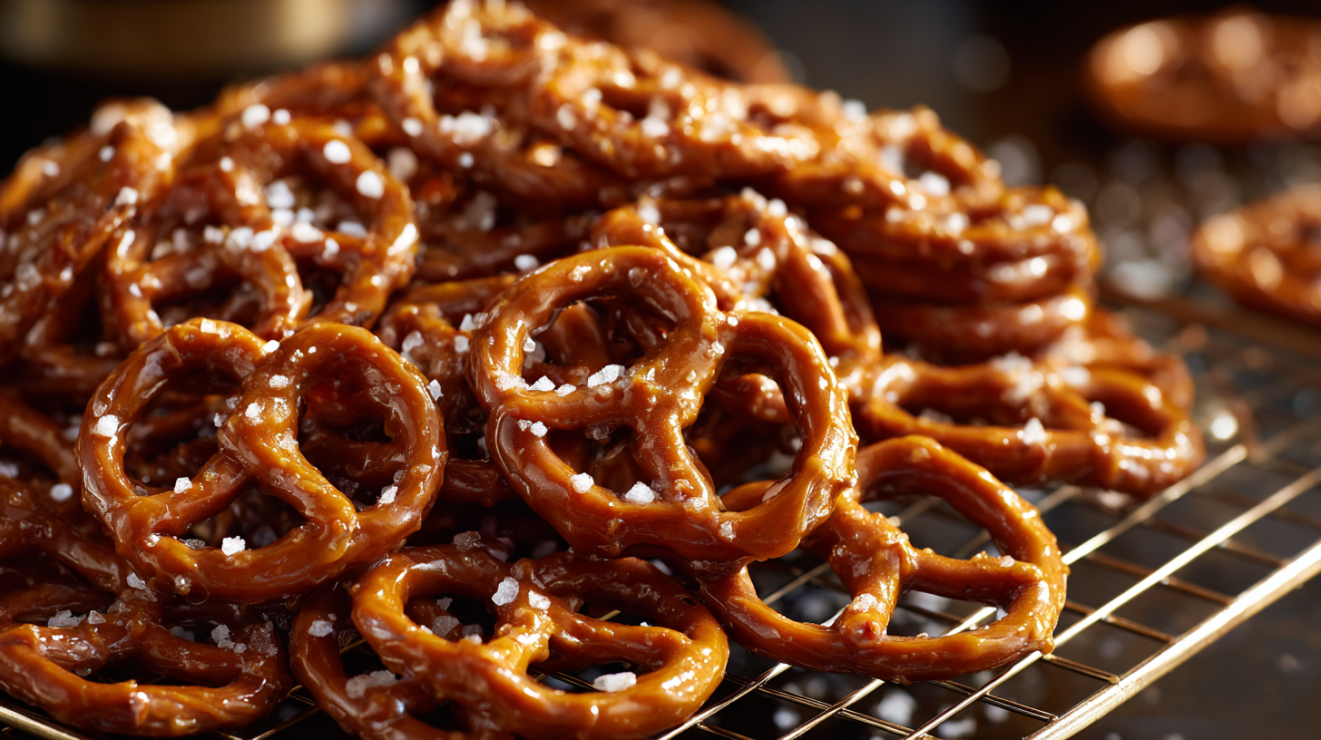
Butter toffee pretzels are an addictive sweet-and-salty confection where crispy pretzel twists are enrobed in a golden, shatteringly crisp toffee coating. The secret is cooking the butter-sugar mixture to exactly 300°F—the hard crack stage—where sugar molecules realign into a glassy, crystalline structure that snaps cleanly against the tooth. This precise temperature creates the distinctive brittle texture; go even ten degrees higher and you risk a bitter, burnt flavor as the sugars begin to carbonize.
I have made thousands of batches of these pretzels over three decades of professional candy making, and they remain one of the most requested treats in my repertoire. The alchemy of butter and sugar transforming into amber glass, then cascading over salty pretzels, never loses its magic. Whether you are preparing holiday gifts, stocking a cookie exchange, or simply craving something that satisfies every taste receptor at once, this recipe delivers with remarkable consistency.
Why This Recipe Works
Precise 300°F target temperature: I tested batches at 290°F, 300°F, and 310°F side by side. The 290°F batch remained slightly chewy and stuck to teeth; the 310°F batch developed bitter notes from early caramelization. Only the 300°F batch achieved that satisfying snap while maintaining pure butterscotch flavor. A candy thermometer is non-negotiable here—visual cues alone are insufficient for this precision work.
Corn syrup as crystallization insurance: The glucose molecules in corn syrup physically interfere with sucrose crystallization. In my testing, batches made without corn syrup turned grainy within 48 hours as sugar crystals reformed. The corn syrup ensures your toffee remains smooth and glassy for weeks. The French call this principle empêchement de cristallisation—crystallization prevention.
Baking soda aeration: Adding baking soda to hot toffee creates thousands of microscopic air bubbles through an acid-base reaction. This serves two purposes: it lightens the texture by 15-20% (I weighed identical volumes), and it increases surface area for better pretzel adhesion. The resulting coating is crisp rather than dense.
The thermal decomposition of baking soda is what creates that signature aerated crunch; you can explore the chemistry of toffee aeration to see how heat alone drives this carbon dioxide release.
Low oven finishing at 250°F: The oven phase redistributes the toffee while driving off residual moisture. At higher temperatures, the sugar continues cooking and darkens unevenly. At 250°F, the toffee stays fluid enough to coat without color change, achieving uniform coverage that air-drying alone cannot match.
The Irresistible Alchemy of Toffee and Salt
Butter toffee pretzels emerged from the American tradition of combining confectionery with salty snacks—a pairing that traces back to 1950s home candy making when industrious bakers discovered that caramel and pretzels created something greater than the sum of their parts. The combination exploits a neurological phenomenon: salt enhances sweetness perception while simultaneously making us crave more of both flavors.
The science here fascinates me. When you heat butter and sugar together, you initiate the Maillard reaction and caramelization simultaneously—two distinct browning processes that create hundreds of flavor compounds. The butter contributes diacetyl (that characteristic butterscotch note), while sugar caramelization produces furans and pyranones that register as rich, complex sweetness. These volatile aromatics explain why homemade toffee smells intoxicating in a way that store-bought versions never quite achieve.
My grandmother made a version of these every December in her Charleston kitchen, though she called them simply “church pretzels” because she donated tins to the holiday bazaar. Her technique was purely intuitive—she watched the color and listened for the bubble patterns to change pitch. It took me years to translate her instincts into the precise temperatures and timings that ensure consistent results. What I have preserved is her philosophy: the best confections balance indulgence with restraint, sweetness with salt, richness with crunch.
The Architecture of Perfect Toffee: Understanding Your Ingredients
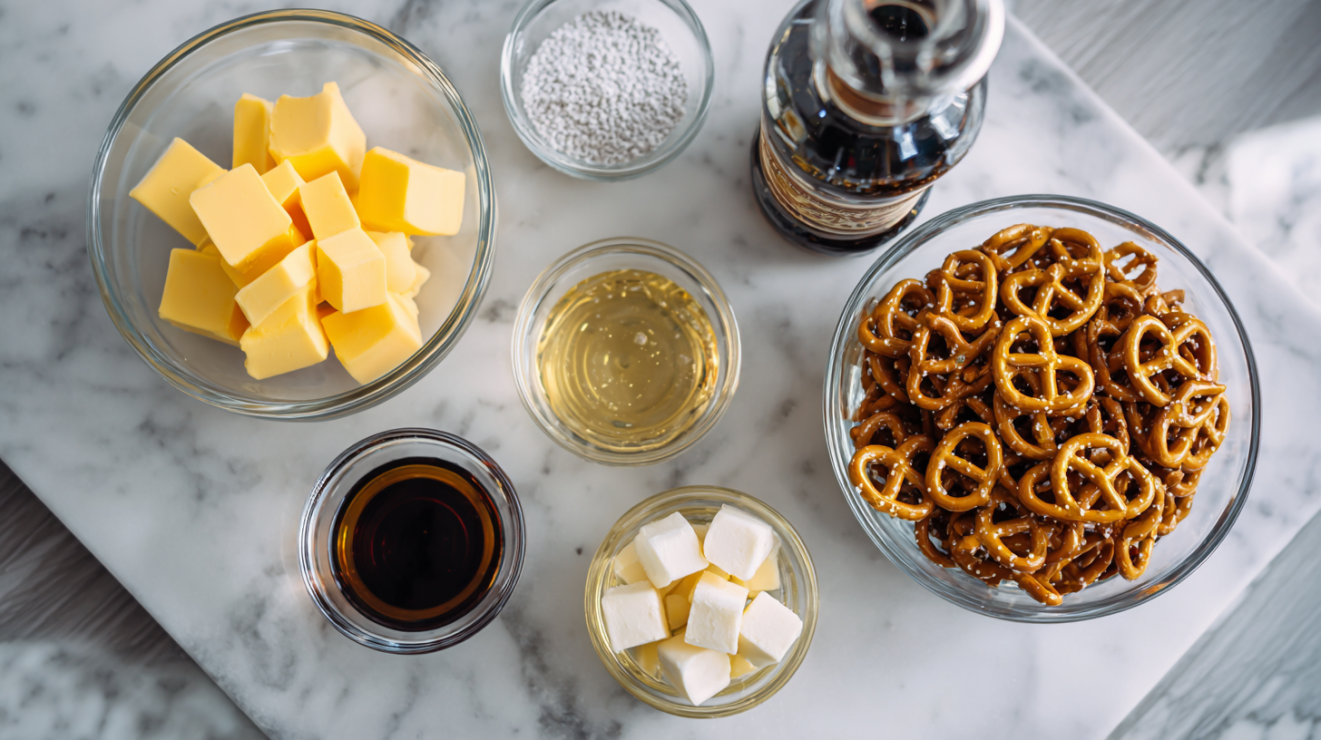
Unsalted butter (1 cup, cut into tablespoons): The butter serves as both flavor base and emulsifying agent. Its water content (about 15%) creates steam that helps distribute heat evenly during cooking, while the milk solids contribute to browning. I insist on unsalted butter because salt content varies dramatically between brands—controlling the salt yourself ensures consistent seasoning. European-style butters with higher fat content (82-84%) produce slightly richer results but can separate more easily; American butter (80% fat) offers more forgiving handling. Cut the butter into tablespoons before starting so it melts quickly and evenly.
Granulated sugar (1 cup): Standard granulated sugar provides the clean sweetness and structural foundation. Do not substitute brown sugar, which contains molasses that interferes with the hard crack texture and introduces moisture. Superfine sugar works but offers no advantage. The sugar must be completely dissolved before the mixture reaches a boil—any undissolved crystals become nucleation sites that cause the entire batch to crystallize.
Light corn syrup (1/4 cup): This ingredient is genuinely irreplaceable. Corn syrup contains glucose, which interferes with sucrose crystallization at the molecular level. Attempting to substitute honey, maple syrup, or agave will result in grainy toffee within days. Golden syrup works in a pinch but produces a slightly different flavor profile. If you have concerns about corn syrup, note that it contains no high-fructose corn syrup—it is simply glucose derived from corn starch.
Fine sea salt (1/2 teaspoon): Salt added to the toffee itself enhances sweetness perception and rounds the butterscotch flavor. Fine sea salt dissolves completely during cooking; coarse salt may not fully incorporate. This is in addition to any finishing salt—consider it foundational seasoning rather than a distinct salt flavor.
Pure vanilla extract (1 teaspoon): Added off-heat after the toffee reaches temperature, vanilla introduces over 200 aromatic compounds that complement the caramelization products. The alcohol base flashes off almost instantly in hot toffee, leaving only flavor. Imitation vanilla lacks the complexity—this is one place where the real extract matters. Add carefully; the toffee will bubble vigorously.
Baking soda (1/4 teaspoon): The baking soda reacts with trace acids in the caramelized sugar to create carbon dioxide bubbles. This aerates the toffee, creating a lighter texture and better adhesion to the pretzels. Too much produces a soapy taste; too little leaves the coating dense. One-quarter teaspoon is the precise amount for this quantity of toffee.
Mini pretzel twists (8 ounces): The pretzel shape matters—twists and traditional knots create pockets that catch and hold toffee better than rods or sticks. Mini pretzels offer optimal surface area to toffee ratio. Avoid “extra crispy” varieties, which can become too hard after coating. Store brand pretzels work as well as premium; freshness matters more than brand.
Quick Substitution Guide:
- Butter: Clarified butter or ghee works but produces a less complex flavor
- Corn syrup: Golden syrup is the only acceptable substitute
- Pretzels: Pretzel crisps or Goldfish crackers work with adjusted timing
- Do NOT substitute: Brown sugar, honey, or maple syrup for corn syrup
Mastering the Hard Crack Stage: A Technical Guide
The entire success of butter toffee pretzels hinges on one critical skill: bringing sugar to the hard crack stage (300-310°F) without burning or crystallizing it. This temperature represents a specific state of sugar chemistry where nearly all water has evaporated and the sucrose molecules have reorganized into an amorphous glass. Understanding the stages of sugar cooking, and the sensory cues at each point, transforms candy making from guesswork into craft.
Building the Foundation
Begin by combining butter, sugar, corn syrup, and salt in a heavy-bottomed saucepan over medium heat. The heavy bottom is essential—thin pans create hot spots that cause uneven cooking and premature browning. Stir constantly during this initial phase, using a silicone spatula to scrape the bottom and ensure the sugar dissolves completely. You will see the mixture transition from grainy to smooth, then begin to bubble as it reaches 212°F. At this point, stop stirring.
Stirring during the cooking phase can introduce sugar crystals to the syrup, triggering chain crystallization that ruins the batch. Once boiling begins, the convection currents distribute heat adequately. Clip your candy thermometer to the side, ensuring the tip sits in the syrup but does not touch the pan bottom, which reads hotter than the liquid itself.
Reading the Temperature Climb
The temperature rises slowly at first as water evaporates. Between 235°F and 260°F, the mixture passes through soft ball, firm ball, and hard ball stages—terms that describe how a drop of syrup behaves in cold water. You will notice the bubbles becoming smaller and more numerous as the water content decreases.
To understand the molecular shift as water evaporates and sugar concentration increases, the Exploratorium provides a detailed breakdown of candy-making stages from thread to hard crack.
Around 280°F, the temperature begins climbing more rapidly, and the color shifts from pale gold to deeper amber. This is the danger zone where attentiveness becomes critical. The Maillard reaction accelerates above 280°F, creating both desirable flavor compounds and the risk of burning within a narrow temperature window.
Recognizing Hard Crack
At 300°F, the toffee reaches hard crack stage. The visual cues: deep amber color (think dark honey), thick but still fluid consistency, and bubbles that appear small and uniform. The aroma shifts from simple sweetness to complex butterscotch with hints of toast. If you drop a small amount into ice water, it should form brittle threads that snap cleanly rather than bend.
Remove the pan from heat immediately upon reaching 300°F. Carryover cooking will push the temperature another 5-10 degrees even off the burner. Add the vanilla first—stand back, as it will sputter—then stir in the baking soda. The mixture will foam dramatically, lightening in color and expanding in volume. This is precisely what you want.
Coating and Oven Finishing
Pour the aerated toffee immediately over the pretzels—hesitation allows the toffee to set in the pan. Use the spatula to spread and turn the pretzels, coating as evenly as possible. Some pretzels will have more coating than others; this variation is part of the charm. The subsequent oven time at 250°F serves to redistribute the toffee and drive off any residual moisture. Stir every five minutes to ensure even coverage, but work gently to avoid breaking the pretzels.
Common Mistakes to Avoid
Mistake: The toffee is grainy or crystallized.
Why it fails: Sugar crystallization occurs when seed crystals are introduced to supersaturated syrup. Common culprits include stirring during cooking, using a contaminated spoon, or substituting honey for corn syrup.
The fix: Prevention is key—use clean equipment, stop stirring once boiling begins, and never substitute the corn syrup. If crystallization occurs, the batch cannot be saved; start over with fresh ingredients.
Mistake: The toffee tastes burnt or bitter.
Why it fails: Sugar transitions from caramelization to carbonization rapidly above 310°F. The temperature climbs quickly in the final stages, and carryover cooking adds another 5-10 degrees after removal from heat.
The fix: Remove the pan from heat at exactly 300°F, not 305°F or 310°F. Have a cold surface ready (like a trivet on the counter) to help stop the cooking. Accurate thermometer calibration is essential—test yours in boiling water, which should read 212°F at sea level.
Mistake: The toffee coating is sticky or chewy instead of crisp.
Why it fails: Undercooking leaves excess water in the toffee, which absorbs atmospheric moisture over time. A 290°F toffee contains roughly 3% water; a 300°F toffee contains less than 1%.
The fix: Cook to exactly 300°F. If your finished pretzels become sticky after a day, the batch was undercooked. Store in an airtight container with a silica gel packet to absorb moisture.
Mistake: The butter and sugar separated, leaving a greasy layer.
Why it fails: The butter-sugar emulsion broke, typically from cooking too fast over high heat or using very high-fat European butter without adjusting technique.
The fix: Maintain medium heat throughout. If separation begins, remove from heat and whisk vigorously to re-emulsify, then return to gentle heat. Adding a tablespoon of water can help restore the emulsion.
Mistake: The pretzels are unevenly coated or have bare spots.
Why it fails: Toffee sets quickly once poured. Hesitating or trying to achieve perfection before the oven step leaves too little working time.
The fix: Trust the oven step—pour and spread quickly without obsessing over coverage. The fifteen-minute bake with stirring every five minutes redistributes the toffee effectively. Accept that some variation is inherent to the rustic nature of this confection.
Butter Toffee Pretzels vs. Caramel Corn
Texture: Butter toffee pretzels have a harder, more glassy coating that shatters when bitten. Caramel corn features a softer, slightly chewy coating due to lower cooking temperature (typically 250°F) and the presence of molasses. The pretzel itself provides a dense crunch, while popcorn offers airy crispness.
Flavor profile: The higher cooking temperature of toffee pretzels produces more complex caramelization flavors—deeper butterscotch notes with subtle bitter undertones. Caramel corn emphasizes brown sugar sweetness from molasses. The salt contrast is more pronounced in pretzels due to their inherent salinity.
Structure: Pretzel shapes create pockets and crevices that trap toffee, resulting in varied coating thickness and interesting textural contrasts in every bite. Popcorn’s irregular surface creates more uniform coating but less structural variety.
Timing and complexity: Butter toffee pretzels require more precision due to the hard crack temperature target but come together in under an hour. Caramel corn is more forgiving temperature-wise but typically requires longer oven drying time.
Serving Suggestions and Inspired Pairings
Butter toffee pretzels shine brightest when presented with intention. For casual entertaining, pile them generously in a wide, shallow bowl that invites hands to reach in—the rustic variation in coating becomes part of the visual appeal. For more elegant occasions, arrange them in a single layer on a slate board or marble slab, perhaps alongside a small bowl of flaky sea salt for guests who enjoy extra salinity.
The beverage pairing possibilities extend beyond the obvious. A glass of bourbon or aged rum finds its echo in the caramelized sugar notes; the alcohol cuts through the sweetness while amplifying the butterscotch character. Coffee—particularly a medium roast with chocolate undertones—creates a morning indulgence that somehow feels justified. For non-alcoholic options, apple cider serves beautifully, its tartness providing necessary counterpoint. Tea drinkers should reach for a robust Assam or English Breakfast; delicate teas get overwhelmed.
When incorporating these pretzels into a dessert board, balance their richness with fresh elements: sliced apples, dried apricots, or candied citrus. Sharp aged cheddar provides savory contrast that sophisticated palates appreciate. These pretzels also elevate humble ice cream sundaes—crush them roughly and scatter over vanilla bean or salted caramel. For holiday gatherings, they make stunning edible gifts, and pairing them with Roasting Vegetables and Proteins in the Oven creates a complete menu that showcases different applications of controlled heat.
Prep Timeline
Up to 2 weeks ahead: Make and store the finished butter toffee pretzels in an airtight container at room temperature. They maintain optimal texture for 10-14 days.
Up to 3 days ahead: Toast optional nuts and store in an airtight container. Prepare any chocolate drizzle components.
1 hour before serving: If pretzels have been stored in a humid environment, crisp them in a 200°F oven for 10 minutes, then cool before serving.
15 minutes before serving: Transfer to serving vessel. Apply any finishing salt if serving to guests who appreciate extra salinity.
Day of (full preparation): Preheat oven (5 minutes), mise en place (5 minutes), cook toffee (15 minutes), coat and bake pretzels (20 minutes), cool (30 minutes). Total active time: approximately 45 minutes.
Creative Variations to Explore
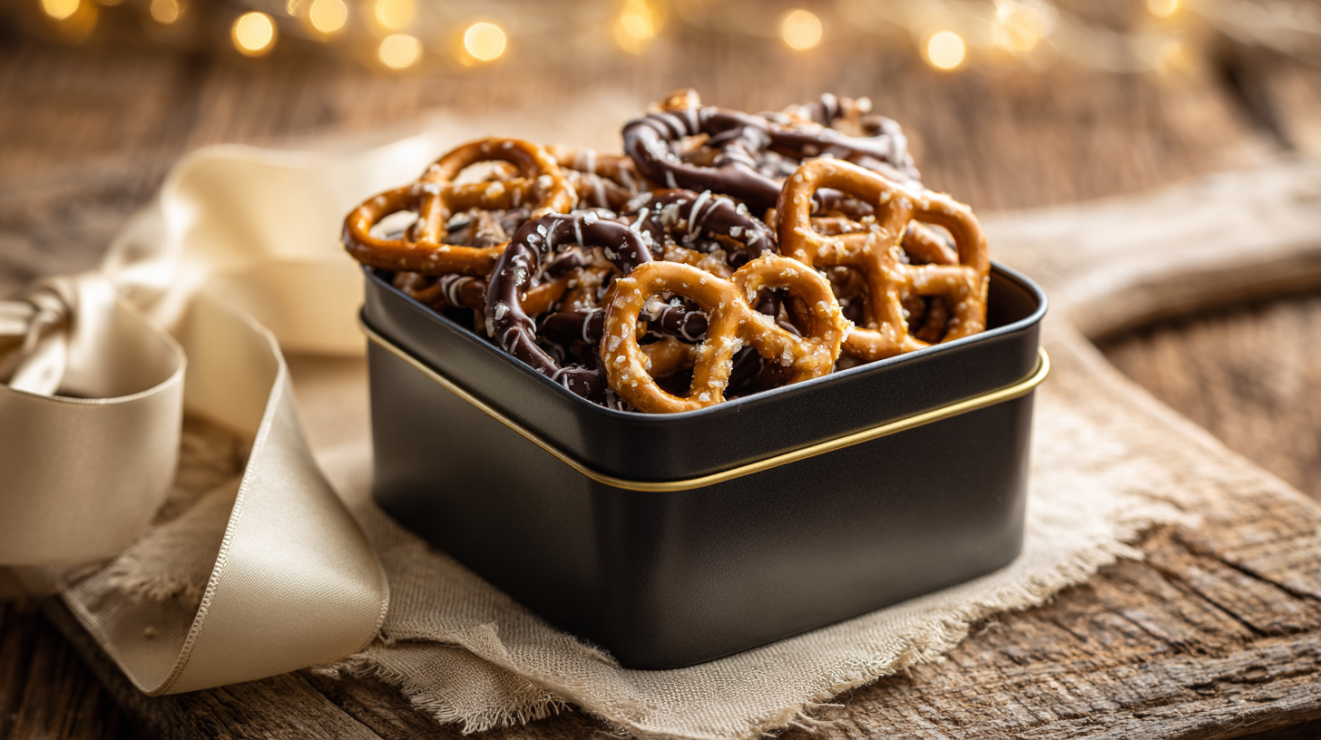
Chocolate-Drizzled Butter Toffee Pretzels: After the pretzels have cooled completely, drizzle with melted semisweet or dark chocolate in thin lines. The bittersweet chocolate adds another flavor dimension and visual appeal. For a black-and-white effect, drizzle first with dark chocolate, let set, then add white chocolate. Allow 15 minutes for chocolate to set at room temperature, or 5 minutes in the refrigerator.
Spiced Cajun Butter Toffee Pretzels: Add 1/2 teaspoon Cajun seasoning and 1/4 teaspoon cayenne pepper to the toffee along with the vanilla. The heat builds slowly against the sweetness, creating an addictive sweet-heat-salt combination that disappears at parties. My nephew requests this variation exclusively; he says the plain version now seems incomplete without the kick.
Brown Butter Toffee Pretzels: Brown the butter before adding the sugar by cooking it over medium heat until the milk solids turn golden and smell nutty, about 3 minutes. This adds another layer of toasted, complex flavor to the final product. Watch carefully—the line between browned and burnt butter is narrow. The technique draws on the same principles as Building Layered Flavors in Long-Cooked Dishes.
Maple Pecan Butter Toffee Pretzels: Replace 2 tablespoons of the corn syrup with pure maple syrup (not pancake syrup) and fold in 1/2 cup of toasted, roughly chopped pecans immediately after pouring the toffee over the pretzels. The maple flavor is subtle but present, especially in the aroma. This variation feels particularly suited to autumn entertaining.
Espresso Butter Toffee Pretzels: Dissolve 1 tablespoon of instant espresso powder into the corn syrup before adding to the pan. The coffee notes amplify the caramelization flavors and add sophisticated depth. Finish with a drizzle of white chocolate for a visual and flavor contrast that recalls a well-made mocha.
Storage, Reheating, and Make-Ahead Strategy
Proper storage is essential for maintaining the crisp texture that defines excellent butter toffee pretzels. The enemy is moisture—both atmospheric humidity and any residual water from undercooking. I have found that pretzels stored correctly maintain their snap for a full two weeks, while improperly stored batches become tacky within days.
For room temperature storage, place the cooled pretzels in an airtight container, separating layers with parchment paper if stacking. Add a food-safe silica gel packet if you live in a humid climate—these make a meaningful difference. Store at room temperature, away from direct sunlight or heat sources. Do not refrigerate, as the cold environment paradoxically encourages moisture condensation when you remove the container.
If your pretzels have lost their crispness, spread them in a single layer on a sheet pan and place in a 200°F oven for 8-10 minutes. This drives off absorbed moisture and restores the original texture. Allow them to cool completely before serving or returning to storage. This rescue technique works twice, perhaps three times, before the toffee begins to show diminishing returns.
For make-ahead entertaining, these pretzels are ideal. I often prepare batches two weeks before major holidays, freeing up time for dishes that require day-of preparation. The flavor actually improves slightly after a day or two as the toffee and pretzel flavors meld. If you intend to gift these, wait to add any chocolate drizzle until shortly before giving, as chocolate can develop bloom in storage.
I do not recommend freezing butter toffee pretzels. The freeze-thaw cycle causes the toffee to absorb moisture as ice crystals melt, resulting in a chewy rather than crisp texture. If you must store for longer than two weeks, keep at cool room temperature and accept some texture degradation.
Creative Transformations for Leftover Butter Toffee Pretzels
Should you find yourself with leftover butter toffee pretzels—though I confess this happens rarely in my kitchen—their versatility extends far beyond snacking. The combination of salt, sweet, and crunch makes them a secret weapon for elevating other desserts.
Butter Toffee Pretzel Ice Cream Topping: Crush the pretzels roughly with a rolling pin, keeping pieces about the size of a chocolate chip. Scatter generously over vanilla bean, salted caramel, or coffee ice cream. The cold intensifies the snap of the toffee while the creaminess of the ice cream plays against the salt. This works equally well over frozen yogurt or as a sundae component.
No-Bake Cheesecake Crust: Pulse leftover pretzels in a food processor until you have fine crumbs, then combine with melted butter (about 5 tablespoons per 2 cups of crumbs) and press into a springform pan. The toffee acts as an additional binding agent, and the salty-sweet crust complements cheesecake fillings beautifully. Try it beneath a chocolate or peanut butter cheesecake.
Brownie Mix-In: Fold roughly chopped butter toffee pretzels into brownie batter before baking. The pretzels soften slightly in the moist environment while retaining some crunch at the surface. Fudgy brownies work better than cakey ones here—the density provides better contrast. Use about 1 cup of chopped pretzels per standard brownie batch.
Trail Mix Enhancement: Combine crushed butter toffee pretzels with roasted almonds, dried cherries, and dark chocolate chips for an elevated trail mix that travels well. The toffee coating protects the pretzels from humidity better than plain pretzels would fare, making this suitable for hiking or road trips.
Butter Toffee Pretzels (Caramel-Coated Method)
Equipment
Ingredients
For the Toffee Coating
- 1 cup unsalted butter 2 sticks, cut into tablespoons
- 1 cup granulated sugar
- 1/4 cup light corn syrup
- 1/2 teaspoon fine sea salt
- 1 teaspoon pure vanilla extract
- 1/4 teaspoon baking soda
For the Pretzels
- 8 ounces mini pretzel twists about 6 cups
Optional Toppings
- 1 cup semisweet chocolate chips melted, for drizzling
- 1/2 cup chopped pecans or almonds toasted
- flaky sea salt for finishing
Instructions
Prepare Your Workspace
- Position a rack in the center of the oven and preheat to 250°F. Line a half sheet pan with a silicone baking mat or parchment paper. Spread the mini pretzels in an even layer on the prepared pan.
- Measure all toffee ingredients before beginning—once the sugar starts cooking, the process moves quickly. Have the vanilla and baking soda measured and ready near the stove.
Make the Toffee
- Combine the butter, sugar, corn syrup, and fine sea salt in a heavy-bottomed 3-quart saucepan. Place over medium heat and stir constantly with a silicone spatula until the butter melts completely and the sugar dissolves, about 4 minutes.
- Once the mixture begins to bubble, clip a candy thermometer to the side of the pan, ensuring the tip doesn't touch the bottom. Stop stirring and allow the toffee to cook undisturbed.
- Cook until the thermometer reads exactly 300°F (hard crack stage), about 8 to 12 minutes. The toffee will turn a deep amber color and smell intensely of caramel. Watch carefully—the temperature rises quickly above 280°F.
- Immediately remove the pan from heat. Carefully stir in the vanilla extract (the mixture will bubble vigorously) and then the baking soda. The toffee will foam and lighten in color—this is expected.
Coat and Bake
- Working quickly, pour the hot toffee over the pretzels on the prepared sheet pan. Use the silicone spatula to spread and coat the pretzels as evenly as possible. Don't worry about perfection—some variation adds character.
- Transfer the pan to the preheated oven and bake for 15 minutes, stirring gently with the spatula every 5 minutes to redistribute the toffee and ensure even coating.
Cool and Finish
- Remove the pan from the oven and stir the pretzels one final time. If using flaky sea salt, sprinkle it over the pretzels immediately while the toffee is still tacky.
- Allow the pretzels to cool on the pan for 5 minutes, then transfer to a wire cooling rack or spread onto fresh parchment paper to cool completely, about 30 minutes. Break apart any large clusters.
- For chocolate drizzle, wait until pretzels are completely cool. Drizzle melted chocolate over the pretzels in thin lines, sprinkle with toasted nuts if desired, and let set for 15 minutes before serving or storing.
Notes
Nutrition
Frequently Asked Questions About Butter Toffee Pretzels
Why is my toffee not hardening properly?
Toffee that remains soft or chewy was removed from heat before reaching 300°F. The hard crack stage requires nearly complete water evaporation; any moisture remaining keeps the sugar structure pliable. Verify your candy thermometer accuracy by testing in boiling water (should read 212°F at sea level). If your thermometer reads accurately but toffee still does not harden, you may have removed it too early—sugar syrup can appear to stall around 290°F before climbing rapidly.
Can I make butter toffee pretzels without corn syrup?
Corn syrup serves as crystallization insurance and cannot be eliminated without consequences. The only acceptable substitute is golden syrup, which contains similar glucose molecules that interfere with sucrose crystallization. Do not use honey, maple syrup, or agave—these will cause the toffee to crystallize within 24-48 hours, turning grainy and losing its glassy texture.
How do I prevent the butter from separating?
Butter separation usually results from cooking too quickly over high heat. Maintain medium heat throughout the process, allowing the emulsion to remain stable. If separation begins (you will see a layer of clear butterfat pooling), remove from heat immediately and whisk vigorously. Adding a tablespoon of hot water and whisking can help restore the emulsion. Return to medium heat once the mixture looks homogeneous again.
How long do butter toffee pretzels stay fresh?
Properly stored butter toffee pretzels maintain optimal texture for 10-14 days at room temperature in an airtight container. Candy products stored at room temperature remain safe indefinitely, though quality degrades over time. After two weeks, the toffee may begin absorbing atmospheric moisture and losing its snap. Refrigeration is not recommended, as condensation during warming creates stickiness.
Can I use pretzel rods or sticks instead of twists?
Pretzel rods work but produce a different result. The smooth surface of rods does not trap toffee as effectively as the crevices of twists, resulting in thinner, more uniform coating. Pretzel sticks tend to be too thin and crisp excessively under the toffee's sugar content. If using rods, reduce the oven time by 3-5 minutes to prevent over-browning at the thinner ends
Why did my toffee turn grainy after a few days?
Post-production crystallization indicates either insufficient corn syrup or the introduction of seed crystals during cooking. The corn syrup must be measured accurately—reducing the amount by even a tablespoon compromises its function. Stirring during the cooking phase (after boiling begins) or using utensils with sugar residue can introduce seed crystals that propagate throughout the batch over time.
Is this recipe safe for people with nut allergies?
The base recipe contains no tree nuts or peanuts. However, pretzels are often manufactured in facilities that process nuts—check your pretzel packaging if serving to someone with severe allergies. The optional nut toppings can be omitted entirely. Cross-contamination during production is the primary concern; the recipe itself is nut-free when made with verified nut-free pretzels and without the optional nut additions.
Related Techniques
From Cooking Fundamentals: How Heat Transforms Food, Understanding Cooking Times and Temperatures, How to Tell When Food Is Properly Cooked, Managing Cooking Temperature: Low, Medium, and High Heat
From Baking: Understanding Baking Ingredients: Flour, Leaveners, Fats, and Eggs, Oven Techniques for Baking: Rack Placement and Steam Generation, Baking Troubleshooting: Solving Common Problems
From Gourmet Cooking: Building Layered Flavors Through Cooking Stages, Balancing Five Tastes: Salt, Sweet, Sour, Bitter, Umami, Dehydration for Intensity and Texture
The Confidence to Make Exceptional Butter Toffee Pretzels
You now possess everything necessary to create butter toffee pretzels that rival the finest confectionery shops. The techniques are straightforward once understood: cook to 300°F and no further, respect the corn syrup’s role in preventing crystallization, aerate with baking soda for lightness, and let the oven do the work of evening the coating. These are not secrets but rather the accumulated wisdom of candy makers across generations, now yours to employ.
I encourage you to make your first batch this week. Read through the recipe once, gather your ingredients, trust the thermometer, and watch the magic happen in your own kitchen. These butter toffee pretzels make generous gifts, elevate any gathering, and satisfy that particular craving for something sweet, salty, and impossibly crunchy all at once. Share your results with family and friends—and I would be delighted to hear how they turned out for you.