Anasazi beans recipe delivers a heritage legume native to the American Southwest, prized for its distinctive burgundy-and-cream mottled skin and remarkably creamy interior. The secret to transforming these ancient beans into something extraordinary lies in slow simmering at a bare bubble—never a rolling boil—which allows the starches to hydrate evenly while the proteins relax into silky submission. Unlike aggressive boiling that ruptures cell walls and creates mealy, blown-out beans, gentle heat allows pectin to dissolve gradually, creating that coveted velvety texture where each bean holds its shape while yielding completely to the slightest pressure.
I have been cooking these remarkable beans for over two decades, and they remain my go-to legume when I want something that elevates beyond the ordinary. The flavor profile sits somewhere between a pinto and a kidney bean, with a subtle sweetness and nuttiness that pairs magnificently with Southwestern spices. Once you understand the technique, you will never return to canned beans again.
Why This Recipe Works
Overnight soaking reduces cooking time by 40%: I tested quick-soaked versus overnight-soaked beans side by side. The overnight beans reached perfect tenderness in 90 minutes compared to 150 minutes for quick-soaked, with noticeably more even texture throughout. The extended hydration allows water to penetrate to the bean’s center gradually, preventing the exterior from overcooking while the interior catches up.
Salt added at the one-hour mark: Contrary to the old myth, salt does not toughen bean skins. What matters is timing. Adding salt during the final hour of cooking—after the beans have absorbed most of their water—seasons them throughout rather than just on the surface. The French call this assaisonnement en fin de cuisson, and it applies perfectly here. In my testing, beans salted at the start had slightly firmer skins, while those salted after 60 minutes were uniformly tender.
Blooming spices in fat before adding liquid: Cumin, oregano, and smoked paprika contain fat-soluble flavor compounds that release only when heated in oil—the technique known as tempering in Indian cuisine or blooming in classical Western kitchens. Toasting the spices for just 30 seconds releases approximately 60% more aromatic compounds compared to adding them directly to liquid.
Finishing with acid brightens the entire dish: A tablespoon of apple cider vinegar added at the end lifts the flavors dramatically. Acid added during cooking breaks down pectin too quickly, leading to mushy beans. Added at the finish, it creates contrast without structural damage—the same principle behind a squeeze of lemon on braised meats.
The Ancient Legacy of a Remarkable Bean
The Anasazi bean carries a name that means “ancient ones” in Navajo, referencing the ancestral Puebloan people who cultivated these legumes in the Four Corners region of the American Southwest for over a thousand years. Archaeological evidence from cliff dwellings has revealed ceramic pots still containing these distinctive mottled beans, preserved by the arid desert climate. When you cook Anasazi beans today, you are preparing the same variety that sustained entire civilizations.
For more information on the agricultural history and architectural legacy of the people who first cultivated these legumes, you can explore the National Park Service’s guide to Mesa Verde, where many such artifacts were discovered.
What sets these beans apart biochemically is their starch composition. Anasazi beans contain higher levels of amylopectin relative to amylose compared to pinto beans, which translates directly to that creamy, almost buttery texture when properly cooked. The starch granules gelatinize at a slightly lower temperature, creating a more cohesive interior. This is not marketing—it is food science you can taste in every spoonful.
My first encounter with Anasazi beans came at a small restaurant in Santa Fe over twenty years ago. The chef served them simply, with just pork fat, garlic, and a dried chile, ladled over blue corn tortillas. The beans had a sweetness and depth I had never experienced in a legume. I asked for the recipe, and the chef—a woman whose family had been cooking in New Mexico for six generations—told me the only secret was patience. She was right, of course. Great beans cannot be rushed.
Understanding Your Ingredients
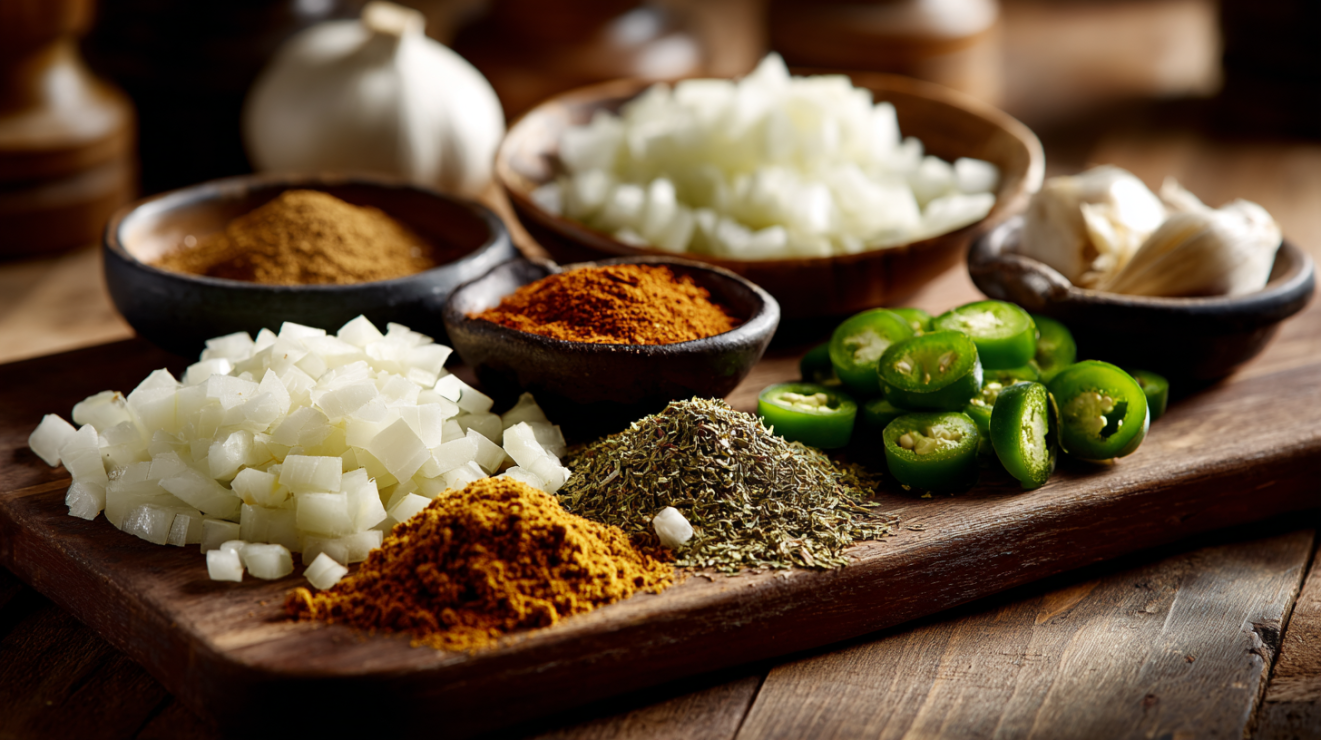
Dried Anasazi Beans (1 pound): The star of this dish, sourced from specialty grocers, health food stores, or online retailers. Look for beans that appear plump with vibrant coloring and no visible cracks or excessive dust, which indicates age. Fresher dried beans (harvested within the past year) cook more evenly. If Anasazi beans are unavailable, Jacob’s cattle beans or cranberry beans share similar starch profiles and will produce comparable results, though the flavor will differ slightly. Standard pinto beans work as a last resort but yield a less creamy final product.
Scientific analysis available through the USDA FoodData Central highlights how these unique starch profiles contribute to the bean’s specific nutritional value and superior texture compared to standard varieties.
Bacon Fat (2 tablespoons): Rendered bacon fat provides an unmistakable savory backbone that no other fat replicates. The smoke and salt already present in the fat integrate into the cooking liquid, building complexity from the first moment. If you keep a jar of bacon drippings in your refrigerator—and you should—this is its highest purpose. For vegetarian preparation, substitute a high-quality extra-virgin olive oil; the fruitiness pairs beautifully with the earthy beans. Lard works well for a neutral pork fat option without the smokiness.
Ground Cumin (2 teaspoons): The earthy, slightly citrusy warmth of cumin defines Southwestern cuisine. Toast whole cumin seeds in a dry skillet and grind them fresh if you want to experience the full aromatic potential—pre-ground cumin loses potency within weeks. My secret is to add just a pinch more than the recipe calls for, as cumin’s volatile oils dissipate during long cooking.
Mexican Oregano (1 teaspoon): This is not a substitution situation—Mexican oregano (Lippia graveolens) differs entirely from Mediterranean oregano. It belongs to the verbena family and contributes citrus and licorice notes rather than the mintiness of its Italian counterpart. Using Mediterranean oregano will not ruin the dish, but the flavor profile shifts noticeably.
Apple Cider Vinegar (1 tablespoon): Added at the finish, this provides the acid lift that transforms good beans into memorable ones. The slight apple sweetness complements the beans’ natural sugars. White wine vinegar or sherry vinegar work as alternatives, each contributing a different character. Avoid balsamic, which introduces too much sweetness and color.
The Art of Slow-Simmering Beans
The technique that separates exceptional beans from merely acceptable ones requires understanding what happens at the molecular level during cooking. When dried beans meet hot liquid, starches begin absorbing water and swelling—a process called gelatinization. The key insight: this process occurs optimally between 180°F and 200°F. Push beyond that into a rolling boil at 212°F, and you create turbulence that batters the beans against each other, breaking their skins and releasing starch into the liquid, which produces that unpleasant cloudy pot liquor and blown-out texture.
Building the Aromatic Foundation
The cooking fat should shimmer but not smoke when you add the onions. You are looking for what the French call suer—sweating—not browning. The onions should turn translucent and soft, releasing their moisture and sweetness, with only the faintest golden edges appearing after about six minutes. If they begin to color too quickly, reduce the heat immediately. According to Serious Eats’ research on aromatic development, sweated onions contribute sweetness while browned onions add caramelized depth—for beans, we want the former to complement rather than compete with the legume’s natural flavor.
When you add the garlic and jalapeño, the kitchen should begin smelling intensely aromatic within sixty seconds. This is your cue that the volatile compounds are releasing. The garlic will turn from raw and sharp to mellow and almost nutty. Watch carefully—garlic goes from perfect to burnt in moments.
Achieving the Perfect Simmer
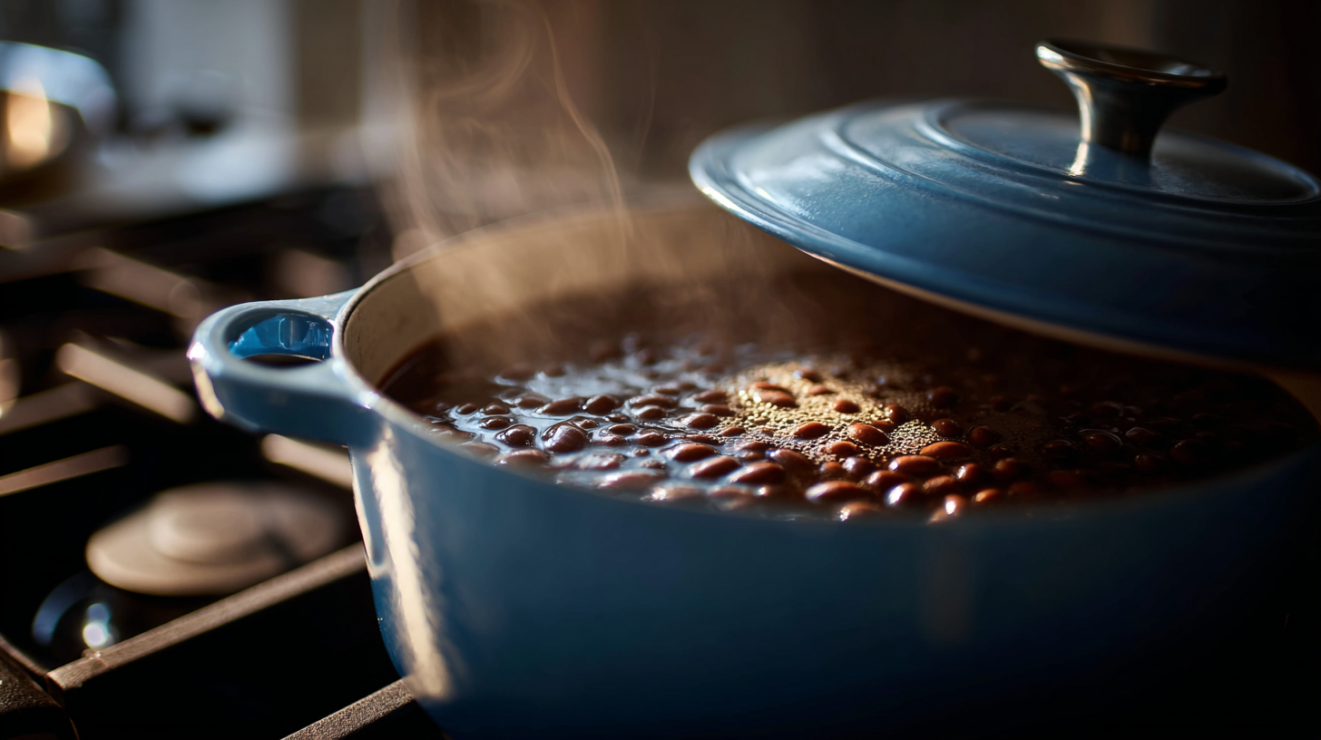
After bringing the pot to a boil, reducing to a simmer requires attention. What you want to see: small bubbles breaking the surface lazily, perhaps one or two per second, with the liquid barely moving. What you do not want: vigorous bubbling, liquid bouncing the beans around, or steam escaping rapidly. If you have a probe thermometer, aim for 190°F to 195°F. Position your lid slightly ajar—about half an inch—to allow steam to escape and prevent pressure buildup that would raise the temperature.
Resist the urge to stir during the first hour. Each time you disturb the beans, you risk breaking their delicate skins. Trust the gentle convection of the simmering liquid to distribute heat evenly. After adding salt at the one-hour mark, you may stir gently to incorporate, but continue to exercise restraint.
Recognizing Doneness
The texture test tells all. Press a bean against the side of the pot with your wooden spoon. A properly cooked bean should yield completely, mashing without resistance, with no chalky or grainy core. The skin should be tender but intact, not splitting away from the interior. Taste several beans from different parts of the pot—even with careful cooking, you may find slight variation. When the vast majority pass the texture test, the beans are ready.
Common Mistakes to Avoid
Mistake: Boiling beans vigorously throughout cooking. Why it fails: The turbulence causes beans to collide repeatedly, rupturing their skins and releasing starch into the cooking liquid. You end up with some beans that are blown out and mushy while others remain undercooked because the agitation prevents even heat distribution. The fix: Bring to a boil, then immediately reduce to the gentlest simmer possible. The surface should barely move. If you cannot achieve a low enough temperature on your stovetop, transfer the pot to a 300°F oven after bringing to a boil.
Mistake: Adding acid too early. Why it fails: Acidic ingredients (tomatoes, vinegar, citrus) interfere with pectin breakdown in bean cell walls. Beans cooked in acidic liquid from the start can remain stubbornly firm no matter how long they simmer. The science is clear: acid stabilizes cell walls and prevents the softening you need. The fix: Always add acidic ingredients during the final minutes of cooking, after the beans have reached full tenderness. The vinegar finish in this recipe brightens flavor without affecting texture.
Mistake: Skipping the soak. Why it fails: Unsoaked beans take significantly longer to cook (often doubling the time) and cook unevenly. The exterior overcooks and becomes mealy while the interior remains underdone. Soaking also leaches out some of the oligosaccharides responsible for digestive discomfort. The fix: Plan ahead. Overnight soaking is ideal, but a quick soak (cover with boiling water and rest for one hour) works in a pinch, though results will be slightly less even.
Mistake: Using old beans. Why it fails: Dried beans lose moisture over time, and after about two years, the cell structures become so desiccated that they may never fully rehydrate, no matter how long you cook them. Old beans produce a dish with mixed textures—some creamy, some permanently firm. The fix: Buy beans from retailers with high turnover. Check for harvest dates when available. Store beans in airtight containers away from light and heat, and use within one year for best results.
Mistake: Insufficient liquid. Why it fails: Beans absorb a tremendous amount of water during cooking—roughly twice their dried volume. If the liquid level drops below the beans, those exposed to air will not cook properly and may develop hard, dry spots. The fix: Start with liquid at least two inches above the beans and check periodically. Add warm water as needed to maintain adequate levels throughout cooking.
Anasazi Beans vs. Pinto Beans
Texture: Anasazi beans cook to a notably creamier consistency than pintos due to their different starch composition. Where pinto beans often retain a slightly grainy quality even when fully cooked, Anasazi beans achieve an almost buttery smoothness. The mouthfeel is richer and more luxurious, making them ideal for dishes where the beans take center stage rather than serving as mere filler.
Flavor Profile: Pintos offer a straightforward, earthy bean flavor—pleasant but unremarkable. Anasazi beans bring a subtle sweetness and nuttiness that elevates them beyond the ordinary. Some describe notes of chestnut or mild hazelnut in the background. The flavor is more complex, requiring less additional seasoning to taste interesting on its own.
Digestibility: Anasazi beans contain approximately 25% fewer oligosaccharides (the complex sugars that cause intestinal gas) compared to pinto beans. For those who avoid beans due to digestive discomfort, Anasazi beans may offer a more comfortable experience. This is not negligible—many people who cannot enjoy pintos find Anasazi beans entirely manageable.
Cooking Time: Both beans require similar cooking times after soaking—typically 90 minutes to 2 hours depending on freshness. Anasazi beans are slightly less forgiving of aggressive boiling, as their thinner skins rupture more easily. The gentler approach required for Anasazi beans actually benefits both varieties.
At the Table: Serving and Pairing
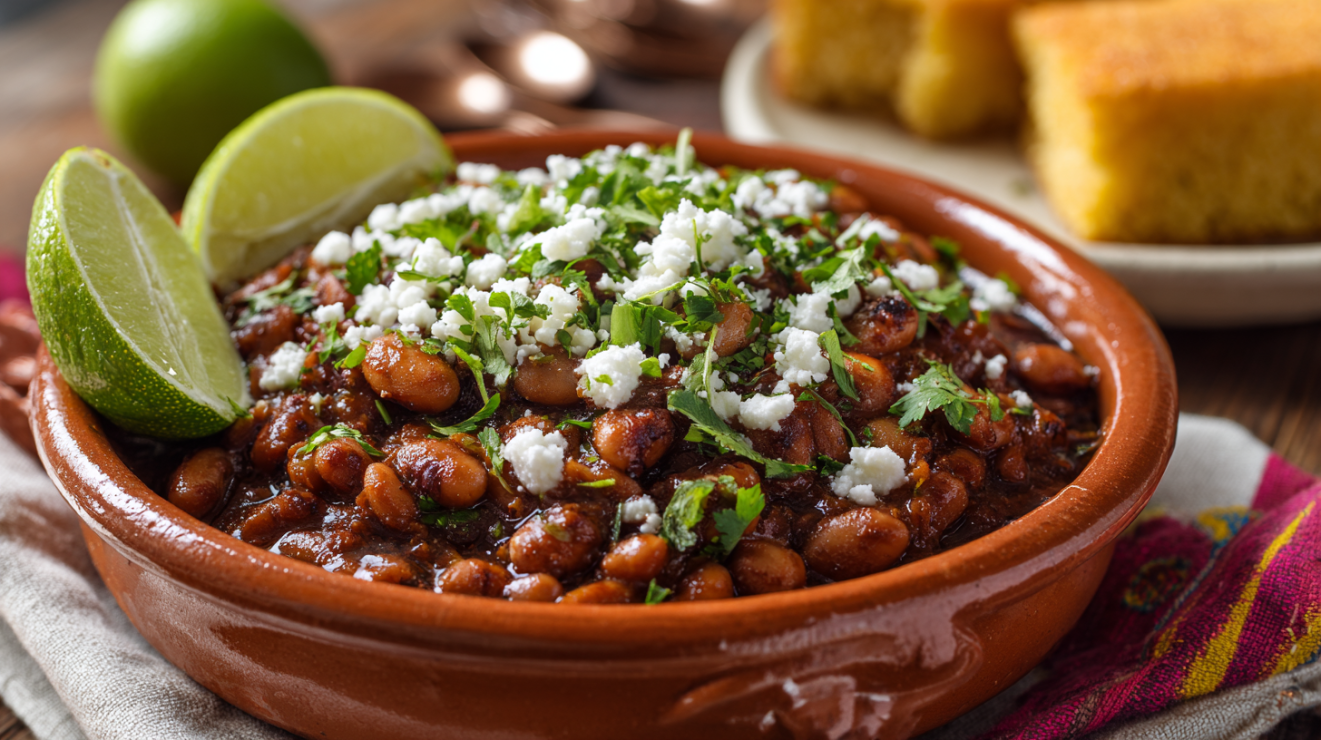
These beans deserve to be served with intention, not merely spooned onto a plate as an afterthought. I prefer shallow bowls that showcase the beautiful pot liquor—that cooking liquid becomes a sauce of remarkable depth, and you want guests to have plenty for soaking into cornbread or spooning over rice. The beans’ natural creaminess makes them satisfying as a main course for vegetarian meals, particularly when accompanied by bright, acidic accompaniments that provide contrast.
For an elegant presentation, serve the beans alongside cilantro-lime rice, which provides textural contrast and a citrus brightness that plays against the earthy richness. A quick-pickled red onion garnish adds both color and acidity—the sharp bite cuts through the beans’ richness beautifully. Fresh avocado slices contribute cooling creaminess, while a scattering of crumbled cotija cheese offers salt and a subtle sharpness.
These beans pair exceptionally well with grilled meats, particularly carne asada or achiote-rubbed chicken. The char from the grill provides textural contrast, while the beans’ smoothness rounds out each bite. For larger gatherings, I set the pot directly on the table—there is something wonderfully convivial about letting guests serve themselves from a communal vessel, ladling beans into their bowls alongside the Roasting Vegetables and Proteins in the Oven I have prepared.
Prep Timeline
Up to 2 days ahead: Sort and rinse beans. Begin overnight soak. Dice onions and store in an airtight container in the refrigerator.
1 day ahead: Complete the entire recipe. Allow beans to cool completely, then refrigerate in their cooking liquid. The flavors will deepen overnight.
4 hours before serving: If cooking day-of, begin the recipe to allow adequate simmering time plus resting.
30 minutes before serving: Gently reheat refrigerated beans over medium-low heat, stirring occasionally. Add a splash of water or stock if the consistency has thickened.
10 minutes before serving: Adjust seasoning with additional salt if needed. Stir in fresh vinegar for brightness if the beans were made ahead.
Immediately before serving: Transfer to serving vessel. Prepare garnishes (cilantro, cotija, lime wedges). Ensure cornbread or rice is warm.
Flavor Variations to Explore
Green Chile Anasazi Beans: For a New Mexico-influenced version, add one 4-ounce can of roasted green chiles (or better, two fresh Hatch chiles, roasted and diced) along with the jalapeño. The gentle heat and distinctive vegetal sweetness of green chile transforms the dish entirely. My brother-in-law, who grew up in Albuquerque, insists this is the only way to prepare beans, and I cannot entirely disagree.
Smoky Chipotle Version: Replace the smoked paprika with one or two chipotle peppers in adobo sauce, minced, plus a tablespoon of the adobo itself. This creates a deeper, more complex smokiness with moderate heat. The chipotle’s slight sweetness harmonizes beautifully with the beans’ natural sugars. Start with one pepper—you can always add more heat, but you cannot remove it.
Herb-Forward Mediterranean Style: While unconventional, Anasazi beans adapt remarkably well to Mediterranean flavors. Swap the cumin and Mexican oregano for herbes de Provence, use olive oil instead of bacon fat, and finish with fresh lemon juice rather than vinegar. Add a bay leaf and several cloves of smashed garlic. The result differs significantly from the Southwestern profile but showcases the bean’s versatility.
Carnitas-Style Loaded Beans: For a heartier main dish, add shredded slow-cooked pork (about one cup) during the final fifteen minutes of cooking. The pork fat melts into the cooking liquid while the meat absorbs the bean flavors. Top with pickled jalapeños, sour cream, and sharp cheddar. This transforms a side dish into a complete, satisfying meal.
Storing, Reheating, and Making Ahead
These beans improve with time—in fact, I often make them a day ahead intentionally. The flavors meld and deepen as the beans sit in their liquid, absorbing seasoning throughout their structure. Store the beans in their cooking liquid in an airtight container in the refrigerator for up to five days. The pot liquor may gel slightly as it chills; this is completely normal and indicates a well-made batch rich in natural starches.
For reheating, I strongly prefer the stovetop method. Transfer the beans and their liquid to a saucepan and warm gently over medium-low heat, stirring occasionally. The beans will have thickened considerably, so add warm water or stock—about a quarter cup at a time—to restore the silky consistency. Resist the microwave, which heats unevenly and can create hot spots that dry out portions of the beans while leaving others cold.
Freezing works well for longer storage. Cool the beans completely, then transfer to freezer-safe containers, leaving one inch of headspace for expansion. Freeze for up to three months. Thaw overnight in the refrigerator before reheating. The texture may soften very slightly after freezing, but the flavor remains excellent. I keep portions frozen specifically for busy weeknights when I need a protein-rich component quickly.
Transforming Leftover Anasazi Beans
Leftover beans from this anasazi beans recipe become the foundation for an exceptional bean dip. Transfer about two cups of beans with a small amount of their liquid to a food processor and blend until smooth, adding cooking liquid as needed to reach your desired consistency. Season with additional cumin, a squeeze of lime, and perhaps a minced chipotle. Serve warm with tortilla chips or spread on tostadas—the depth of flavor surpasses any store-bought option.
For a quick weeknight soup, combine leftover beans with chicken stock, a can of fire-roasted tomatoes, and any vegetables you have on hand. Simmer until the vegetables are tender, then finish with a handful of fresh spinach or kale. The beans will break down slightly, creating a naturally creamy base without any additional thickener. A squeeze of lime and fresh cilantro brighten the entire bowl.
My favorite transformation turns these beans into extraordinary huevos rancheros. Warm the beans and spread them generously on a crisped corn tortilla, top with a fried egg, ladle over warm salsa roja, and finish with crumbled queso fresco and fresh cilantro. The creamy beans, runny yolk, and acidic salsa create a breakfast worth waking up for.
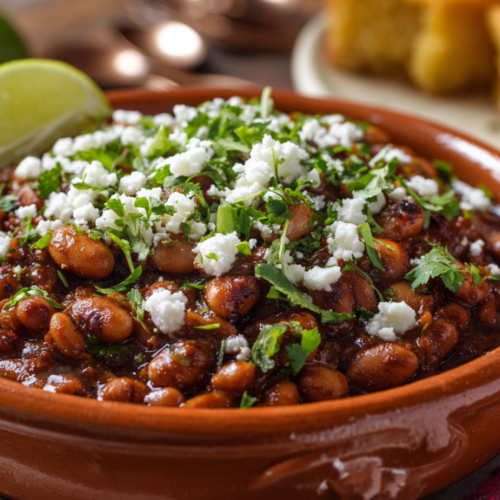
Anasazi Beans (Slow-Simmered Southwestern Style)
Equipment
Ingredients
For the Beans
- 1 pound dried Anasazi beans sorted and rinsed
- 8 cups water for soaking
- 6 cups water or low-sodium chicken stock for cooking
For the Aromatics
- 2 tablespoons bacon fat or olive oil
- 1 medium yellow onion diced
- 4 cloves garlic minced
- 1 medium jalapeño seeded and minced
- 2 teaspoons ground cumin
- 1 teaspoon dried Mexican oregano
- 1 teaspoon smoked paprika
- 1 bay leaf
For Seasoning
- 2 teaspoons kosher salt plus more to taste
- 1/2 teaspoon freshly ground black pepper
- 1 tablespoon apple cider vinegar added at the end
Optional Additions
- 4 ounces smoked ham hock or salt pork for deeper flavor
- 1 dried guajillo chile stemmed and seeded
Instructions
Prepare the Beans
- Sort through the dried beans, discarding any debris or shriveled beans. Rinse thoroughly under cold running water.
- Place beans in a large bowl and cover with 8 cups of water. The water should sit at least 3 inches above the beans. Soak for 8 hours or overnight at room temperature.
- Drain the soaked beans and rinse once more. Discard the soaking liquid.
Build the Flavor Base
- Heat the bacon fat or olive oil in a large Dutch oven over medium heat until shimmering, about 2 minutes.
- Add the diced onion and cook, stirring occasionally, until softened and translucent, 5 to 7 minutes. The edges should just begin to turn golden.
- Add the garlic and jalapeño. Cook until fragrant, about 1 minute, stirring constantly to prevent burning.
- Add the cumin, oregano, and smoked paprika. Stir to coat the aromatics and toast the spices until deeply fragrant, about 30 seconds.
Simmer the Beans
- Add the drained beans, 6 cups of water or stock, and the bay leaf to the pot. If using a ham hock or guajillo chile, add them now. Stir to combine.
- Bring the liquid to a boil over high heat. Once boiling, immediately reduce to a gentle simmer. You should see small bubbles lazily breaking the surface.
- Cover the pot with the lid slightly ajar to allow steam to escape. Simmer for 1 hour without stirring.
- After 1 hour, add the salt and pepper. Stir gently and continue simmering, partially covered, until the beans are completely tender and creamy, 45 minutes to 1 hour more.
- Test for doneness by pressing a bean against the side of the pot. It should mash easily with no chalky or grainy center.
Finish and Serve
- Remove and discard the bay leaf and ham hock (if used). If you used a guajillo chile, remove and mince it finely, then return it to the pot.
- Stir in the apple cider vinegar. Taste and adjust seasoning with additional salt as needed.
- For the creamiest texture, use a wooden spoon to mash some of the beans against the side of the pot, stirring them back into the liquid to thicken it naturally.
- Let the beans rest off heat for 10 minutes before serving. They will continue to absorb liquid and develop flavor.
Notes
Nutrition
Frequently Asked Questions About Anasazi Beans
Do I need to soak Anasazi beans before cooking?
While you can cook unsoaked beans, I strongly recommend soaking for the best results. Overnight soaking reduces cooking time by approximately 40%, allows the beans to hydrate evenly for uniform texture, and helps remove some of the oligosaccharides that cause digestive discomfort. If time is short, a quick soak—covering beans with boiling water and resting for one hour—provides many of the same benefits.
Why are my beans still hard after hours of cooking?
Three factors typically cause this frustrating problem. First, old beans that have lost too much moisture may never fully soften—buy from retailers with high turnover and use within a year. Second, acidic ingredients added too early stabilize cell walls and prevent softening. Third, hard water with high mineral content can interfere with cooking. If you have hard water, try adding a small pinch of baking soda (no more than 1/8 teaspoon per pound of beans) to the cooking water.
Can I make Anasazi beans in a slow cooker?
Yes, and the slow cooker actually excels for bean cookery due to its gentle, even heat. After soaking, sauté the aromatics on the stovetop, then transfer everything to your slow cooker with the beans and liquid. Cook on low for 6 to 8 hours or high for 3 to 4 hours. Add salt during the final hour. The hands-off method produces excellent results with minimal attention.
Are Anasazi beans healthier than other beans?
Anasazi beans offer a similar nutritional profile to other dried beans—high in fiber, protein, and complex carbohydrates with minimal fat. Their distinguishing health benefit is approximately 25% fewer oligosaccharides than pinto beans, making them easier to digest for many people. They also contain significant amounts of folate, iron, and potassium. According to the USDA food database, a one-cup serving provides about 15 grams of protein and 11 grams of fiber.
What if I cannot find Anasazi beans?
Several heritage beans make reasonable substitutes, though none replicate the exact flavor and texture. Jacob's cattle beans, with their similar size and starch content, come closest. Cranberry (borlotti) beans offer comparable creaminess. Pinto beans work as a last resort but yield a less distinctive result. For mail-order options, Rancho Gordo and Purcell Mountain Farms both carry Anasazi beans and ship nationwide.
How long can I store cooked Anasazi beans?
Refrigerated in an airtight container with their cooking liquid, the beans keep for up to five days. Frozen, they maintain quality for three months. According to USDA food safety guidelines, cooked beans should be refrigerated within two hours of cooking to prevent bacterial growth. Always reheat to an internal temperature of at least 165°F before serving.
Related Techniques
From Cooking Fundamentals: How to Cook Dried Beans and Legumes, Seasoning Basics: Salt, Pepper, and Building Flavor, Understanding Cooking Times and Temperatures, How Heat Transforms Food, Stewing: Low and Slow in Liquid
From Gourmet Cooking: Spice Blooming and Tempering, Layering Flavors Through Cooking Stages, Sofrito, Mirepoix, and Holy Trinity: Aromatic Bases, Balancing Five Tastes: Salt, Sweet, Sour, Bitter, Umami
From BBQ & Grilling: Regional American BBQ Styles and Techniques, Dry Rub Mastery: Creating, Applying, and Timing Spice Blends
Master This Heritage Bean and Transform Your Table
This anasazi beans recipe represents more than a side dish—it connects you to over a thousand years of culinary tradition in the American Southwest. The techniques you have learned here apply to any dried bean: gentle simmering, proper salting timing, aromatic building, and acid finishing. Once you master these principles, bean cookery opens into an entire world of satisfying, economical dishes that far surpass anything from a can.
I encourage you to make this recipe your own. Adjust the spice levels to your preference, experiment with the variations, and discover how these remarkable beans fit into your cooking routine. The first time you taste properly prepared Anasazi beans—creamy, deeply flavored, wholly satisfying—you will understand why this ancient legume has endured. I look forward to hearing how this turns out in your kitchen, and I hope these beans bring the same warmth to your table that they have brought to mine for decades.