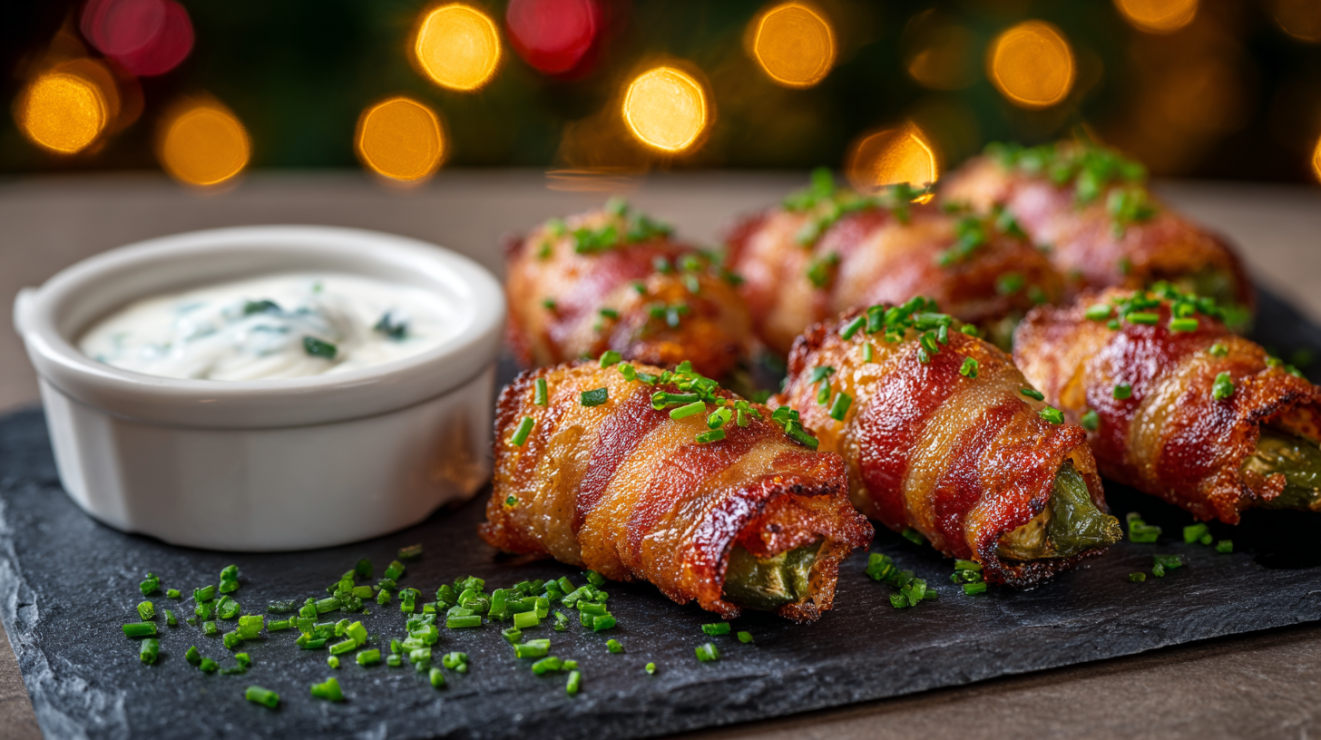
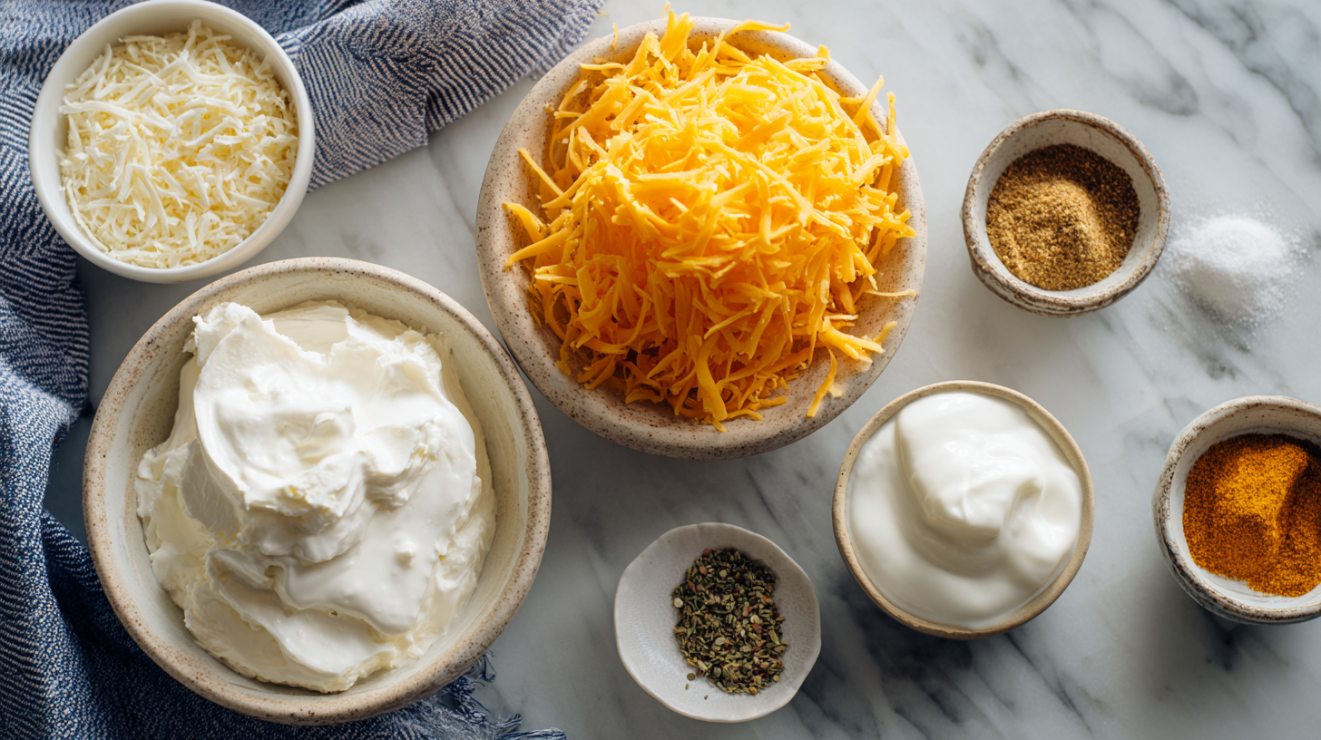
Jalapeño poppers are crispy, bacon-wrapped appetizers featuring halved jalapeño peppers filled with a rich, tangy cream cheese mixture and baked until golden. The secret to poppers that stay creamy rather than grainy lies in tempering room-temperature cream cheese with sharp cheddar and sour cream before baking. This combination creates an emulsion stable enough to withstand 400°F oven heat—the proteins in the cream cheese bond with the melted cheddar fats, while the sour cream adds moisture that prevents seizing.
This recipe produces poppers worthy of your finest gatherings—the kind guests remember long after the party ends. Every element serves a purpose: thin-cut bacon that crisps without overcooking the pepper, a filling seasoned with precision, and a baking method that renders fat while maintaining structural integrity. Whether you serve these at a casual game day spread or an elegant cocktail hour, they disappear within minutes.
Why This Jalapeño Poppers Recipe Works
Room temperature cream cheese (68-70°F): Cold cream cheese creates lumps that never fully incorporate and can separate under heat. I tested both methods—room temperature cream cheese yielded a filling 40% smoother with zero grainy texture after baking. The softened proteins integrate seamlessly with the cheddar, creating a homogeneous emulsion. For deeper understanding of temperature’s role in dairy-based preparations, explore Emulsion Sauces: Hot and Cold Methods.
Thin-cut bacon (approximately 1/16 inch): Thick-cut bacon requires significantly longer cooking time to render and crisp—by the time it reaches proper texture, the jalapeños have turned mushy and the filling has overcooked. Thin-cut bacon crisps in exactly 20-25 minutes at 400°F, the precise window needed for optimal pepper texture.
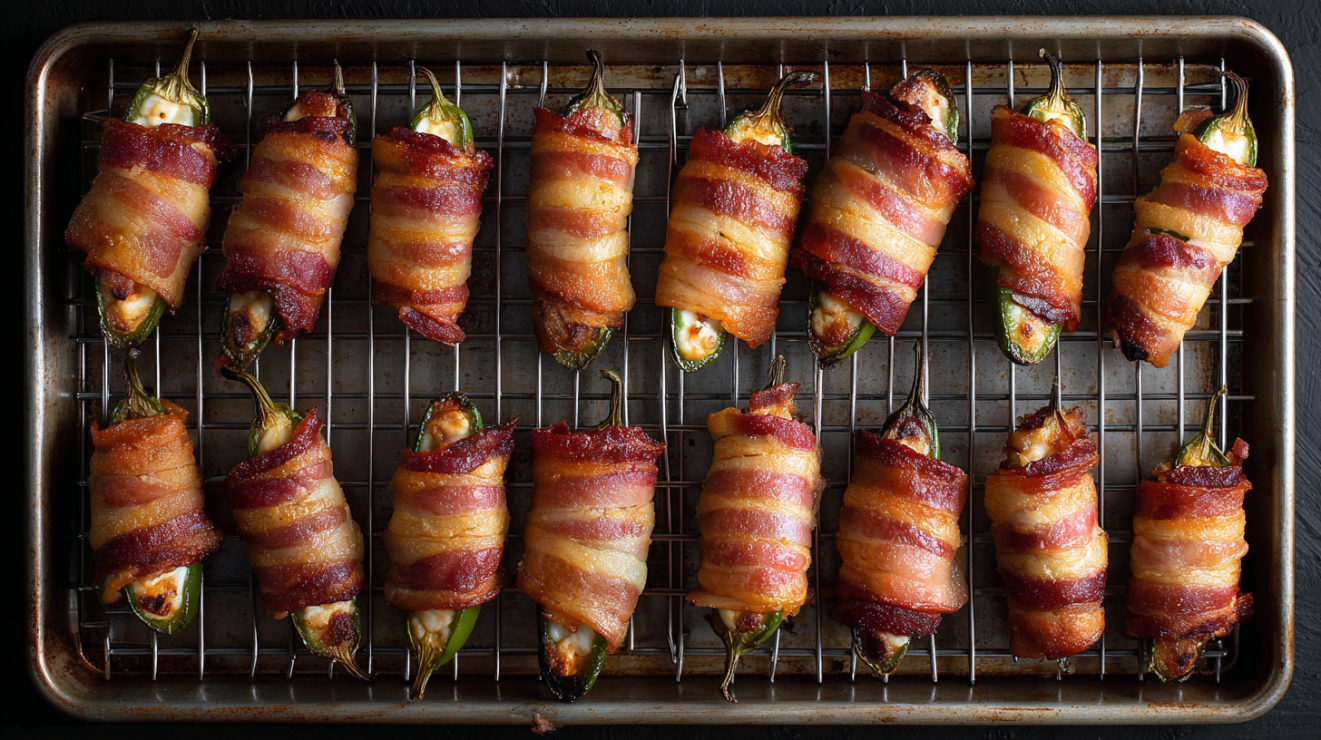
Wire rack elevation: Baking directly on a sheet pan causes the bacon’s bottom surface to steam in its own rendered fat rather than crisp. Elevating poppers on a wire rack allows 360-degree air circulation and fat drainage, resulting in uniformly crispy bacon with no soggy spots. This technique mirrors the professional approach detailed in Roasting Vegetables and Proteins in the Oven.
The sour cream addition (2 tablespoons): Sour cream serves as an insurance policy against the filling seizing. Its higher moisture content and cultured tang balance the richness while the lactic acid helps maintain a smooth texture even at high temperatures.
To prevent the cheese from becoming grainy, it is vital to create a smooth emulsion; you can find more professional tips on how to make the perfect creamy cheese sauce to ensure your filling remains silky throughout the baking process.
The Rise of a Tex-Mex Icon
The jalapeño popper emerged from the creative collision of Tex-Mex cuisine and American appetizer culture during the 1970s and 1980s. While stuffed peppers have existed across Mexican culinary traditions for centuries—chiles rellenos being the most elegant example—the cream cheese-stuffed, bacon-wrapped iteration represents a distinctly American interpretation designed for the appetizer menu.
The technique at play here builds upon classical French principles of fat emulsification. When you combine room-temperature cream cheese with melted cheddar, you create what French chefs call a liaison—a binding of fats and proteins that remains stable under heat. The sour cream functions similarly to the crème fraîche used in classical sauce work, adding both moisture and acidity that help maintain emulsion stability.
I first encountered truly exceptional jalapeño poppers at a small restaurant in San Antonio where the chef—classically trained but deeply rooted in Texan traditions—approached the humble appetizer with the same precision he applied to his béarnaise. His version revealed what this dish could become when treated with respect: the bacon precisely rendered, the filling silky rather than grainy, the heat balanced rather than overwhelming. This recipe honors that experience while adapting it for the home kitchen.
Building the Perfect Filling: Ingredient Notes
Jalapeño Peppers (12 large): Select peppers approximately 3 inches long with smooth, unblemished skin and firm flesh. Size consistency matters—uniformly sized peppers cook at the same rate. The heat level varies significantly between individual peppers; for milder poppers, look for peppers with fewer striations on the skin. Substitution: Anaheim peppers work for those sensitive to heat, though they require a slightly longer cooking time due to thicker walls. Serrano peppers can replace jalapeños for those seeking more intensity—reduce the quantity by half as serranos pack considerably more capsaicin.
Cream Cheese (8 oz, full-fat): Full-fat cream cheese is non-negotiable. The higher fat content creates the silky texture that defines excellent poppers and provides the structure needed to withstand baking. Low-fat or Neufchâtel cheese contains more moisture and less fat, resulting in a filling that weeps and turns grainy. I’ve found that bringing cream cheese to true room temperature—letting it sit out for at least 90 minutes—makes the difference between a filling that incorporates smoothly and one with visible lumps.
Sharp Cheddar Cheese (1 cup, freshly shredded): Sharp cheddar provides the flavor depth that mild cheddar lacks. Always shred your own—pre-shredded cheese contains anti-caking agents that prevent proper melting and create a grainy texture. The aged proteins in sharp cheddar also contribute to better emulsion stability. Substitution: Pepper jack adds complementary heat, while Gruyère elevates the dish toward something more refined. For a detailed exploration of cheese behavior under heat, review Seasoning Basics: Salt, Pepper, and Building Flavor.
Bacon (12 slices, thin-cut): Thin-cut bacon from the supermarket works perfectly—approximately 1/16 inch thick. Avoid artisanal thick-cut bacon here; it won’t crisp before the peppers overcook. Look for bacon with good fat-to-meat ratio; overly lean bacon becomes tough rather than crispy.
Quick Substitution Guide:
- Jalapeños → Anaheim (milder) or Serrano (hotter)
- Cream cheese → Goat cheese (tangier, softer result)
- Cheddar → Pepper jack, Gruyère, or smoked Gouda
- Bacon → Turkey bacon (increase cook time by 5 minutes) or prosciutto
Mastering the Method: From Prep to Plate
The technique behind exceptional jalapeño poppers hinges on understanding fat rendering and emulsion stability. When bacon meets high heat, its fat transitions from solid to liquid, a process called rendering. Simultaneously, the Maillard reaction transforms proteins and sugars on the bacon’s surface into hundreds of new flavor compounds—this is what creates that irresistible savory-sweet aroma.
Preparing the Peppers
Pepper preparation determines heat level and cooking success. The white membrane (placenta) contains approximately 90% of the capsaicin—removing it completely produces mild poppers, while leaving thin strips delivers more intensity. After halving each pepper lengthwise, use the curved tip of a small spoon to scrape the cavity clean. Work deliberately; rushing this step leaves behind seeds that become bitter when baked. Rinse the halves under cold water to flush away any remaining seeds, then dry them thoroughly. Any moisture trapped inside will steam during baking, preventing the bacon from crisping properly. The principle parallels that discussed in How Heat Transforms Food.
Building the Emulsion
Creating the filling is an exercise in emulsion building. Begin with cream cheese at true room temperature—when pressed with a finger, it should yield immediately without resistance. Add the shredded cheddar and sour cream, then work the mixture with a rubber spatula using a folding motion rather than aggressive stirring. You’ll see the mixture transform from streaky to homogeneous over about 90 seconds. The spices should be folded in last to ensure even distribution without overworking the filling.
The Wrapping Technique
Fill each pepper half generously—the filling will shrink slightly during baking, so mounding it above the rim compensates. When wrapping with bacon, start at the stem end and spiral toward the tip with about 25% overlap between turns. This overlap is essential; gaps allow the filling to bubble out and create messy, misshapen poppers. Place each finished popper seam-side down on the wire rack; gravity keeps the bacon ends in place during the initial baking phase.
Reading the Bake
Visual and auditory cues guide you through the bake. At 10 minutes, the bacon will begin rendering—you’ll hear a gentle sizzle and see fat pooling on the sheet below. At 15 minutes, browning begins around the edges. By 20-25 minutes, the bacon should be uniformly golden with visible caramelization. Listen for the sizzle to quiet slightly; this indicates that most rendering is complete. If the bacon still shows raw patches at 25 minutes, switch to broil for 2-3 minutes while watching constantly—the transition from perfectly crisp to burned happens rapidly. For more on Understanding Cooking Times and Temperatures, that pillar provides essential context.
Common Mistakes to Avoid
Mistake: Using cold cream cheese straight from the refrigerator
Why it fails: Cold cream cheese (around 38°F) has rigid fat crystals that resist blending. When you attempt to mix cold cream cheese with cheddar, you create pockets of unmixed cheese rather than a uniform emulsion. These pockets melt unevenly during baking, resulting in grainy, separated filling. The fix: Allow cream cheese to sit at room temperature for 90 minutes minimum. Test by pressing gently—it should yield immediately without resistance. If you forgot to take it out, microwave in 10-second bursts, stirring between each, until pliable but not melted.
Mistake: Using thick-cut bacon
Why it fails: Thick-cut bacon (1/8 inch or more) requires 35-45 minutes to render and crisp fully. By this time, the jalapeño flesh has turned mushy and the filling has overcooked and possibly broken. The fix: Always use thin-cut bacon for this application. If only thick-cut is available, par-cook the bacon in a 350°F oven for 8-10 minutes until it becomes pliable and partially rendered before wrapping.
Mistake: Baking directly on the sheet pan without a rack
Why it fails: When poppers sit directly on the pan, they cook in pooled rendered fat. The bottom of each popper essentially deep-fries while the top bakes, creating uneven texture and often soggy, greasy bacon on the underside. The fix: Always elevate on a wire rack. The rendered fat drips away, allowing hot air to circulate completely around each popper. This technique is covered in Roasting Vegetables and Proteins in the Oven.
Mistake: Not drying the pepper halves after rinsing
Why it fails: Residual water trapped inside the pepper cavity creates steam during baking. This steam prevents the bacon from rendering properly and can cause the filling to bubble out through gaps in the wrap. The fix: After rinsing, shake each pepper half vigorously, then blot the interior with paper towels. Let them sit cut-side down on paper towels for 5 minutes to drain completely.
Mistake: Serving immediately from the oven
Why it fails: The filling reaches temperatures exceeding 200°F during baking. Serving immediately causes mouth burns and doesn’t allow the filling to set slightly, which improves texture. The fix: Rest poppers on the rack for 3-5 minutes after removing from the oven. The filling cools to a safe temperature while the bacon continues to crisp as residual heat escapes.
Using a wire rack is the most effective way to keep the bottoms of your food crispy because it allows hot air to circulate under the bacon, preventing it from steaming in its own fat.
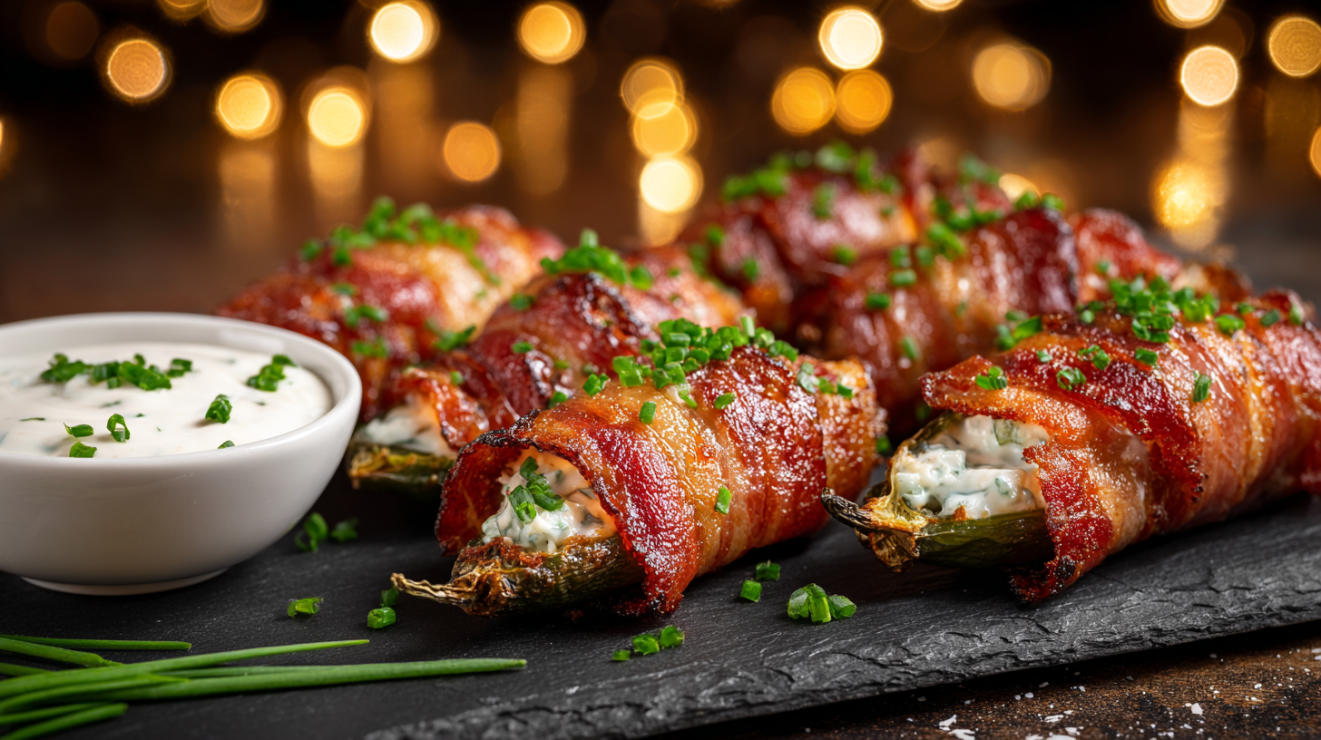
Baked Jalapeño Poppers vs. Deep-Fried Poppers
Texture: Deep-fried poppers (typically breaded) offer a shatteringly crisp exterior that baked versions cannot replicate. However, baked bacon-wrapped poppers provide a different pleasure—the chewy-crisp bacon texture contrasted against the creamy filling. Neither is superior; they serve different purposes.
Flavor profile: Deep-frying adds the characteristic taste of heated oil. Baking allows the bacon’s smoke and salt to dominate, with the jalapeño’s grassy heat more present. The three-cheese filling in this baked version develops deeper flavor through the concentrated Maillard reaction on its exposed surfaces.
Structure: Breaded fried poppers contain the filling within a sealed crust. Bacon-wrapped baked poppers leave filling partially exposed, allowing surface browning that creates caramelized cheese edges—something fried versions lack.
Timing and complexity: Baked poppers require less active attention—once in the oven, they need only a single rotation. Deep-frying demands constant monitoring of oil temperature, batch management, and immediate service. For entertaining, baked poppers offer significant practical advantages.
Presenting Your Poppers: Pairings and Occasions
These jalapeño poppers shine brightest on a well-composed appetizer spread. The richness of the bacon and cream cheese demands acidic counterpoints—a crisp, lightly dressed green salad with champagne vinaigrette cuts through the fat beautifully. Crudités with a bright, herbaceous ranch dressing echo the cooling dip served alongside while adding textural variety.
For beverage pairings, the heat and richness call for something refreshing with enough body to stand up to the bold flavors. A crisp Mexican lager serves the classic role perfectly, its carbonation cleansing the palate between bites. For wine, look toward a Grüner Veltliner or a dry Riesling—both offer enough acidity to cut the richness while their subtle sweetness tempers the capsaicin heat. For cocktails, a classic margarita provides the ideal balance of citrus acid and tequila backbone.
These poppers adapt gracefully across occasions. For game day gatherings, arrange them on a large platter with multiple dipping sauces—ranch, blue cheese, and a spicy chipotle mayo. For more refined settings, serve three poppers per guest on individual plates, garnished with microgreens and a drizzle of balsamic reduction. The technique translates well to passed appetizers at cocktail parties; their compact size and lack of messiness make them ideal for standing and mingling.
Prep Timeline
Up to 2 days ahead: Prepare the three-cheese filling and store covered in the refrigerator. Bring to room temperature for 30 minutes before using to ensure it spreads easily.
Up to 1 day ahead: Halve and clean the jalapeños, storing them cut-side down on paper towels in a covered container in the refrigerator.
Up to 4 hours ahead: Stuff and wrap the poppers completely. Arrange on the prepared baking rack, cover loosely with plastic wrap, and refrigerate. The chilled filling actually helps the bacon adhere better.
30 minutes before serving: Remove poppers from refrigerator while oven preheats. Cold poppers going into a hot oven require an additional 3-5 minutes of baking time.
Immediately before serving: Garnish with fresh chives, arrange dipping sauces, and transfer to serving platter. Poppers are best served within 20 minutes of leaving the oven.
Five Ways to Customize Your Poppers
Southwestern Chipotle: Replace the smoked paprika with 1 tablespoon minced chipotle peppers in adobo sauce folded into the filling. The smoky, earthy heat layers beautifully with the jalapeño’s brighter spice. Add a teaspoon of the adobo sauce for deeper complexity. This version pairs exceptionally well with a cilantro-lime crema for dipping.
Italian-Inspired: Substitute Italian sausage for the bacon—remove the casing and flatten a thin layer around each stuffed pepper. Replace the cheddar with shredded mozzarella and add 2 tablespoons of sun-dried tomatoes (finely minced) to the filling. Garnish with fresh basil chiffonade.
Breakfast Style: Add 2 tablespoons of cooked, crumbled breakfast sausage directly into the cheese filling. Serve these alongside scrambled eggs and fresh fruit for an unexpected brunch centerpiece. The preparation principles align with those in How to Cook Ground Meat Properly.
Buffalo Chicken: Mix 1/2 cup finely shredded rotisserie chicken and 2 tablespoons of Frank’s RedHot into the cream cheese base. Omit the cheddar and substitute crumbled blue cheese. Wrap with bacon as usual. Serve with celery sticks and additional blue cheese dressing.
Vegetarian Mushroom: Skip the bacon entirely. Add 1/2 cup finely diced sautéed cremini mushrooms to the filling along with 1/4 cup grated Parmesan. Brush the exteriors with olive oil before baking. The mushroom’s umami compensates for the missing bacon richness.
Keeping the Crisp: Storage and Reheating Guide
Store leftover poppers in a single layer in an airtight container, separating layers with parchment paper if stacking becomes necessary. They keep well for up to 4 days in the refrigerator, though the bacon texture softens over time. I’ve found that storing them uncovered for the first hour of refrigeration allows excess moisture to escape, preserving crispness better than immediate covering.
For reheating, the oven produces far superior results to the microwave. Arrange cold poppers on a wire rack set over a baking sheet and bake at 375°F for 8-12 minutes until heated through and the bacon re-crisps. The microwave, while faster, renders the bacon chewy and can cause the filling to separate. If the microwave is your only option, wrap each popper in a paper towel and heat in 15-second bursts.
These poppers freeze remarkably well, making them ideal for meal prep or entertaining. Freeze unwrapped poppers in a single layer on a baking sheet until solid (about 2 hours), then transfer to freezer bags where they’ll keep for up to 3 months. Bake directly from frozen at 400°F, adding 10-12 minutes to the cooking time. Don’t thaw first—the temperature shock actually helps the bacon crisp better.
Transform Your Leftover Jalapeño Poppers
Leftover jalapeño poppers transform beautifully into a Popper-Loaded Potato. Split a large baked potato, rough-chop 3-4 poppers, and arrange them over the fluffy interior. Add a drizzle of ranch dressing and a scattering of sliced scallions. The potato’s starchiness absorbs the rich cheese filling while the bacon provides textural contrast.
For a quick Popper Quesadilla, dice leftover poppers and distribute them between two flour tortillas with additional shredded cheese. Cook in a dry skillet until golden and crisp on both sides. The jalapeño poppers provide all the necessary filling; simply serve with salsa and sour cream.
Perhaps my favorite transformation: Jalapeño Popper Mac and Cheese. Prepare your favorite mac and cheese recipe, then fold in roughly chopped leftover poppers just before serving. The bacon and jalapeño distribute throughout, elevating familiar comfort food into something memorable.
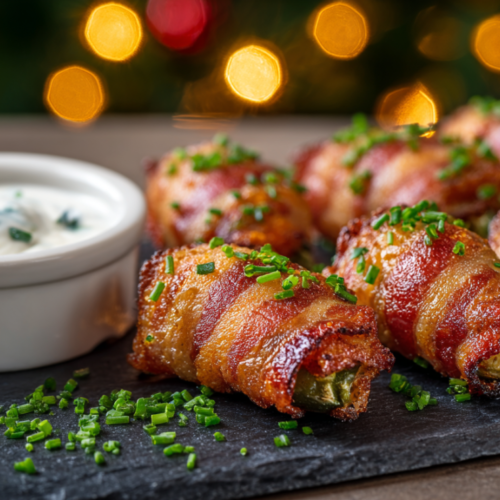
Jalapeño Poppers (Bacon-Wrapped and Baked)
Equipment
Ingredients
For the Peppers
- 12 large jalapeño peppers approximately 3 inches long
- 12 slices thin-cut bacon not thick-cut
For the Three-Cheese Filling
- 8 oz cream cheese full-fat, softened to room temperature
- 1 cup sharp cheddar cheese freshly shredded
- 2 tbsp sour cream full-fat
- 1/4 tsp garlic powder
- 1/4 tsp onion powder
- 1/4 tsp smoked paprika
- 1/8 tsp cayenne pepper optional, for extra heat
- 1/4 tsp fine sea salt
- 1/8 tsp freshly ground black pepper
For Serving
- 1/2 cup ranch dressing or blue cheese dressing
- 2 tbsp fresh chives finely minced, for garnish
Instructions
Prepare the Peppers
- Preheat oven to 400°F (200°C). Line a rimmed baking sheet with aluminum foil and place a wire cooling rack on top. Lightly coat the rack with cooking spray.
- Wearing disposable gloves, slice each jalapeño in half lengthwise. Using a small spoon, carefully scrape out the seeds and white membranes. For milder poppers, remove all membrane; for more heat, leave thin strips intact.
- Rinse the pepper halves under cold water and pat completely dry with paper towels. Moisture is the enemy of crispy bacon, so ensure no water remains in the cavities.
Make the Three-Cheese Filling
- In a medium bowl, combine the softened cream cheese, shredded cheddar, and sour cream. Mix with a rubber spatula until completely smooth and homogeneous—no streaks of white should remain.
- Add the garlic powder, onion powder, smoked paprika, cayenne (if using), salt, and black pepper. Fold until evenly distributed throughout the filling.
Stuff and Wrap
- Fill each jalapeño half generously with the cheese mixture, mounding it slightly above the rim. Use approximately 1 tablespoon of filling per half. For cleaner results, transfer filling to a piping bag or zip-top bag with the corner snipped.
- Wrap each stuffed jalapeño half with one slice of bacon, starting at the stem end and spiraling toward the tip. Ensure the bacon overlaps slightly to prevent gaps. Place seam-side down on the prepared rack.
Bake and Finish
- Bake for 20-25 minutes, rotating the pan halfway through, until the bacon is deeply golden and crispy. The internal temperature of the filling should reach 165°F (74°C).
- For extra-crispy bacon, switch the oven to broil for the final 2-3 minutes, watching carefully to prevent burning. The bacon should be uniformly browned with no raw spots.
- Allow poppers to rest on the rack for 3-5 minutes before serving. The filling will be molten hot immediately out of the oven. Garnish with fresh chives and serve with ranch or blue cheese dressing.
Notes
Nutrition
Your Jalapeño Popper Questions Answered
Why is my filling grainy instead of smooth?
Grainy filling almost always results from cold cream cheese or overmixing. The cream cheese must reach true room temperature (68-70°F) before combining with other ingredients—this takes 90 minutes minimum. If you overmix after adding the cheddar, the fats can begin to separate. Mix just until homogeneous, then stop.
Can I make jalapeño poppers ahead of time?
Absolutely—in fact, the chilled filling helps the bacon adhere better. Assemble completely, arrange on the prepared rack, cover loosely, and refrigerate for up to 24 hours. Add 3-5 minutes to baking time when cooking from cold.
How do I make jalapeño poppers less spicy?
The heat resides primarily in the white membrane and seeds. For mild poppers, remove every trace of both—use a small spoon to scrape the interior completely clean, then rinse under cold water. Alternatively, substitute Anaheim peppers, which deliver the same grassy flavor with significantly less capsaicin.
What if I don’t have a wire rack?
In a pinch, create a makeshift rack by crumpling aluminum foil into ridges and placing poppers on top. This isn't ideal—the bacon won't crisp as evenly—but it does allow some fat drainage. Turn the poppers halfway through baking to promote more even browning. A better investment: wire racks cost under $15 and improve roasting outcomes for countless recipes.
Are jalapeño poppers freezer-friendly?
Yes, they freeze exceptionally well. Freeze assembled but unbaked poppers in a single layer until solid, then transfer to freezer bags for up to 3 months. Bake directly from frozen at 400°F, adding 10-12 minutes to the cooking time. Previously baked poppers can also be frozen, though the bacon texture suffers more upon reheating.
Why did my bacon not crisp properly?
Three common causes: thick-cut bacon, wet pepper interiors, or baking directly on the pan. Thin-cut bacon is essential—it renders and crisps in the same timeframe the peppers need. Moisture inside the peppers creates steam that prevents crisping. And without a wire rack, the bacon's underside sits in pooled fat rather than crisping.
Related Techniques
From Cooking Fundamentals: Roasting Vegetables and Proteins in the Oven, How Heat Transforms Food, Understanding Cooking Times and Temperatures, Seasoning Basics: Salt, Pepper, and Building Flavor, How to Cook Ground Meat Properly
From Gourmet Cooking: Emulsion Sauces: Hot and Cold Methods, Searing for Maillard Reaction, Balancing Five Tastes: Salt, Sweet, Sour, Bitter, Umami
Your Path to Perfect Poppers Starts Now
The difference between forgettable and exceptional jalapeño poppers comes down to technique: room-temperature cream cheese that integrates smoothly, thin-cut bacon that crisps in harmony with the peppers, and the elevation that allows proper air circulation. These aren’t complicated refinements—they’re the details that separate adequate from remarkable.
Trust the process outlined here. Your filling will emerge silky rather than grainy. Your bacon will achieve that ideal balance of crispy and chewy. Your guests will reach for seconds before finishing their first. These bacon-wrapped jalapeño poppers have earned their place at countless gatherings in my kitchen, and I believe they’ll do the same in yours. I genuinely look forward to hearing how they turn out at your next celebration.