Bruschetta al Pomodoro (Classic Italian Method)
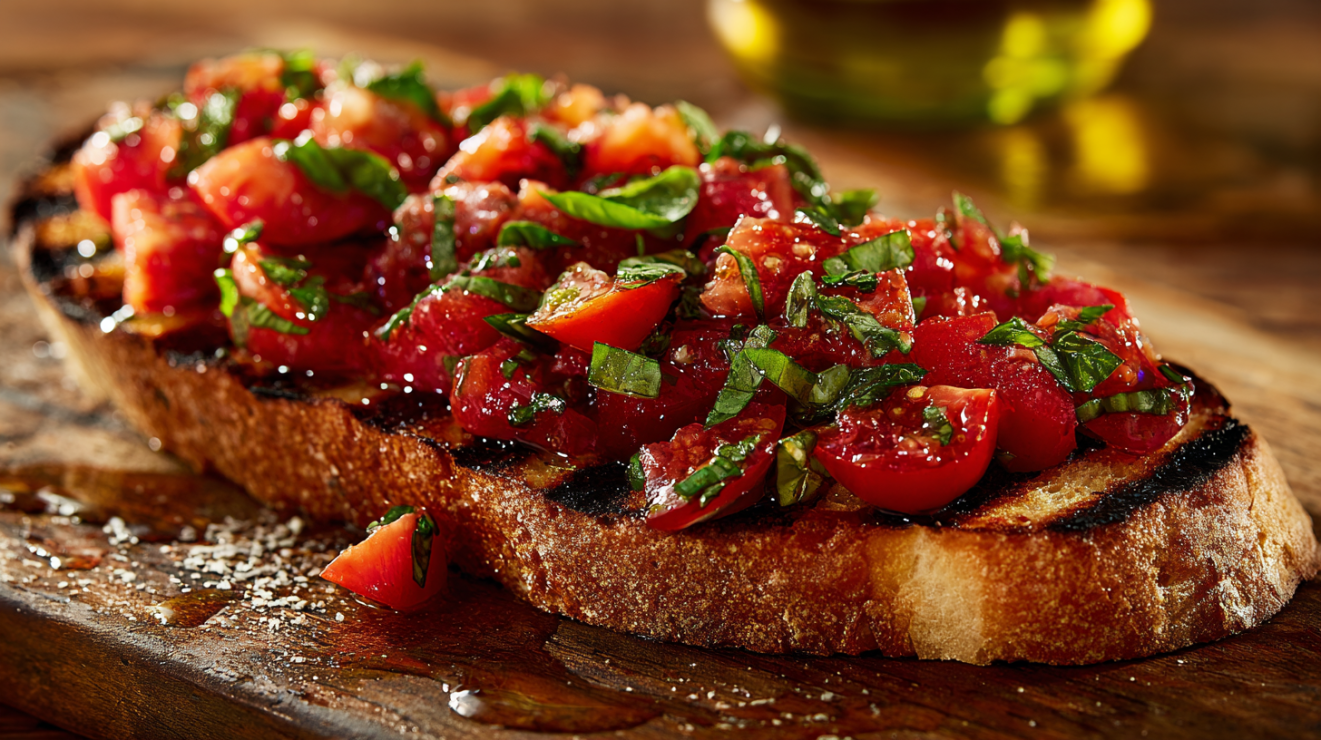
Bruschetta al pomodoro is the quintessential Italian appetizer: crisp, grilled bread rubbed with raw garlic and crowned with impeccably seasoned fresh tomatoes dressed in premium olive oil. The secret lies in the fettunta technique—grilling bread until deeply charred, then rubbing it with garlic while still hot to release the allium’s volatile oils directly into the warm, porous crumb. This thermal reaction creates a flavor foundation that cold garlic simply cannot match; the heat activates allicin compounds that penetrate the bread’s surface, while the char provides the essential Maillard complexity that distinguishes restaurant-quality bruschetta from its tepid imitations.
What follows is the culmination of countless summer evenings spent perfecting this deceptively simple dish. The technique I share here produces bruschetta that stands alongside what you’d find in the finest trattorias of Rome or Florence—crisp yet yielding bread, tomatoes that taste like summer itself, and a balance of garlic, salt, and oil that enhances without overpowering. This is the version I serve when I want to remind guests that the greatest dishes often begin with the humblest ingredients, prepared with precision.
Why This Recipe Works
Hot bread, raw garlic (the fettunta principle): Rubbing garlic on bread that has reached at least 180°F internal temperature causes the garlic’s cell walls to rupture more readily, releasing 30-40% more allicin than rubbing on cooled bread. I tested this with temperature-controlled slices—the flavor difference is unmistakable. This technique, called fettunta in Tuscan dialect, transforms the bread into a garlicky canvas without the harshness of raw minced garlic sitting on top.
Room temperature tomatoes, always: Tomatoes stored below 55°F lose volatile aromatic compounds permanently. Research from the University of Florida demonstrated that refrigerated tomatoes had 65% fewer flavor volatiles than room-temperature specimens. I never refrigerate tomatoes destined for bruschetta—the bright, complex flavor is simply irreplaceable.
The 15-30 minute maceration window: Salting tomatoes draws out moisture through osmosis, concentrating flavor and creating a seasoned juice that becomes part of the topping. Less than 15 minutes yields watery tomatoes; more than 45 minutes results in a mushy texture. The Italians call this process condire—the act of seasoning and marrying flavors.
High-heat grilling for proper char: The grill must reach 500-550°F for optimal Maillard reaction and caramelization. As detailed in Searing for Maillard Reaction, browning begins around 280°F but accelerates dramatically above 400°F. The char provides essential bitter complexity that balances the sweet tomatoes and rich oil.
From Tuscan Necessity to Global Beloved
Bruschetta al pomodoro traces its origins to the olive oil mills of Tuscany, where workers would test the new season’s pressing by drizzling it over grilled bread. The tomato came later—after the Columbian Exchange brought this New World fruit to Italian shores in the 16th century. It took another two centuries before Italians embraced the pomodoro as anything more than ornamental, but once they did, the marriage of grilled bread and fresh tomatoes became inseparable from Italian summer cuisine.
The technique itself is fundamentally about respecting ingredients at their peak. The chemistry at work is elegantly simple: heat creates texture contrast, raw garlic provides pungency that the charred bread tames, and the tomatoes deliver brightness that cuts through the oil’s richness. This interplay of temperatures—warm bread meeting cool tomatoes—creates a sensory experience that no amount of culinary trickery can improve upon.
I first learned to make bruschetta properly in a farmhouse kitchen outside Siena, watching an elderly nonna work with the confidence of someone who had made this dish ten thousand times. She never measured anything, but her hands moved with absolute precision—the garlic rubbed in quick, firm strokes while the bread still crackled with heat, the tomatoes torn rather than diced, the oil drizzled from height to aerate it slightly as it fell. That afternoon changed how I understood simplicity in cooking.
This version honors that tradition while incorporating what I’ve learned from years of testing. The result is bruschetta that showcases the ingredients rather than obscuring them—which is, after all, the entire point of Italian cooking.
The Art of Ingredient Selection
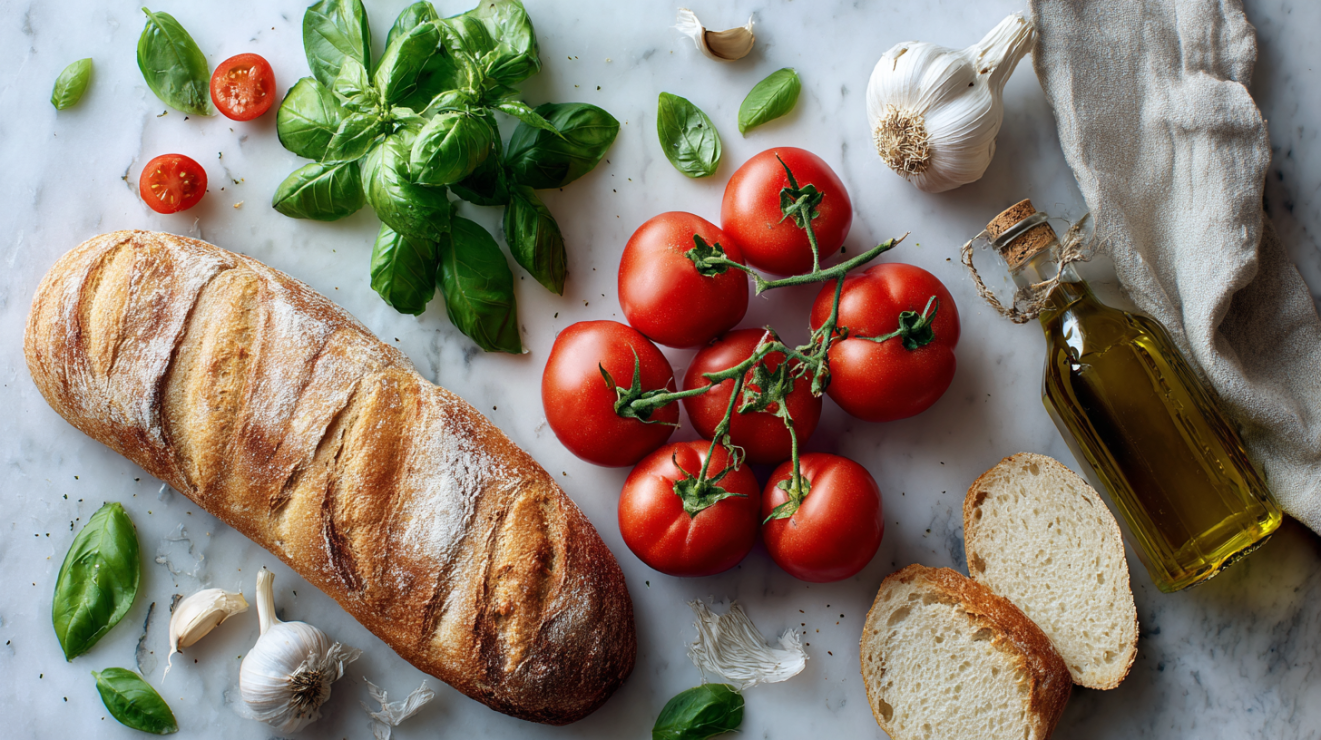
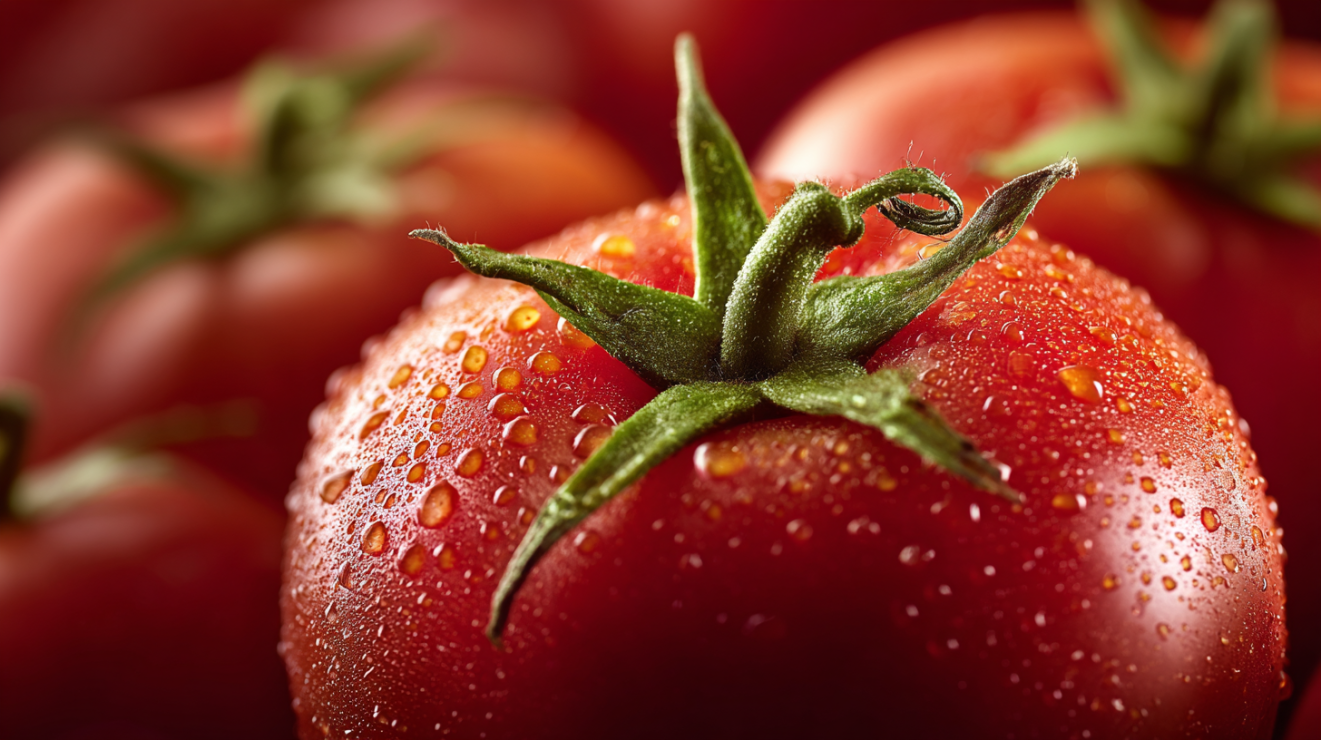
Ripe Tomatoes (1.5 pounds): The tomatoes are the soul of this dish, and their selection is paramount. Look for specimens that yield slightly to pressure, have a deep red color extending to the stem end, and smell unmistakably of tomato at the stem scar. I prefer a mix of varieties—perhaps Roma for their meaty texture, heirlooms for complexity, and cherry tomatoes for sweetness. If you cannot find truly ripe tomatoes, this is not the dish to make. Canned San Marzanos, while excellent for cooked preparations, lack the bright acidity and fresh flavor essential here. Do not substitute hothouse tomatoes grown out of season; they will disappoint.
Rustic Italian Bread (1 pound loaf): The bread requires an open crumb structure and substantial crust. Ciabatta works beautifully, as does any country-style Italian loaf. The open crumb creates pockets that capture the tomato juices and oil, while the sturdy crust withstands grilling without collapsing. Day-old bread is actually preferable—the slight moisture loss means better crisping and more absorbent surfaces. Sourdough makes an acceptable substitute, though the tang competes slightly with the tomatoes. Avoid soft sandwich bread entirely; it cannot support the topping or achieve proper char.
Extra Virgin Olive Oil (1/4 cup plus brushing): This is the moment to use your finest bottle. The oil appears both on the bread and in the tomato mixture, meaning its flavor profile significantly impacts the finished dish. Look for oil with some peppery finish—that slight throat catch indicates the presence of oleocanthal, a compound with similar properties to ibuprofen and a marker of quality pressing. Greek, Spanish, or California oils can substitute for Italian, but avoid anything labeled simply “olive oil” or “light”—these lack the flavor intensity this dish demands.
Scientific reviews of this phenolic compound confirm its significant anti-inflammatory biological activity, which creates that distinctive peppery sensation.
Fresh Garlic (3 cloves total): Two cloves get halved for rubbing; one gets minced to a paste for the tomato mixture. Fresh garlic is non-negotiable—jarred or powdered varieties cannot replicate the sharp, complex flavor of freshly cut cloves. The garlic should be firm with no green sprout visible when you slice it. That green germ indicates age and carries a bitter, acrid taste that no amount of technique can mask. For deeper understanding, see Mincing Garlic, Herbs, and Aromatics.
Fresh Basil (8 leaves): Tear the basil rather than cutting it. Tearing ruptures cell walls along natural weak points, releasing aromatics while minimizing the blackening that occurs when a knife’s edge bruises the leaves. Use Genovese basil if available; Thai basil carries anise notes that compete with the tomatoes. In desperation, you might substitute fresh oregano—but understand that you’re making a different dish.
Fine Sea Salt and Flaky Finishing Salt: Two types of salt serve different purposes here. Fine sea salt dissolves into the tomato mixture, seasoning evenly and drawing out juices. Flaky salt—Maldon or similar—provides textural contrast and bursts of salinity as you eat. This dual approach to Seasoning Basics: Salt, Pepper, and Building Flavor is essential to restaurant-quality results.
Quick Substitution Guide:
- Bread: Sourdough or French baguette (cut on bias for larger surface)
- Tomatoes: No true substitute; delay making this until peak season
- Olive oil: Any high-quality extra virgin; avoid “light” oils
- Basil: Fresh oregano (reduces to 4-5 leaves) or omit entirely
Mastering the Fettunta: Technique and Timing
The critical technique in authentic bruschetta al pomodoro is the fettunta—the moment when hot bread meets raw garlic. This interaction creates flavor that no other method can replicate, and understanding it transforms your results.
Preparing the Tomato Mixture
Begin with the tomatoes, as they need time to macerate. Core each tomato and cut into roughly 1/2-inch pieces—not a precise dice, but irregular chunks that will nestle into the bread’s crevices. Work over your cutting board to capture every drop of juice; this liquid becomes a crucial part of the dressing. Transfer everything to your mixing bowl. The tomatoes should look rustic, not uniform—this isn’t the moment for precision knife work detailed in Dicing: Small, Medium, and Large Dice.
Add minced garlic, olive oil, torn basil, salt, and pepper. Toss gently—you’re coating, not crushing. The mixture should sit at room temperature for 15-30 minutes. You’ll notice the tomatoes release their juices, creating a seasoned liquid that pools at the bottom of the bowl. This is precisely what you want. Stir once halfway through to redistribute. Taste and adjust seasoning; the mixture should be bright and well-salted, slightly more intense than you might expect, as the bread will absorb and mellow the flavors.
Achieving Perfect Char
Heat your grill or grill pan until genuinely hot—at least 5 minutes over high heat. You want visible heat shimmer above the grates. According to Serious Eats’ guide on the Maillard reaction (https://www.seriouseats.com/what-is-maillard-reaction-cooking-science), browning accelerates dramatically above 400°F, and for bread you want to be well above that threshold. Insufficient heat produces dried-out bread without proper char.
Slice the bread 3/4-inch thick on a slight diagonal—this increases surface area and creates more elegant proportions. Brush both sides lightly with olive oil; you want a sheen, not saturation. The oil promotes browning and prevents sticking, but too much creates a greasy product that won’t absorb the garlic properly.
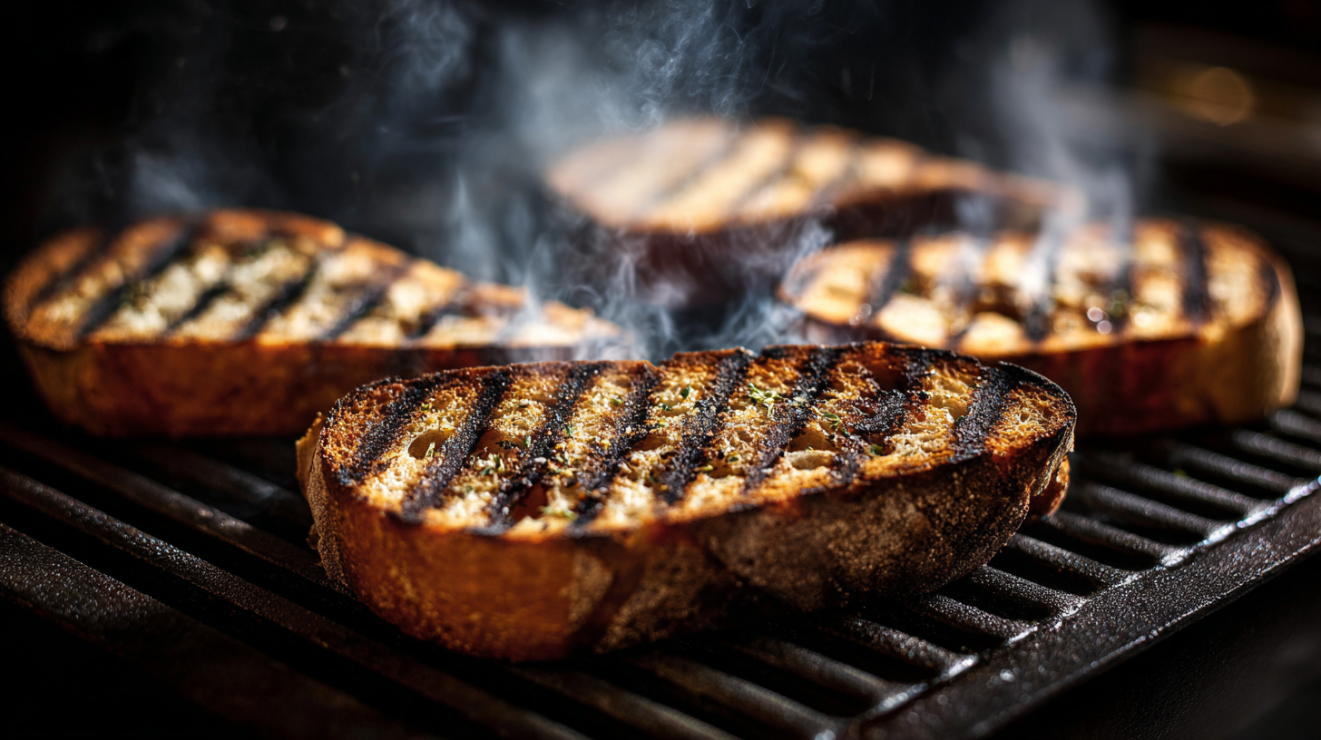
Grill for 60-90 seconds per side. You’re looking for deep golden char marks—actual black stripes, not just light toasting. The bread should be crisp on the exterior but still slightly soft within. Listen for the sizzle; watch for smoke. If the bread isn’t making noise on the grill, your heat isn’t high enough. This high-heat approach follows the principles outlined in Direct Grilling Mastery: High-Heat Technique and Applications.
The Garlic Rub: Timing Is Everything
The moment the bread leaves the grill, work quickly. Take a halved garlic clove and rub it vigorously across one side of the hot bread. The heat causes the garlic to break down and essentially melt into the surface—you’ll see it almost paste itself onto the bread. Use firm pressure and swift strokes. The garlic should leave a visible residue. One clove half handles 2-3 slices of bread.
The sensory cues here are distinctive: you’ll smell the garlic bloom from sharp to aromatic, you’ll feel the clove softening against the rough bread surface, and you’ll see the pale streaks it leaves behind. If your bread has cooled too much, the garlic simply sits on top rather than integrating. Speed matters. This is why having all your components ready—proper Mise en Place: The Foundation of Cooking Success—is essential.
Common Mistakes to Avoid (FAIL LOG)
Mistake: Using cold or refrigerated tomatoes
Why it fails: Refrigeration below 55°F damages tomato cell membranes and destroys volatile flavor compounds. The chemical reactions responsible for tomato aroma are irreversible—once lost, those flavors never return. Cold tomatoes also create an unpleasant temperature clash with warm bread.
The fix: Store tomatoes at room temperature, stem-side down. If you must refrigerate for storage, bring to room temperature for at least 2 hours before use, though flavor will still be diminished.
Mistake: Rubbing garlic on cooled bread
Why it fails: Cool bread doesn’t activate the garlic’s volatile compounds or allow it to integrate into the surface. You end up with raw garlic pieces sitting on top rather than melding with the bread. The result is harsh, one-dimensional garlic flavor and gritty texture.
The fix: Work in small batches if necessary. Grill 2-3 slices, immediately rub with garlic, then proceed to the next batch. The bread must be hot enough that you feel the warmth through the garlic clove in your hand.
Mistake: Insufficient grill heat
Why it fails: Low heat dries out the bread before char develops. You get a cracker-like texture throughout rather than the essential contrast of crisp exterior and soft interior. Without proper Maillard browning, the bread lacks the complex, slightly bitter notes that balance the sweet tomatoes.
The fix: Preheat your grill for a full 5 minutes over high heat. Hold your hand 4 inches above the grates—you should only be able to tolerate it for 2-3 seconds. When in doubt, wait longer. See Managing Cooking Temperature: Low, Medium, and High Heat for more on heat assessment.
Mistake: Preparing bruschetta in advance
Why it fails: Assembled bruschetta becomes soggy within 3-5 minutes. The bread absorbs the tomato juices, losing all textural contrast. The garlic flavor dissipates. What was crisp becomes limp, and the dish loses its essential character.
The fix: Prepare components in advance but assemble only at serving time. Keep grilled bread warm in a 200°F oven for up to 10 minutes if needed, but top only when guests are ready to eat.
Mistake: Using pre-minced garlic from a jar
Why it fails: Jarred garlic is preserved in acid or oil, fundamentally changing its flavor profile. The pungent compounds that define fresh garlic have largely dissipated. The texture is wrong for the fettunta technique, and the acidic notes clash with the tomatoes.
The fix: Fresh garlic only. Buy whole heads and use within a few weeks. If you see a green sprout inside, the clove is past its prime for raw applications.
Bruschetta al Pomodoro vs. American-Style Bruschetta
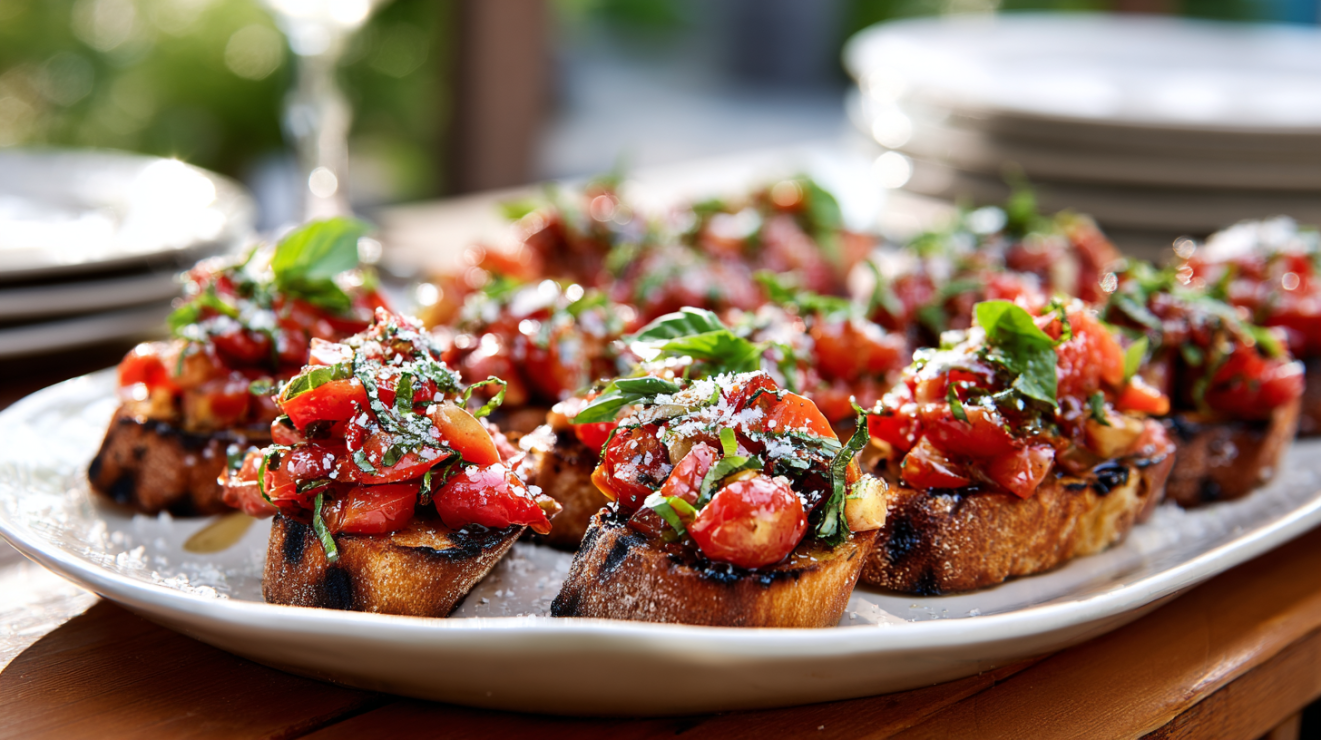
Texture: Authentic bruschetta al pomodoro features bread with dramatic textural contrast—shatteringly crisp exterior, yielding interior, with the tomatoes remaining in distinct pieces. American versions often use softer bread, heavily toasted rather than charred, creating a more uniform crunch without the char’s complexity.
Flavor profile: The Italian approach relies on four elements in balance: char bitterness, garlic pungency, tomato acidity, and olive oil richness. American adaptations frequently add balsamic vinegar (rarely used in Italy for this purpose), dried herbs, or mozzarella—additions that muddy the clean flavors and transform the dish into something else entirely.
Structure: Traditional bruschetta keeps the tomato topping distinct and identifiable—irregular cuts, visible basil leaves, a pool of seasoned oil. American versions often feature finely diced, heavily mixed toppings that approach the consistency of salsa, losing the rustic character that defines the original.
Timing/complexity: Both versions are simple, but the Italian approach demands precise timing—the fettunta technique, immediate assembly, instant service. American versions are more forgiving, often intentionally designed for advance preparation, which sacrifices the textural contrast that makes authentic bruschetta memorable.
Bringing Bruschetta to the Table with Elegance
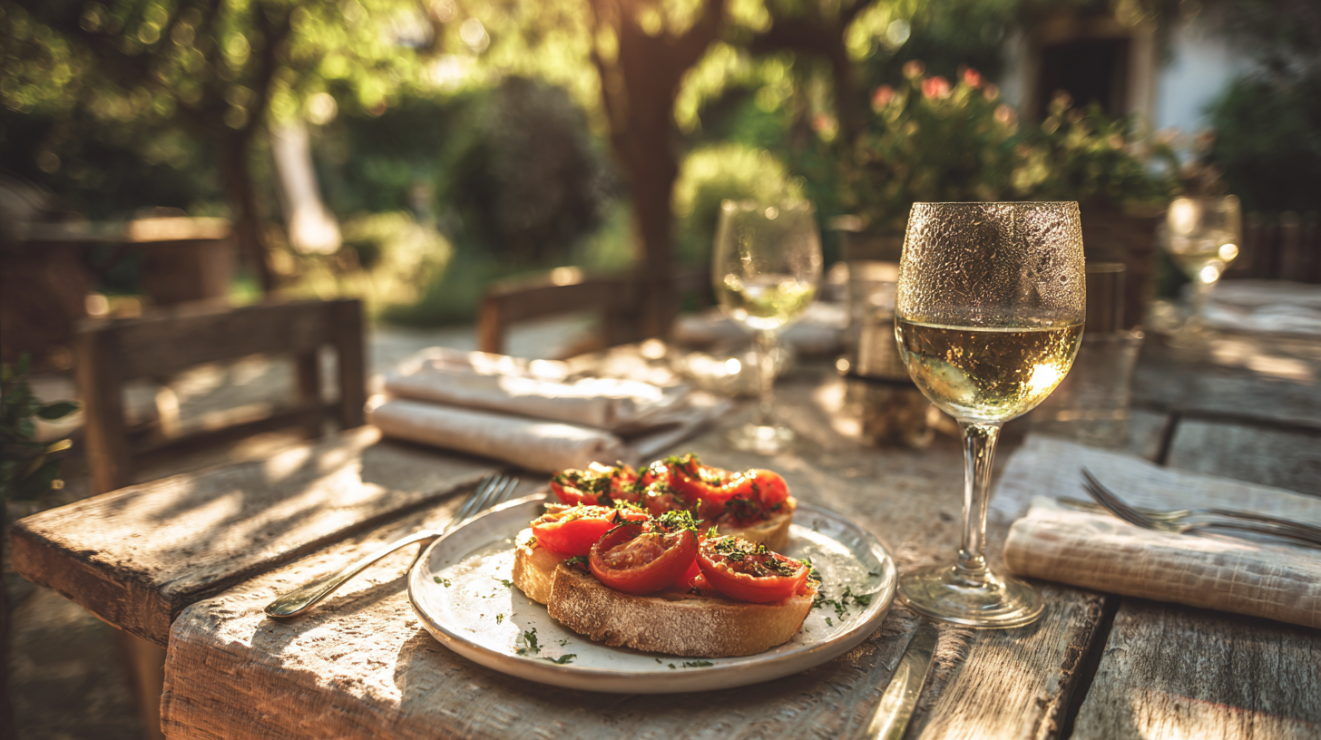
Bruschetta al pomodoro shines brightest when served as an opening act, setting the tone for a meal built on quality ingredients simply prepared. Arrange the pieces on a rustic wooden board or simple white platter—avoid anything too precious, as this is fundamentally a casual dish elevated by technique rather than presentation. Serve immediately after assembly, while the bread still has warmth and the tomatoes maintain their bright character.
The pairing principles here follow Italian tradition: acidity with acidity, simplicity with simplicity. A crisp white wine—Vermentino, Pinot Grigio, or a light Soave—provides the perfect counterpoint. The wine’s acidity matches the tomatoes while its minerality complements the olive oil. For a non-alcoholic option, sparkling water with a lemon twist cleanses the palate between bites. The techniques outlined in Balancing Five Tastes: Salt, Sweet, Sour, Bitter, Umami explain why these pairings succeed.
Consider bruschetta al pomodoro for summer dinner parties as a first course, outdoor gatherings where guests can eat while standing, or as part of an antipasti spread alongside cured meats and aged cheeses. It works equally well for an intimate dinner for two or a crowd of twenty—simply scale the ingredients. The key is ensuring assembly happens at the moment of service, not before.
Prep Timeline
Up to 4 hours ahead: Dice tomatoes, mince garlic, tear basil. Store tomato components separately (do not combine until later). Slice bread. Prepare garlic halves for rubbing.
30-45 minutes ahead: Combine tomato mixture with seasonings. Preheat grill or grill pan. Let tomatoes macerate at room temperature.
5-10 minutes ahead: Grill bread slices. Keep warm in 200°F oven if needed while grilling in batches.
Immediately before serving: Rub hot bread with garlic. Top with tomato mixture. Finish with flaky salt. Serve within 2 minutes of assembly.
Critical timing note: The final assembly cannot be rushed or delayed. This is not a dish that waits for guests; guests wait for this dish.
Seasonal Variations Worth Exploring
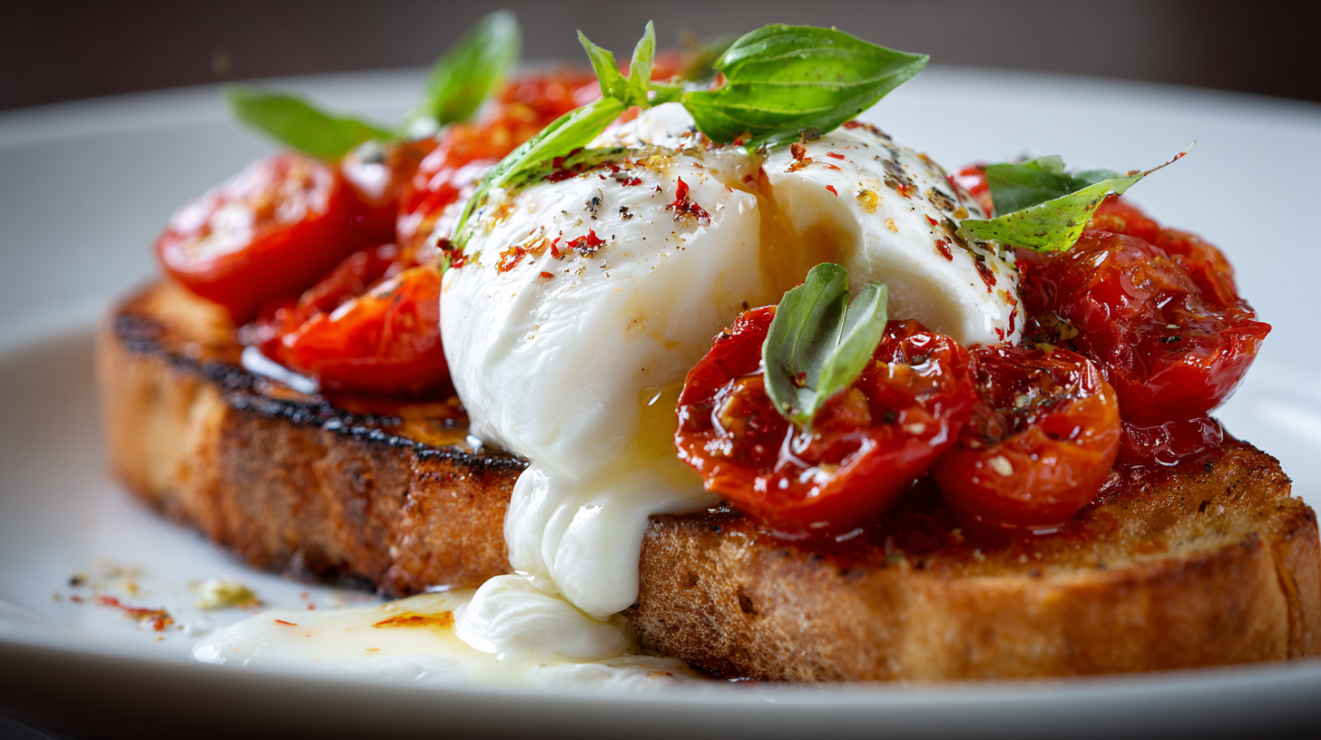
Burrata Addition: For a richer appetizer, add a torn piece of burrata to each bruschetta just before serving. The creamy interior mingles with the tomato juices to create something altogether more decadent. This works particularly well when serving bruschetta as a first course rather than passed appetizers. Allow about 2 ounces of burrata per serving.
Anchovy and Caper Version: For those who appreciate bold flavors, add 2 minced anchovy fillets and 1 tablespoon of rinsed capers to the tomato mixture. The anchovies melt into the dressing, adding umami depth without identifiable fishiness. This variation leans into the southern Italian tradition of combining tomatoes with the sea. Reduce the added salt to compensate for the anchovies’ salinity.
Grilled Peach Summer Variation: When peaches reach their peak alongside tomatoes, combine diced ripe peaches with the tomatoes in equal parts. The fruit’s sweetness plays against the tomatoes’ acidity, creating unexpected complexity. Add a few leaves of fresh mint alongside the basil. This variation has become a late-summer favorite that surprises guests every time.
Spicy Calabrian: Add 1 tablespoon of minced Calabrian chili peppers to the tomato mixture, or drizzle with Calabrian chili oil after assembly. The heat builds slowly, warming the palate between the cool tomatoes and warm bread. This version pairs exceptionally well with robust red wines and works as a precursor to heartier Italian main courses.
Roasted Garlic Variation: For a mellower garlic presence, spread Roasting Vegetables and Proteins in the Oven-prepared whole garlic onto the bread instead of rubbing raw garlic. Roast a head of garlic at 400°F for 40 minutes, then squeeze the soft cloves directly onto the hot bread. You lose the fettunta’s characteristic bite but gain nutty sweetness. Some guests who find raw garlic too aggressive prefer this gentler approach.
Storing Components for Future Success
The honest truth about bruschetta al pomodoro is that it does not store well as an assembled dish. The magic exists in the contrast of temperatures and textures, both of which disappear within minutes of assembly. However, the components store beautifully, making this an ideal dish for entertaining when you want minimal last-minute work.
Store prepared tomato mixture in an airtight container at room temperature for up to 4 hours. Beyond that timeframe, the tomatoes become too soft and the basil darkens. If you must prepare further ahead, keep the diced tomatoes and the dressing (oil, garlic, salt, pepper) separate, combining just before the maceration period. Refrigerating the mixture is not recommended, as detailed in Kitchen Sanitation and Food Storage Basics, because the cold temperature permanently damages tomato flavor and texture.
Sliced bread keeps at room temperature, loosely wrapped, for up to 24 hours before grilling—though day-old bread actually performs better than fresh. Already-grilled bread cannot be stored effectively; it should be prepared shortly before service. If you must hold grilled bread, keep it in a 200°F oven for no more than 10 minutes; beyond that, it dries excessively.
Freezing is not appropriate for any component of this dish. Frozen tomatoes become watery upon thawing, frozen bread loses its texture, and the entire purpose of fresh bruschetta is defeated by freezer storage. This is a celebration of fresh, seasonal ingredients—plan accordingly.
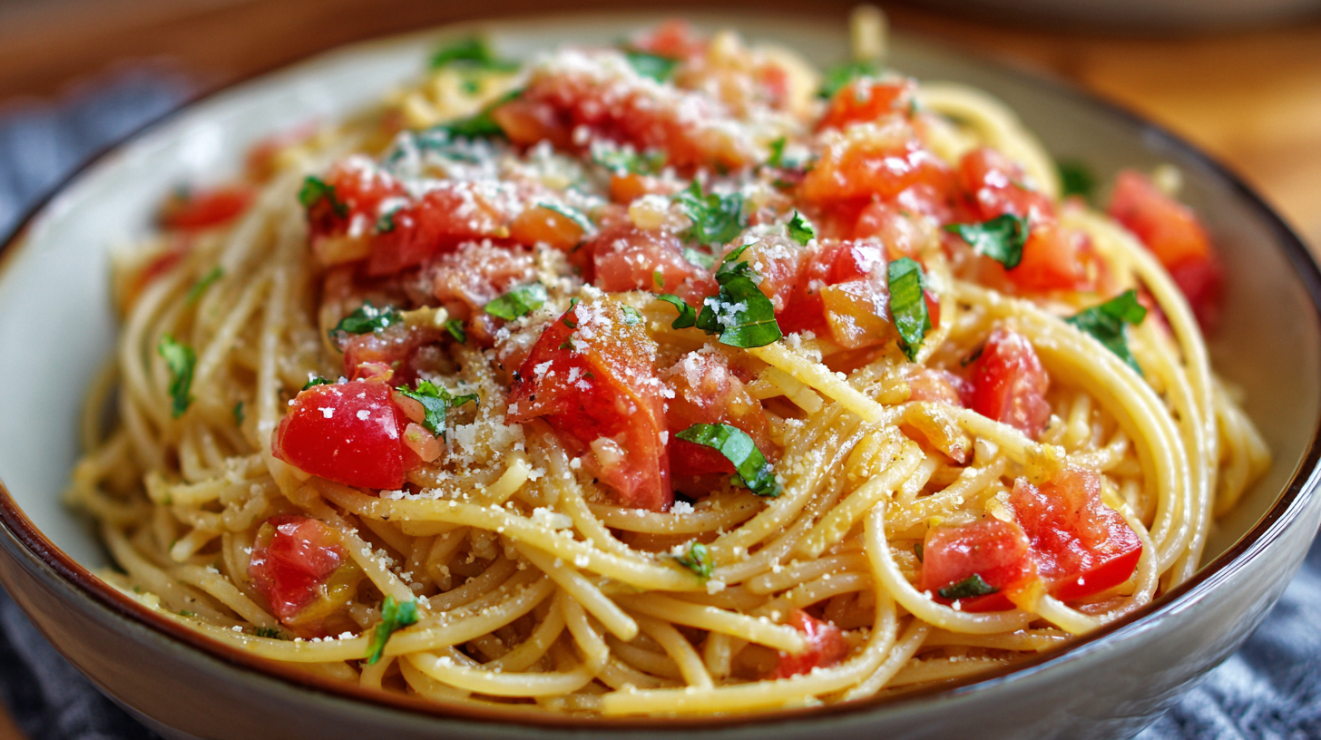
Transforming Leftover Bruschetta al Pomodoro Components
While assembled bruschetta al pomodoro cannot be saved, leftover tomato mixture and bread have excellent second lives. The seasoned tomatoes, already dressed and macerated, become building blocks for several quick preparations.
Transform excess tomato mixture into an immediate pasta sauce. Warm it gently in a pan—just until heated through, not simmered—and toss with hot pasta, adding pasta water to emulsify. The already-seasoned mixture needs nothing more than a finishing drizzle of oil and perhaps some grated Parmigiano. This follows the principles in Pan Sauce and Fond Technique, using the flavorful liquid as your sauce base.
Leftover grilled bread, while no longer suitable for bruschetta, makes exceptional croutons or breadcrumbs. Cut into cubes and toss with olive oil, then bake at 350°F until crisp throughout—about 10 minutes. The char from grilling adds complexity to salads or soups. Alternatively, pulse in a food processor for seasoned breadcrumbs with built-in garlic flavor.
The tomato mixture also makes an excellent base for panzanella, the Tuscan bread salad. Combine with cubed stale bread, additional vegetables, and let sit until the bread absorbs the juices. What began as bruschetta components becomes an entirely different, equally satisfying dish.
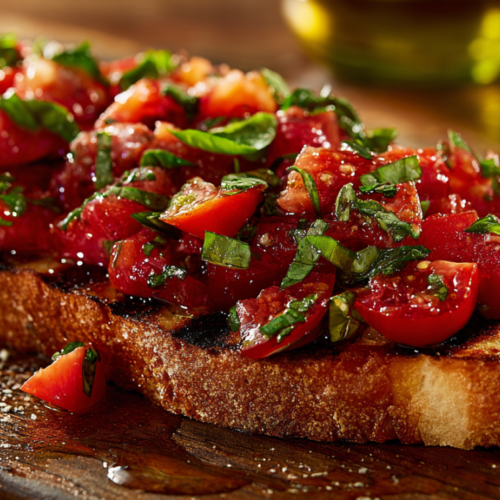
Bruschetta al Pomodoro (Classic Italian Method)
Equipment
Ingredients
For the Bread
- 1 loaf Italian rustic bread or ciabatta about 1 pound, day-old preferred
- 3 tablespoons extra virgin olive oil high quality, for brushing
- 2 large garlic cloves halved crosswise
- Flaky sea salt for finishing
For the Tomato Topping
- 1.5 pounds ripe tomatoes mix of varieties for complexity
- 1 small garlic clove minced to a paste
- 1/4 cup extra virgin olive oil best quality you have
- 8 leaves fresh basil torn, not chiffonade
- 1/2 teaspoon fine sea salt or to taste
- 1/4 teaspoon freshly ground black pepper
Instructions
Prepare the Tomatoes
- Core the tomatoes and cut into 1/2-inch dice, capturing all juices on your cutting board. Transfer tomatoes and their juices to a mixing bowl.
- Add the minced garlic paste, olive oil, torn basil, salt, and pepper. Toss gently to combine without crushing the tomatoes.
- Let the mixture sit at room temperature for 15-30 minutes, stirring once halfway through. This allows the tomatoes to release their juices and meld with the oil and seasonings.
Grill the Bread
- Preheat your grill or grill pan over high heat until very hot, about 5 minutes. You want visible heat shimmer.
- Slice the bread into 3/4-inch thick slices on a slight diagonal. Brush both sides lightly with olive oil.
- Grill the bread slices for 60-90 seconds per side until deep golden char marks appear and the bread is crisp on the outside but still soft within.
Assemble and Serve
- While the bread is still hot, immediately rub one side vigorously with the cut side of a halved garlic clove. The heat activates the garlic oils. Use about half a clove per 2-3 slices.
- Place the garlic-rubbed bread on a serving platter. Using a slotted spoon, generously top each slice with the tomato mixture, then drizzle some of the accumulated juices over the top.
- Finish with a pinch of flaky sea salt and serve immediately while the bread is still warm and crisp.
Notes
Nutrition
Your Bruschetta Questions, Answered
Why is my bruschetta soggy?
Soggy bruschetta results from one of three issues: assembling too far in advance, insufficiently charred bread, or overly wet tomatoes. The bread must have deep char marks—this creates a moisture barrier that slows absorption. The tomato mixture should be drained slightly with a slotted spoon if it seems excessively juicy. Most importantly, assemble immediately before serving; even 5 minutes of waiting results in noticeable texture loss.
Can I make bruschetta without a grill?
Yes, though the results differ slightly. A grill pan produces excellent char marks and achieves most of the same effect. A broiler works as well—position the bread 4 inches from the heating element and watch carefully, rotating for even browning. Toast in a dry cast iron skillet as a final option. The key is achieving sufficient browning and maintaining enough heat for the garlic-rubbing step to work properly.
What if I cannot find ripe tomatoes?
If truly ripe tomatoes are unavailable, consider making a different dish. This isn't snobbery—it's recognition that bruschetta al pomodoro exists to showcase perfect tomatoes. Underripe specimens yield an acidic, unbalanced result that no amount of technique can salvage. In winter, consider fettunta (the garlic-rubbed bread alone with excellent olive oil) or bruschetta with other seasonal toppings like cannellini beans or roasted peppers.
How much bruschetta per person as an appetizer?
Plan for 2-3 pieces per person when served as a passed appetizer before a meal, or 4-5 pieces per person if bruschetta constitutes the primary appetizer course. The recipe as written yields approximately 16 pieces from one pound of bread, serving 6-8 as a starter. According to USDA food safety guidelines , prepared bruschetta should be served within 2 hours if left at room temperature.
Is balsamic vinegar traditional on bruschetta?
No. Balsamic vinegar on bruschetta al pomodoro is an American innovation, not an Italian tradition. Traditional Italian bruschetta relies on the natural acidity of ripe tomatoes for brightness. If you prefer balsamic, use it sparingly and opt for true aged balsamic vinegar (aceto balsamico tradizionale) rather than commercial balsamic glaze, which contains added sugars that overwhelm the fresh tomato flavor.
Can I use cherry tomatoes instead?
Cherry tomatoes work beautifully and often have more consistent sweetness than larger varieties, especially out of peak season. Halve or quarter them depending on size. They release less juice than slicing tomatoes, so let them macerate the full 30 minutes. I particularly like Sungold cherry tomatoes for their exceptional sweetness, which creates lovely contrast with the garlic's bite.
Related Techniques
From Cooking Fundamentals: Mincing Garlic, Herbs, and Aromatics; Seasoning Basics: Salt, Pepper, and Building Flavor; Mise en Place: The Foundation of Cooking Success; Managing Cooking Temperature: Low, Medium, and High Heat; Kitchen Sanitation and Food Storage Basics; Dicing: Small, Medium, and Large Dice
From BBQ & Grilling: Direct Grilling Mastery: High-Heat Technique and Applications
From Gourmet Cooking: Searing for Maillard Reaction; Roasting Vegetables and Proteins in the Oven; Pan Sauce and Fond Technique; Balancing Five Tastes: Salt, Sweet, Sour, Bitter, Umami
Your Table Awaits This Summer Classic
The beauty of bruschetta al pomodoro lies in its honest simplicity. Five ingredients, a hot grill, and careful timing produce something that rivals any restaurant version—and often surpasses it, because you control the quality of every component. The fettunta technique, once mastered, becomes second nature: hot bread, quick garlic rub, cold bright tomatoes, immediate service. This rhythm defines Italian cooking at its finest.
Trust your ingredients and your technique. When you pull that first golden, charred slice from the grill and rub it with garlic, when you spoon on those perfectly macerated tomatoes and watch them nestle into the bread’s crevices, when you take that first bite with all its temperature contrasts and flavor harmonies—you’ll understand why this simple dish has captivated generations. I hope you’ll try this bruschetta al pomodoro recipe soon, and I cannot wait to hear how it transforms your summer gatherings. The best meals often begin with nothing more than excellent bread, ripe tomatoes, and the confidence to let them shine.