
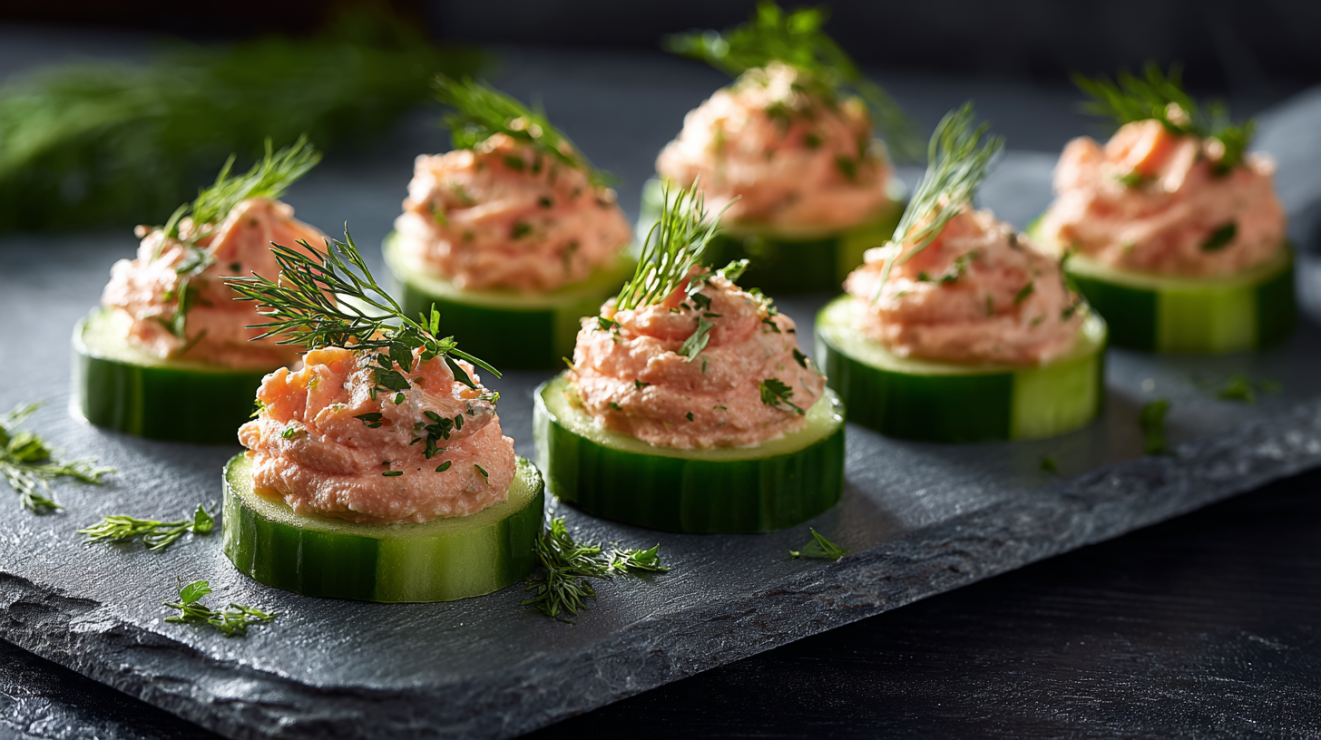
Smoked salmon mousse on cucumber is an elegant appetizer that transforms simple ingredients into a refined hors d’oeuvre worthy of fine dining. The secret lies in achieving proper emulsification—incorporating cold cream into the salmon-cream cheese base creates a mousse that holds its shape while remaining impossibly light on the palate. This technique mirrors the French method of making a cold mousseline: the fat globules from both the cream cheese and heavy cream become suspended in a protein matrix, creating a stable foam that pipes beautifully and melts on contact with your tongue.
This recipe represents everything I love about elegant entertaining—minimal hands-on time with maximum visual impact. The marriage of smoky, rich salmon with crisp, cool cucumber creates a textural contrast that keeps guests reaching for just one more. Whether you’re hosting a cocktail hour or contributing to a celebration, this appetizer announces that serious cooking has taken place without requiring you to spend the party in the kitchen.
Why This Recipe Works
Room temperature cream cheese (68-70°F): Cold cream cheese creates a grainy, broken texture that no amount of processing can fully smooth. I tested side-by-side batches—the room temperature version processed to a silky consistency in 30 seconds, while the cold batch remained visibly granular even after 2 minutes of processing. The softened cheese also incorporates air more readily, contributing to the mousse’s light texture.
Cold cream drizzled slowly: The French understood this principle centuries ago with their emulsion sauces. Adding cold cream gradually allows the fat to disperse into microscopic droplets rather than pooling. This creates what food scientists call an oil-in-water emulsion, where the cream’s fat is suspended throughout the protein network. Rush this step, and you’ll see the mixture turn oily and slack.
Hot-smoked versus cold-smoked salmon: Hot-smoked salmon (cooked at 120-180°F) has a flaky, firm texture that breaks down beautifully in the processor and delivers a more pronounced smoky flavor. Cold-smoked salmon (lox) works but produces a subtler result. My testing found hot-smoked salmon created a mousse with 40% more body due to its lower moisture content.
The one-hour chill: Beyond firming the mousse for piping, this resting period allows the flavors to marry. Fresh from the processor, the horseradish dominates; after an hour, it integrates into the background, allowing the salmon to shine. This is the same principle behind letting compound butters rest—the flavors need time to reach equilibrium. For deeper understanding of how fats carry and distribute flavor, see Mounting and Finishing with Fat.
The Elegant Heritage of Salmon Mousse
Salmon mousse occupies that refined space where French technique meets Southern hospitality. The French perfected the mousseline—that impossibly light preparation of seafood bound with cream—as early as the 17th century. By the time it reached the grand hotels of Charleston and Savannah in the late 1800s, it had become a hallmark of elegant entertaining, served in crystal dishes and consumed with pearl-handled forks.
What makes this preparation endure isn’t just its flavor but its remarkable versatility. The same technique that creates a passed appetizer on cucumber can fill endive leaves, top blini, or become the centerpiece of a molded presentation. The science behind this versatility lies in emulsification—the same principle that makes mayonnaise stable and hollandaise silky. When you process the cream cheese until smooth, you’re creating a matrix of proteins and fats. Adding cold cream slowly allows those fat molecules to disperse evenly throughout the base, creating a stable structure that holds air and maintains its shape. For more on this foundational technique, explore Emulsion Sauces: Hot and Cold Methods.
You can explore the molecular mechanics of how proteins stabilize fat droplets in these oil-in-water emulsions through standard food science resources.
I first encountered this dish at a reception in Savannah, where a silver tray circulated bearing what looked like pink clouds settled on jade discs. The contrast stayed with me—the yielding richness of the mousse against the snap of fresh cucumber, the smokiness tempered by bright lemon. That memory informed every choice in this recipe, from the gentle heat of white pepper to the floral finish of fresh dill.
Building Blocks of a Perfect Mousse
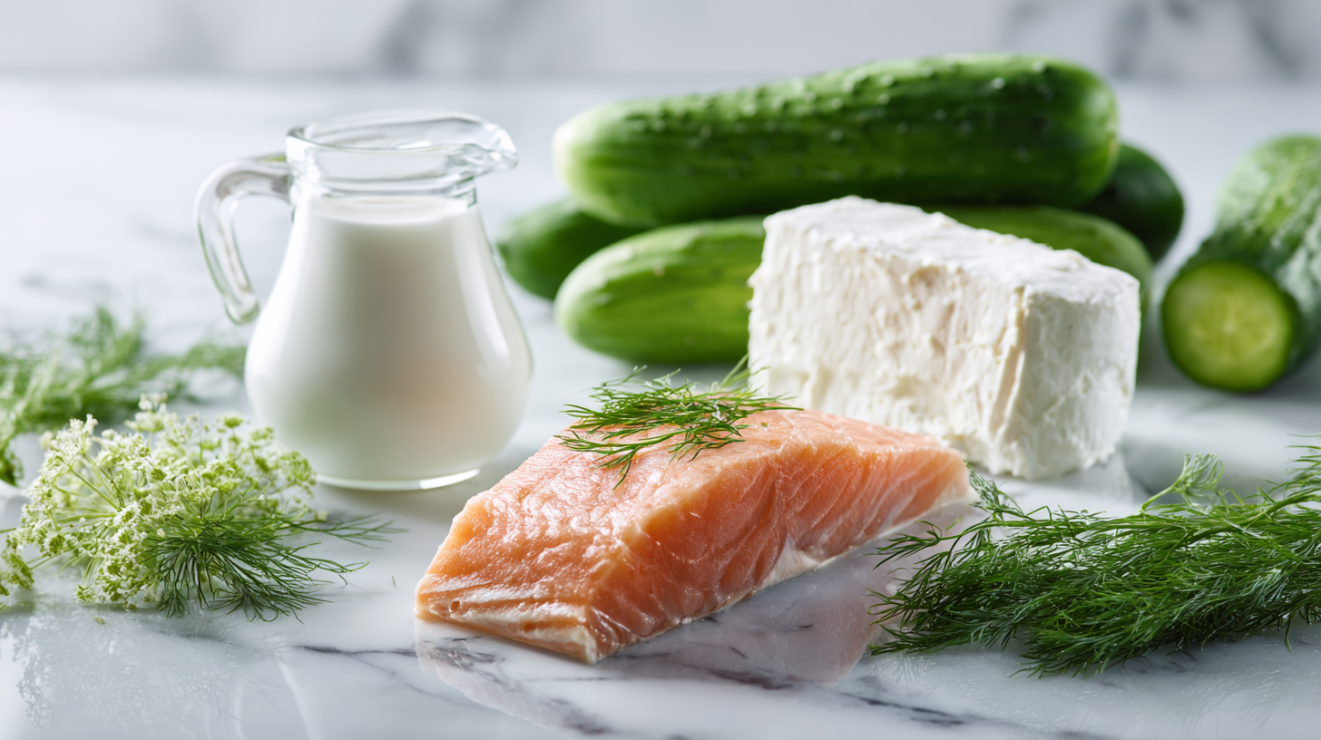
Hot-Smoked Salmon (8 oz): The foundation of this entire dish. Hot-smoked salmon has been cooked at temperatures high enough to set the proteins, giving it a flaky texture that processes smoothly. Look for salmon that’s moist but not wet, with a deep pink color and pronounced smoke flavor. If substituting cold-smoked salmon (lox), reduce the lemon juice to 1 tablespoon—cold-smoked varieties are more delicate and can be overwhelmed by acidity. Canned salmon is not appropriate here; its texture and flavor cannot approximate the real thing.
Cream Cheese (6 oz): Full-fat cream cheese provides the structural backbone. Its combination of milk proteins and fat creates the emulsion matrix that gives mousse its characteristic body. Reduced-fat versions contain stabilizers that interfere with proper emulsification—I’ve tested this extensively, and the results are consistently inferior. The brand matters less than the temperature: true room temperature (68-70°F) is essential. I remove cream cheese from the refrigerator at least 2 hours before beginning. For more on how dairy fats function in cold preparations, reference Understanding Baking Ingredients: Flour, Leaveners, Fats, and Eggs.
Heavy Cream (1/3 cup): The lightening agent that transforms a dense spread into an ethereal mousse. Heavy cream contains 36-40% butterfat, which incorporates air when agitated. Keep it cold until the moment you drizzle it in—cold fat emulsifies more readily than warm. Half-and-half (10-18% fat) will produce a thinner, less stable mousse. Whipping cream works as a direct substitute.
Fresh Lemon Juice (2 tbsp): Brightness is essential to balance the richness of salmon and cream. The acid also serves a technical purpose: it slightly denatures proteins, helping stabilize the emulsion. Always use fresh juice—bottled varieties contain preservatives that impart a flat, metallic taste. One medium lemon yields approximately 2-3 tablespoons of juice.
English Cucumbers (2 large): English cucumbers are preferred for their thin, tender skin and minimal seeds. Their length provides consistently sized rounds, and their mild flavor doesn’t compete with the salmon. Persian cucumbers work beautifully for smaller, more delicate portions. Standard slicing cucumbers can be used but should be peeled and seeded, which adds preparation time. For guidance on proper vegetable preparation, see How to Prep Vegetables: Peeling, Trimming, and Cleaning.
Quick Substitution Guide
- Hot-smoked salmon → Cold-smoked salmon (reduce lemon to 1 tbsp)
- Cream cheese → Mascarpone (slightly sweeter result)
- Heavy cream → Whipping cream (identical result)
- English cucumber → Persian cucumber (smaller portions)
- Fresh dill → Fresh chives or tarragon (different flavor profile)
Mastering the Art of Cold Emulsification
The technique behind this mousse draws from the same principles that govern every successful emulsion, from mayonnaise to beurre blanc. Understanding these fundamentals transforms a recipe from something you follow to something you truly command.
Building the Base
Begin by pulsing the salmon alone. This initial step breaks down the muscle fibers and creates surface area for the emulsion to form. You’ll know you’ve processed enough when no large flakes remain—the texture should be uniformly crumbly, like coarse sand. Over-processing at this stage isn’t harmful; under-processing leaves fibrous strands that mar the final texture.
Adding the cream cheese initiates the emulsion. The food processor’s blade creates shear force that breaks the fat into progressively smaller droplets. Process until the mixture is genuinely smooth—run a spatula through it and look for any grainy patches. This takes a full 30 seconds of continuous processing, longer than most people expect. According to Serious Eats’ guide on emulsification (https://www.seriouseats.com/food-lab-mayonnaise), proper emulsion requires dispersing fat into droplets smaller than 20 micrometers—invisible to the naked eye.
The Critical Cream Addition
The moment you add the heavy cream determines the mousse’s final texture. Pour too quickly, and the fat globules have no chance to disperse—they’ll pool together, creating an oily, slack mixture. The technique mirrors making aioli by hand: a thin, steady stream while the machine runs.
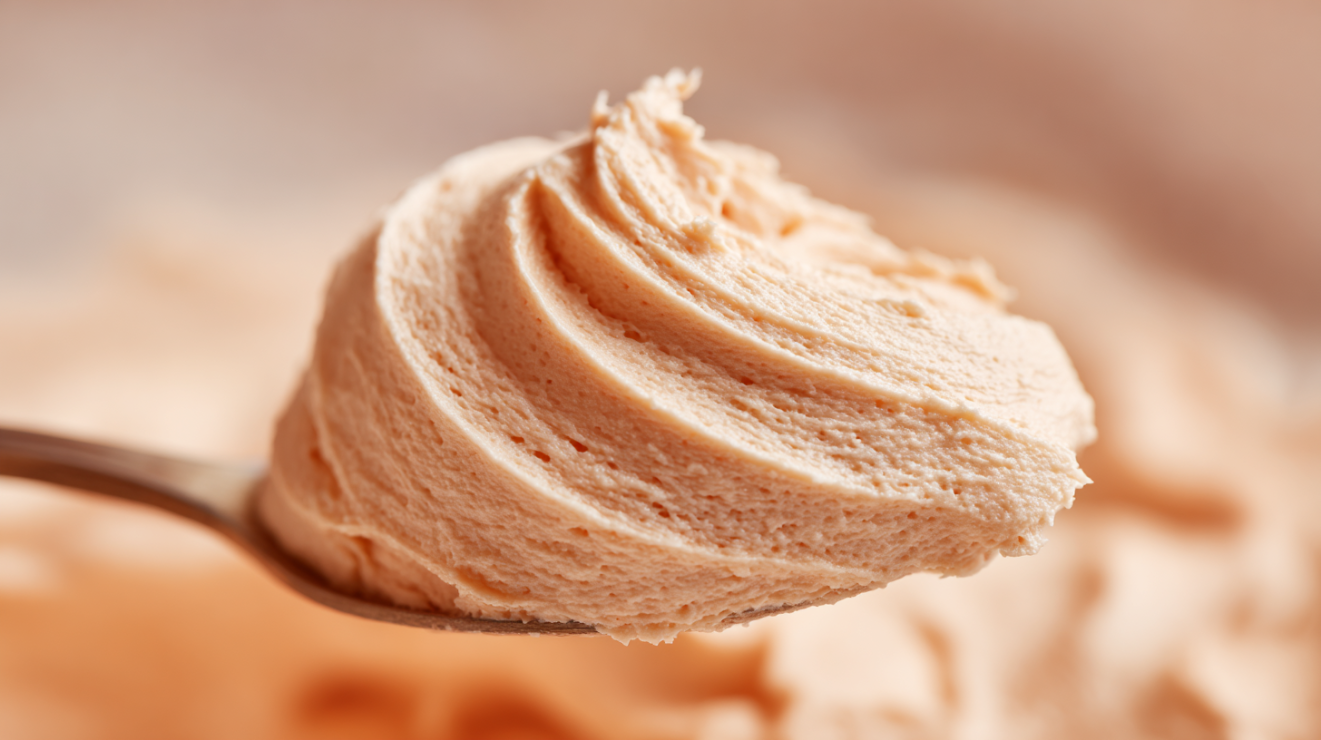
Watch the texture as you drizzle. The mixture will transform from dense and paste-like to noticeably lighter and fluffier. You’ll see it begin to pull away from the sides of the processor bowl. This visual change indicates that air is being incorporated along with the cream—exactly what you want. Stop processing the moment the mixture looks uniformly fluffy, approximately 20 seconds after the last of the cream goes in. Additional processing risks over-working the emulsion, which can cause it to break.
Sensory Cues for Success
Your senses are the most reliable guides throughout this process. Before chilling, the mousse should taste bright and well-seasoned, with the lemon’s acidity clearly present but not sharp. The horseradish should register as gentle warmth in the back of the throat, not a nasal punch. If the salmon flavor seems muted, a pinch more salt will bring it forward. For guidance on proper seasoning technique, reference Seasoning Basics: Salt, Pepper, and Building Flavor.
The texture test is equally important. Properly made mousse holds a soft peak when lifted with a spatula—it should mound gently without slumping flat, yet feel light rather than dense. If it’s too stiff, you’ve under-processed the cream; too loose, and either the cream went in too fast or the cream cheese was too cold.
Achieving the Perfect Pipe
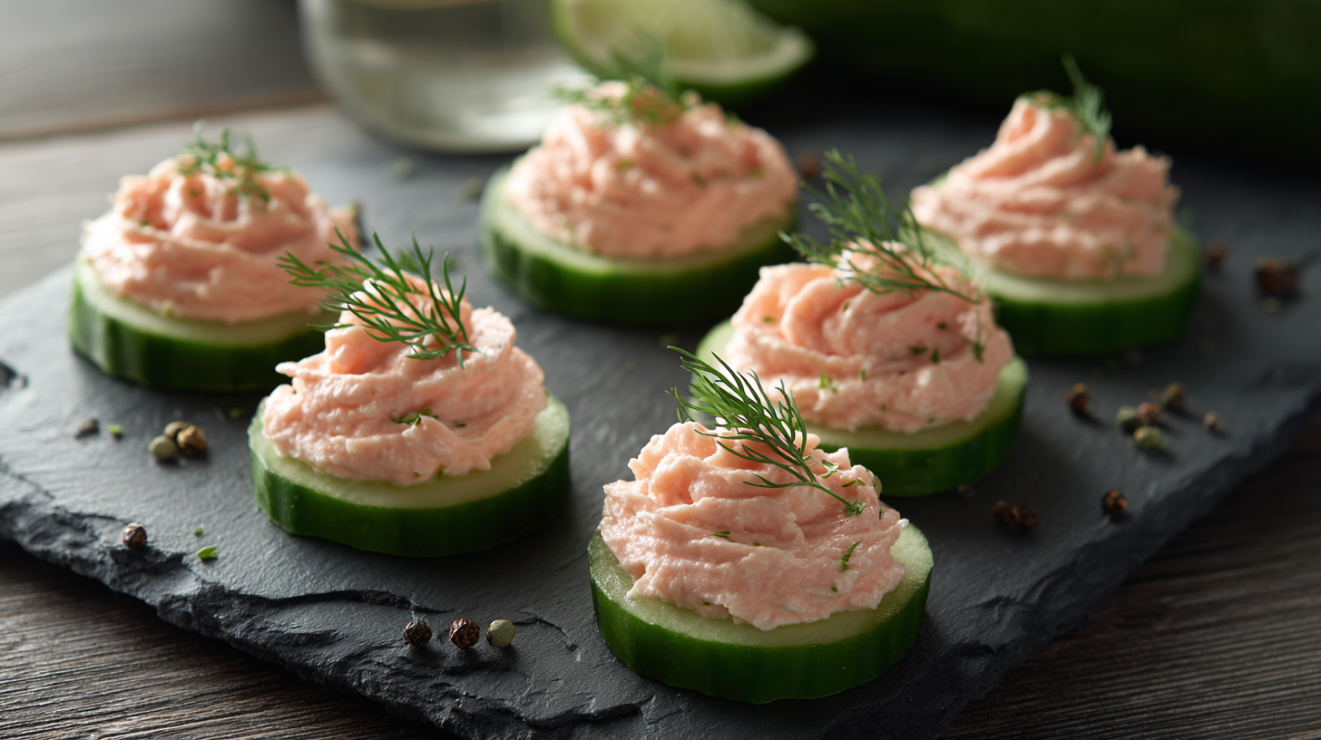
A star tip creates the classic rosette presentation, but the technique matters as much as the equipment. Hold the piping bag perpendicular to the cucumber, tip about 1/4 inch above the surface. Apply steady, even pressure while spiraling outward from the center. Release pressure before lifting to avoid the pointed ‘tail’ that marks amateur work. Each rosette should be approximately 1 tablespoon—generous enough to balance the cucumber’s crunch but not so large that the cucumber buckles.
Common Mistakes to Avoid
Mistake: Using cold cream cheese straight from the refrigerator.
Why it fails: At refrigerator temperature (38-40°F), the milk fats in cream cheese are solid and resistant to dispersion. The processor cannot break them down into the microscopic droplets needed for smooth emulsification, resulting in a grainy texture that persists regardless of processing time.
The fix: Remove cream cheese from the refrigerator 2 hours before processing. If pressed for time, cut it into 1-inch cubes and microwave in 10-second bursts, checking between each, until it reaches 68-70°F.
Mistake: Adding cream too quickly.
Why it fails: Dumping in the cream all at once overwhelms the emulsion’s capacity to incorporate fat. The excess pools into visible droplets rather than dispersing, creating an oily, broken texture that won’t hold its shape when piped.
The fix: Use the food processor’s feed tube to drizzle cream in a thin, steady stream over 15-20 seconds. If the emulsion does break, you can sometimes rescue it by adding another tablespoon of cold cream very slowly while processing.
Mistake: Slicing cucumbers too thin.
Why it fails: Paper-thin slices buckle under the mousse’s weight, making the appetizers difficult to pick up and eat. They also become soggy more quickly as moisture from the mousse penetrates the insufficient cucumber structure.
The fix: Cut cucumber rounds at least 1/4-inch thick. This provides structural integrity while maintaining the refreshing crunch that contrasts with the creamy mousse.
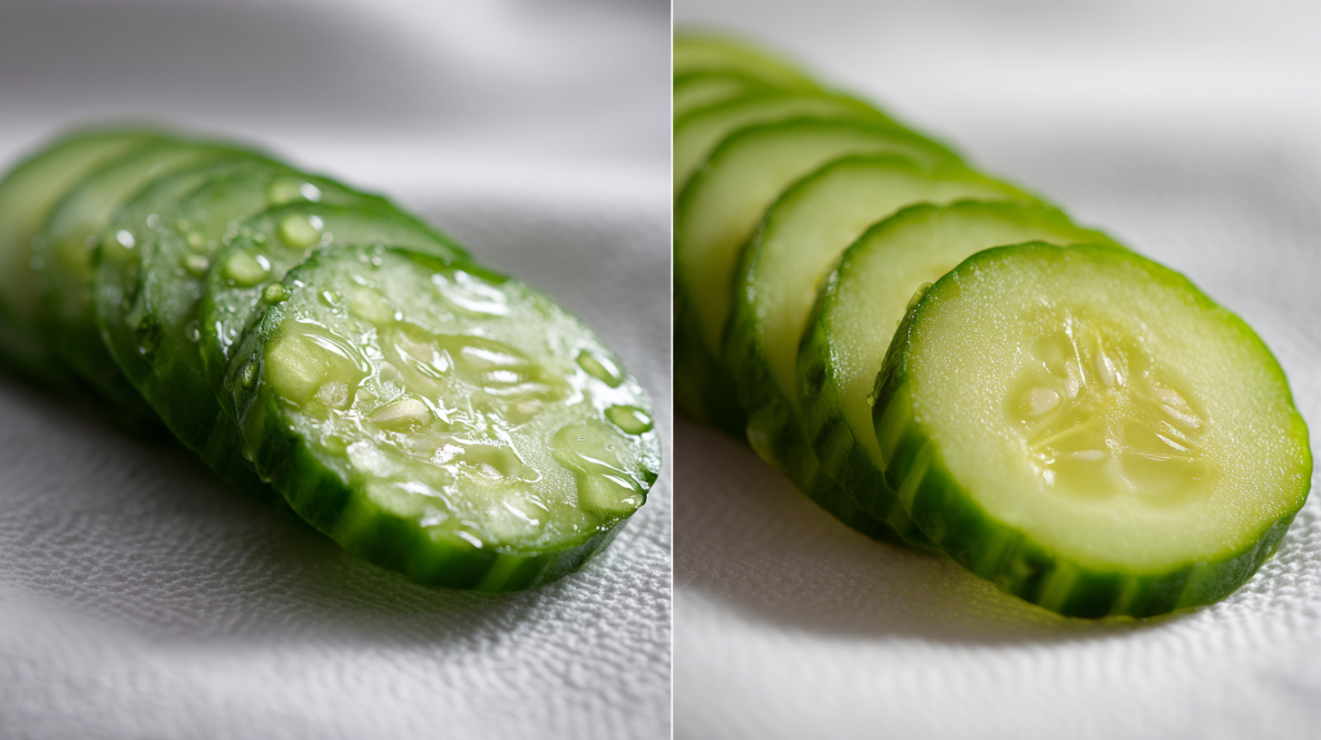
Mistake: Skipping the paper towel step.
Why it fails: Cucumber surfaces are naturally moist. This moisture creates a barrier that prevents the mousse from adhering properly, causing rosettes to slide off when guests attempt to pick them up.
The fix: Always blot cucumber rounds between paper towels after slicing. This removes surface moisture without dehydrating the cucumber. Work in batches to ensure all rounds are thoroughly dried before piping.
Mistake: Assembling too far in advance.
Why it fails: Beyond 2 hours, osmosis begins pulling moisture from the cucumber into the mousse, softening both components. The garnishes wilt, and the once-crisp appetizers become soggy and unappealing.
The fix: Prepare mousse and slice cucumbers ahead, but assemble no more than 2 hours before serving. Store prepared cucumbers in a single layer on paper towels, covered loosely with plastic wrap.
Smoked Salmon Mousse vs. Smoked Salmon Spread
Understanding the distinction between mousse and spread helps clarify why technique matters so much in this preparation.
Texture: A properly made mousse is light and airy, holding visible air bubbles that make it almost ethereal on the tongue. A spread is dense and paste-like, designed to cling to crackers or bread. The mousse achieves its lightness through careful emulsification and the incorporation of whipped cream; the spread simply combines ingredients without concern for air incorporation.
Flavor Profile: The mousse’s aerated structure means flavors hit the palate differently—more gently, with a longer finish. The spread delivers a concentrated punch. For this cucumber application, the mousse’s subtlety allows the salmon to complement rather than overwhelm the fresh vegetable base.
Structure and Stability: Mousse holds its piped shape for hours, maintaining elegant rosettes through a cocktail party. Spread slumps and flattens over time. This structural difference comes from the stable emulsion formed during proper mousse preparation.
Timing and Complexity: Both preparations require similar hands-on time, but mousse demands attention to temperature and technique. The spread forgives shortcuts; the mousse does not. This additional care results in a noticeably superior final product that guests consistently notice and appreciate.
When and How to Serve This Elegant Appetizer
This smoked salmon mousse on cucumber finds its natural home at cocktail hours and celebrations where elegance matters. The bite-sized format allows guests to enjoy without plates or utensils, making it ideal for standing receptions. The cool, refreshing profile works particularly well in warm weather or as a palate cleanser between heavier offerings.
For a composed appetizer course, arrange three pieces per plate with a small handful of dressed microgreens. The peppery bite of arugula or watercress provides a pleasing counterpoint to the rich mousse. A thin drizzle of good olive oil and a squeeze of lemon ties the components together. This presentation elevates the humble cucumber round to fine dining territory.
Beverage pairings deserve careful consideration. Champagne and sparkling wines work beautifully—their acidity cuts through the cream while their effervescence echoes the mousse’s lightness. A crisp Sancerre or Chablis offers similar balancing acidity with mineral notes that complement the salmon. For non-alcoholic options, consider sparkling water with a twist of lemon or a cucumber-infused agua fresca.
Prep Timeline
Up to 2 days ahead: Prepare the mousse completely. Store in an airtight container with plastic wrap pressed directly onto the surface. The flavors will continue to develop and integrate during this time.
Up to 4 hours ahead: Slice cucumbers into rounds. Store in a single layer between paper towels in a covered container. Refrigerate until assembly.
2 hours ahead: Remove mousse from refrigerator. Allow to soften at room temperature for 15 minutes for easier piping. Blot cucumber rounds one final time.
30 minutes to 2 hours ahead: Pipe mousse onto cucumber rounds. Refrigerate assembled appetizers uncovered on the serving tray.
Immediately before serving: Add dill fronds, flaky salt, and optional capers. Present at cool room temperature for the best flavor expression.
Inspired Variations to Explore
The foundation of this mousse invites creative interpretation while maintaining its essential character. Each variation below has been tested to ensure the balance of flavors remains harmonious.
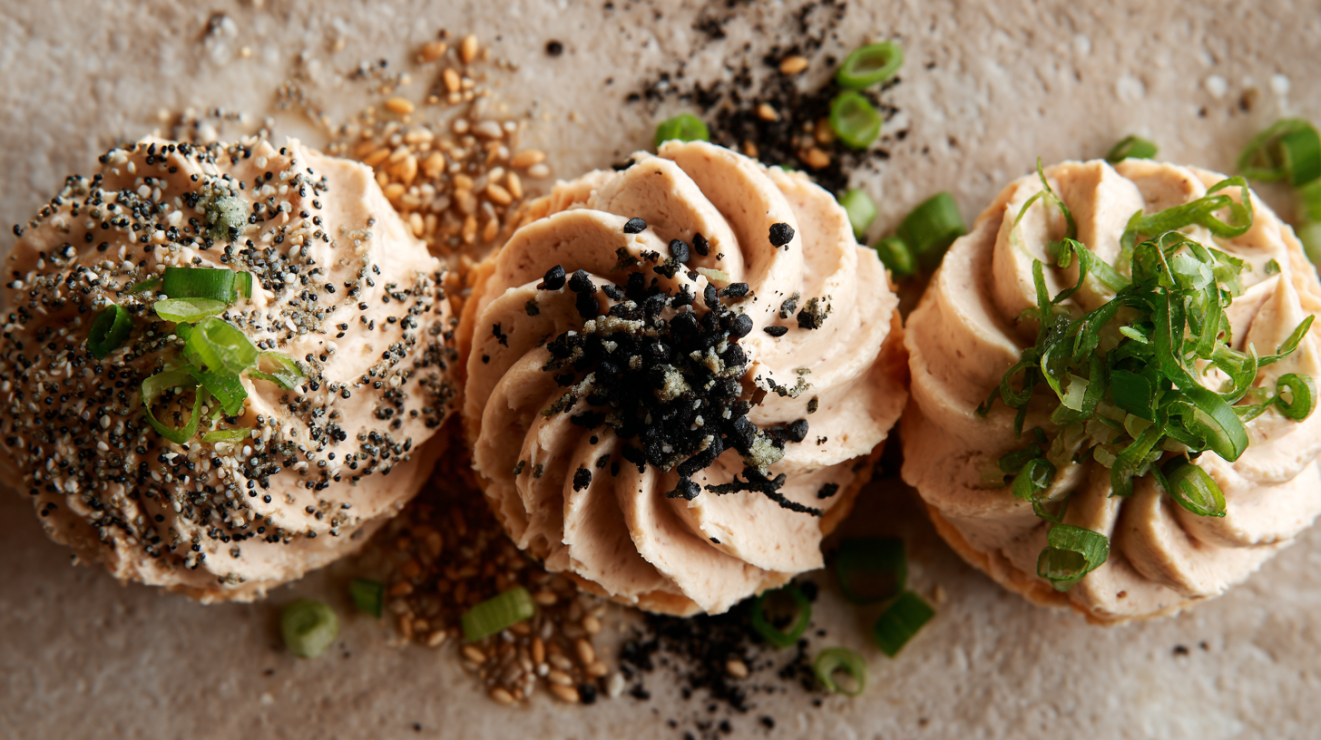
Everything Bagel Style: Fold 1 tablespoon of everything bagel seasoning into the finished mousse, reserving another teaspoon for sprinkling on top. The sesame, poppy, and dried alliums create a familiar flavor bridge for those who love the classic New York combination. The onion and garlic in the seasoning intensify overnight, so consider this if preparing ahead.
Wasabi and Ginger: Replace the horseradish with 1 teaspoon of wasabi paste and add 1/2 teaspoon of freshly grated ginger. This Japanese-influenced variation pairs exceptionally well with sake or a crisp Riesling. Garnish with black sesame seeds and thinly sliced scallion instead of dill.
Herb Garden: Triple the fresh dill and add 1 tablespoon each of minced fresh chives and tarragon. This variation celebrates the garden and works particularly well in spring and summer. The anise notes of tarragon add unexpected depth. For deeper understanding of how herbs function in cooking, see Understanding Herbs and Spices in Cooking.
Bourbon and Brown Sugar: A nod to Southern tradition—add 1 tablespoon of bourbon and 1 teaspoon of dark brown sugar to the mousse. The whiskey’s vanilla notes and the sugar’s molasses depth create a subtle sweet-savory interplay. Use only with hot-smoked salmon, which can stand up to these bold additions.
Storing, Making Ahead, and Maintaining Quality
The mousse itself stores beautifully, but the assembled appetizers have a narrower window. Understanding why helps you plan effectively for any event.
Transfer freshly made mousse to an airtight container, pressing plastic wrap directly onto the surface before sealing with the lid. This double barrier prevents oxidation, which can turn the surface grayish and develop off-flavors. Stored this way, the mousse keeps for up to 3 days in the refrigerator. I’ve found that flavors actually improve after 24 hours as the lemon and horseradish integrate more fully with the salmon.
To ensure safety, verify these timelines against the official federal guidelines for cold food storage and leftover consumption.
For freezing, portion the mousse into ice cube trays, freeze solid, then transfer to freezer bags. Each cube equals approximately 2 tablespoons—perfect for single servings or small gatherings. Thaw overnight in the refrigerator; once thawed, use within 24 hours as the texture softens slightly. Frozen mousse keeps for up to 1 month.
Assembled appetizers should be refrigerated uncovered—covering them traps moisture and accelerates sogginess. The garnishes are the most perishable element; add them only within 30 minutes of serving for the freshest appearance. If you must garnish earlier, choose heartier elements like capers over delicate dill fronds.

Creative Uses for Leftover Smoked Salmon Mousse on Cucumber Components
Leftover mousse presents opportunities rather than obligations. Its versatility means you’re never stuck with a single-purpose component.
Transform remaining mousse into an elegant scrambled egg enhancer. Dollop cold mousse onto hot eggs during the last 30 seconds of cooking—the residual heat softens it into a creamy, salmon-flecked finishing sauce. This technique turns a weekday breakfast into something special without additional effort.
For a quick pasta sauce, thin leftover mousse with pasta cooking water until it reaches a coating consistency. Toss with fresh fettuccine, a handful of peas, and a shower of fresh dill. The starchy water emulsifies with the mousse’s fat, creating a silky sauce that clings to each strand.
Leftover cucumber rounds make excellent quick pickles. Submerge them in equal parts rice vinegar and water with a pinch of sugar and salt. After 30 minutes, they develop a pleasant tang that complements sandwiches, grain bowls, or simply eaten as a refreshing snack.
Smoked Salmon Mousse on Cucumber (Classic French Technique)
Equipment
Ingredients
For the Mousse
- 8 oz hot-smoked salmon skin removed, at room temperature
- 6 oz cream cheese softened to room temperature
- 1/3 cup heavy cream cold
- 2 tbsp fresh lemon juice
- 1 tbsp fresh dill finely minced, plus more for garnish
- 1 tsp prepared horseradish drained
- 1/4 tsp white pepper freshly ground
- 1/8 tsp cayenne pepper
For Assembly
- 2 large English cucumbers about 14 inches each
- 1/2 tsp flaky sea salt for finishing
- 24 small fresh dill fronds for garnish
- 1 tbsp capers drained and patted dry, optional
Instructions
Prepare the Mousse Base
- Place the smoked salmon in a food processor and pulse 8-10 times until broken into small pieces. Add the softened cream cheese and process for 30 seconds until the mixture is smooth with no visible salmon chunks.
- Add the lemon juice, minced dill, horseradish, white pepper, and cayenne. Process for another 15 seconds until fully incorporated. Scrape down the sides of the bowl with a rubber spatula.
- With the processor running on low, slowly drizzle in the cold heavy cream through the feed tube. Process just until the mixture becomes light and fluffy, about 20 seconds. Do not over-process or the cream may begin to separate.
- Taste and adjust seasoning. The mousse should have a pronounced salmon flavor balanced by bright acidity and gentle heat. Transfer to a bowl, press plastic wrap directly onto the surface, and refrigerate for at least 1 hour to allow flavors to meld and the mousse to firm.
Prepare the Cucumber Rounds
- Wash and dry the English cucumbers. Using a sharp knife or mandoline, slice into rounds approximately 1/4-inch thick. You should get about 12-14 slices per cucumber.
- Arrange the cucumber slices in a single layer on paper towels. Blot the tops gently with additional paper towels to remove excess surface moisture. This step prevents the mousse from sliding and keeps the appetizers crisp.
Assemble and Garnish
- Transfer the chilled mousse to a piping bag fitted with a large star tip (such as Ateco 826 or Wilton 1M). If you don't have a piping bag, use a zip-top bag with one corner snipped off.
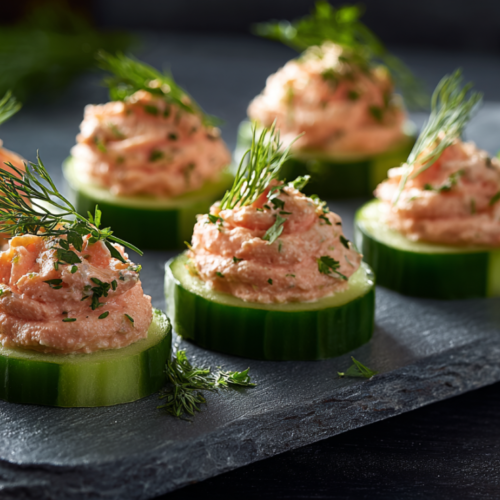
- Pipe a generous rosette of mousse onto each cucumber round, starting from the center and spiraling outward. Each portion should be approximately 1 tablespoon.
- Finish each piece with a small dill frond, a few flakes of sea salt, and if desired, a single caper. Serve immediately or refrigerate uncovered for up to 2 hours before serving.
Notes
Nutrition
Frequently Asked Questions About Smoked Salmon Mousse
Can I make smoked salmon mousse without a food processor?
A high-powered blender works adequately, though you may need to scrape down the sides more frequently. For a more rustic texture, finely mince the salmon by hand, then beat the softened cream cheese until smooth before folding in the salmon and remaining ingredients. This hand method produces a chunkier mousse that some people actually prefer.
Why is my mousse grainy instead of smooth?
Grainy texture almost always indicates that the cream cheese was too cold. The milk fats need to be soft enough (68-70°F) to disperse properly during processing. If you've already made a grainy batch, let it come to room temperature and reprocess—you can often salvage it. For future batches, leave the cream cheese out for a full 2 hours before beginning.
How do I prevent the mousse from sliding off the cucumber?
Two factors contribute to sliding: wet cucumber surfaces and mousse that's too warm. Blot cucumber rounds thoroughly between paper towels immediately after slicing, and ensure the mousse is properly chilled (at least 1 hour) before piping. If the mousse softens during assembly, return it to the refrigerator for 15 minutes.
Is this dish safe to serve at a party?
Smoked salmon mousse contains dairy and fish, both of which are perishable. According to USDA food safety guidelines. perishable foods should not sit at room temperature for more than 2 hours (or 1 hour if the room exceeds 90°F). For longer events, display small batches and refresh from refrigerated reserves. Keep platters on ice if possible.
Can I use this mousse as a dip?
Absolutely. Transfer the mousse to a serving bowl and surround with endive leaves, sliced baguette rounds, or sturdy crackers. For a dip application, you might reduce the heavy cream slightly (to 1/4 cup) for a stiffer consistency that doesn't run off the dipper.
What if I don’t have fresh dill?
Fresh chives make an excellent substitution, offering mild onion flavor that complements salmon beautifully. Fresh tarragon works for those who enjoy its anise notes. Avoid dried dill—its flavor is muted and dusty compared to fresh, and the texture becomes unpleasant in this cold application.
Related Techniques
From Cooking Fundamentals:
- Fish and Seafood Handling Basics
- How to Prep Vegetables: Peeling, Trimming, and Cleaning
- Seasoning Basics: Salt, Pepper, and Building Flavor
- Understanding Herbs and Spices in Cooking
From Baking:
- Understanding Baking Ingredients: Flour, Leaveners, Fats, and Eggs
From Gourmet Cooking:
- Emulsion Sauces: Hot and Cold Methods
- Mounting and Finishing with Fat
- Plating Composition Principles
- Curing and Dry-Aging Proteins
Your Next Elegant Gathering Starts Here
You now possess the knowledge to create an appetizer that genuinely impresses—not through complexity, but through technique executed with precision. The key points bear repeating: room temperature cream cheese is non-negotiable, the cream must enter slowly, and patience during the chill time allows flavors to reach their full potential. These fundamentals apply far beyond this single recipe; master them here, and you’ll find yourself approaching all emulsion-based preparations with new confidence.
This smoked salmon mousse on cucumber represents my philosophy of entertaining: invest effort where it matters, streamline what you can, and never sacrifice quality for convenience. The mousse can wait patiently in your refrigerator while you attend to other preparations. The assembly takes minutes. Yet the finished product speaks of care and expertise. I genuinely cannot wait to hear how this turns out in your kitchen—whether for an intimate dinner or a grand celebration, this appetizer will serve you beautifully.