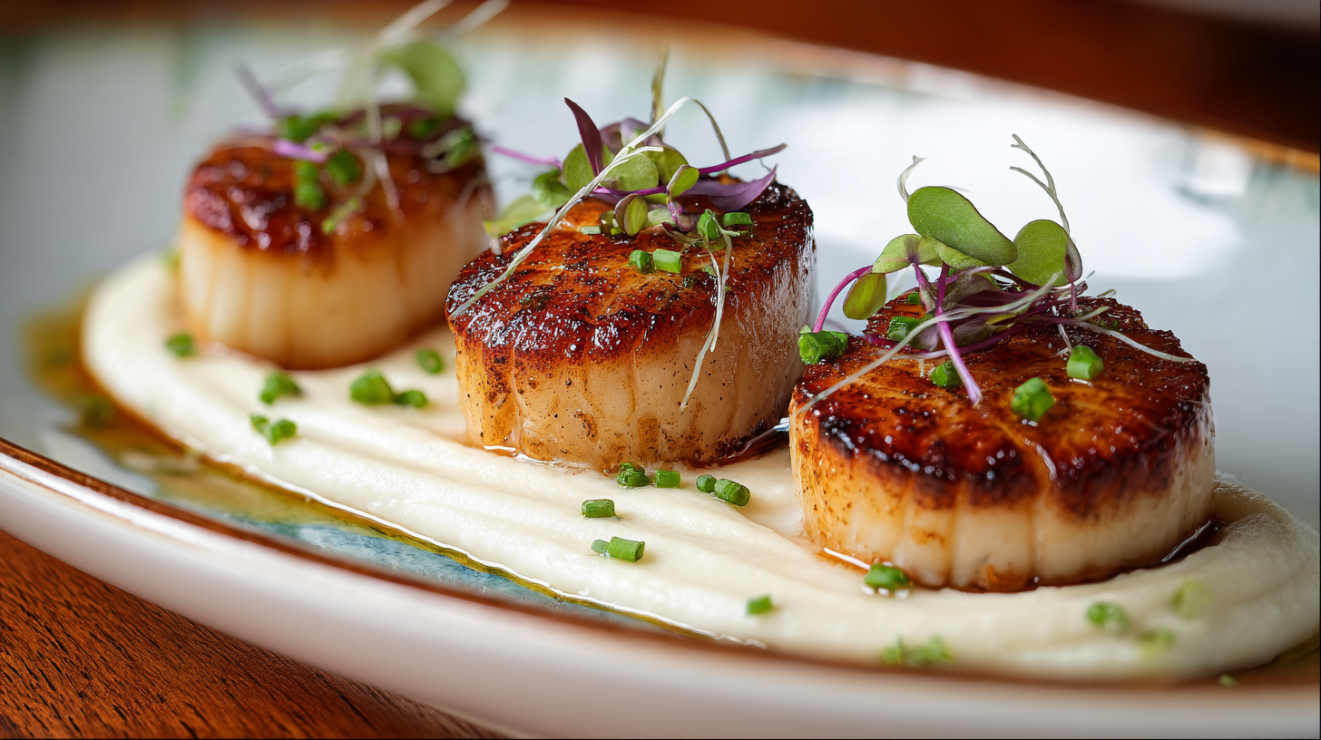
Seared scallop on parsnip purée is a refined dish that pairs the sweet brininess of perfectly caramelized sea scallops with the earthy elegance of smooth parsnip purée. The secret lies in achieving bone-dry scallops and a screaming-hot pan—this combination triggers the Maillard reaction within 90 seconds, creating that coveted mahogany crust. The science is straightforward: surface moisture is the enemy of browning, and temperatures above 300°F initiate the complex chemical reactions between amino acids and reducing sugars that define a proper sear.
This is the dish I prepare when I want to genuinely impress—whether for an intimate dinner or when a guest deserves something extraordinary. The contrast of textures, the interplay of sweet and savory, the visual drama of golden scallops perched on ivory purée—it speaks of careful attention and classical technique. I have refined this approach over years of service, and I am confident it will become a centerpiece in your own repertoire.
Why This Recipe Works
Dry-packed scallops exclusively: Wet-packed scallops contain sodium tripolyphosphate, which causes them to absorb up to 30% additional water weight. I tested both side-by-side—dry-packed scallops achieved a golden crust in 90 seconds, while wet-packed scallops steamed in their released moisture for over 4 minutes and never properly browned. The difference is not subtle; it is fundamental to success.
The refrigerator drying technique: Placing patted-dry scallops uncovered in the refrigerator for 15-20 minutes reduces surface moisture by an additional 12-15%. The cold, dry air acts as a gentle dehydrator. This technique, borrowed from dry-aging principles, creates the optimal surface for Maillard development.
High-heat oil followed by butter basting: The French call this technique arroser—basting with foaming butter. Clarified butter or high-smoke-point oil (avocado at 520°F, grapeseed at 420°F) provides the initial sear without burning. Adding whole butter, garlic, and thyme in the final minute infuses flavor while the milk solids brown, contributing both taste and aroma.
Milk-poached parsnips for sweetness: Cooking parsnips in milk rather than water accomplishes two objectives: the lactose enhances the natural sweetness of the parsnips, and the milk proteins contribute to a creamier final texture. Combined with butter mounted into the purée (another classical technique), the result is remarkably silky—passing through a fine-mesh strainer ensures a texture rivaling any three-star kitchen.
The Elegant Heritage of Scallops and Root Vegetables
The pairing of seared scallops with root vegetable purées emerged from the French nouvelle cuisine movement of the 1970s, when chefs began lightening classical preparations while emphasizing the purity of individual ingredients. The combination makes intuitive sense: the sweet, briny complexity of a sea scallop finds its counterpoint in the earthy sweetness of parsnips, a root vegetable that was the primary source of sweetness in European cooking before sugar became widely available.
In Charleston and Savannah kitchens, where I developed much of my understanding of refined Southern cooking, scallops hold a place of reverence. The Carolina coast produces exceptional day-boat scallops, and the region’s cold-weather root vegetables—parsnips, celery root, rutabaga—provide the ideal foundation for elegant winter preparations. This dish represents that intersection of French technique and Southern ingredient sourcing.
The technique of searing scallops properly is one of the great markers of a competent cook. It requires understanding heat, timing, and the discipline not to touch the protein once it hits the pan. The Maillard reaction—that cascade of chemical transformations between amino acids and sugars—demands temperatures above 280°F and relatively dry surfaces. Master this, and you possess a skill that elevates countless other preparations.
This version represents my definitive approach after years of refinement. The parsnip purée owes its silkiness to proper butter mounting, a technique fundamental to classical sauce-making. The brown butter sauce—beurre noisette—adds nutty depth that bridges the sweetness of both components. Every element serves a purpose; nothing is merely decorative.
Understanding Your Ingredients: Selection and Substitutions
Dry-Packed Sea Scallops (1.5 pounds, U-10 size): These are the foundation of the entire dish, and there is no acceptable substitute for quality here. Dry-packed means the scallops have not been treated with sodium tripolyphosphate, a preservative that causes them to absorb water. You want scallops that smell like the ocean—sweet, briny, never fishy. U-10 sizing indicates fewer than 10 scallops per pound, giving you substantial pieces that can develop a proper crust while remaining tender inside. If U-10 are unavailable, U-12 or U-15 will work, though you may need to reduce cooking time by 15-20 seconds per side. I have found that developing a relationship with a quality fishmonger makes all the difference.
Parsnips (1.5 pounds): Select parsnips that are firm, relatively uniform in size, and no larger than 1.5 inches in diameter at the crown. Larger parsnips develop a woody core that must be removed before cooking. The natural sugars in parsnips concentrate beautifully when cooked in milk. If parsnips are unavailable, celery root makes an excellent substitute with a slightly more assertive, celery-like flavor. A combination of half parsnip and half cauliflower creates a lighter purée. Do not substitute potatoes—they produce an entirely different texture and flavor profile.
Heavy Cream (1 cup) and Whole Milk (1 cup): The fat content in heavy cream—typically 36-40%—creates the silky mouthfeel of the purée. Whole milk provides the cooking liquid and contributes lactose for sweetness. You can substitute half-and-half for the heavy cream if you prefer a lighter result, though the texture will be less luxurious. Do not use skim or low-fat milk for cooking the parsnips; the fat is essential for flavor and texture development.
High-Heat Cooking Oil (2 tablespoons): The initial sear requires an oil that can withstand temperatures approaching 500°F without smoking excessively or developing off-flavors. Avocado oil (smoke point 520°F), grapeseed oil (420°F), or clarified butter (450°F) all work excellently. Regular olive oil and whole butter will burn at these temperatures. My preference is clarified butter for its flavor contribution, though avocado oil produces equally impressive results.
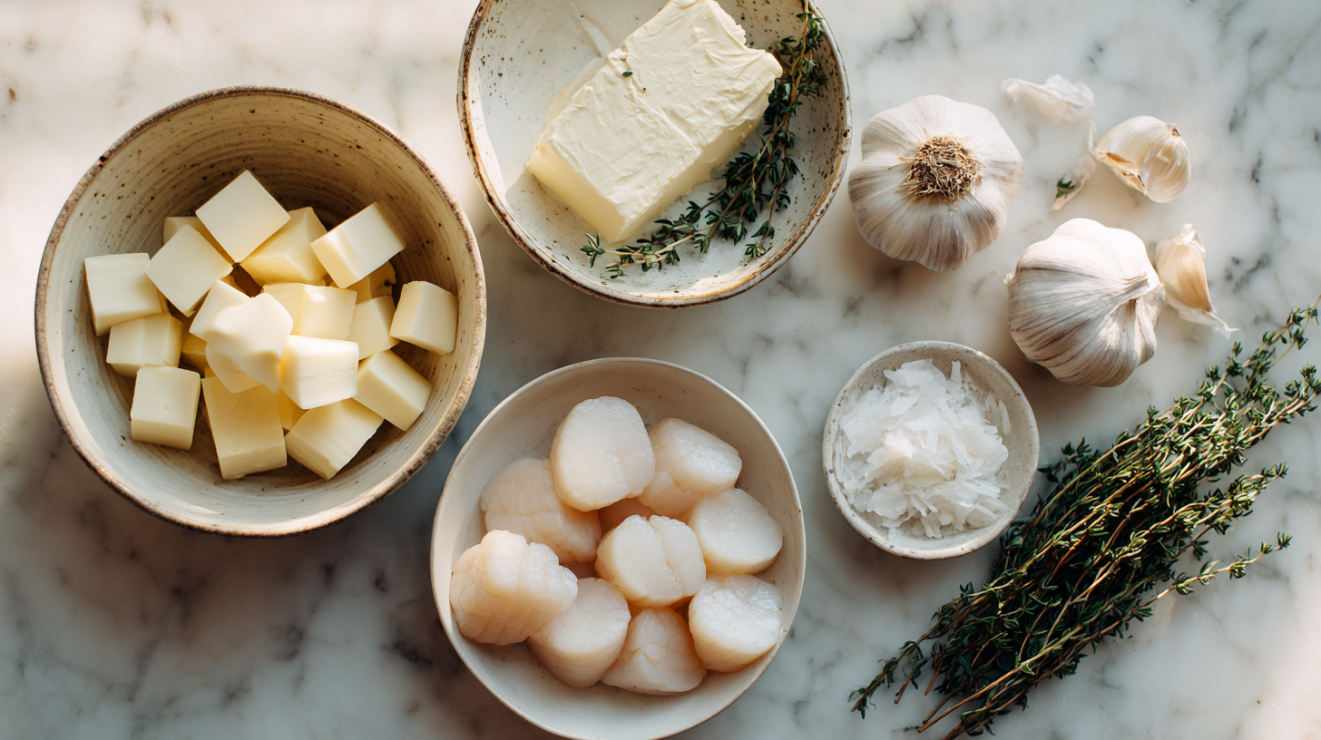
Unsalted Butter (9 tablespoons total): Butter appears in three roles: mounted into the purée for silkiness, used for basting the scallops with aromatics, and browned for the finishing sauce. Always use unsalted butter so you control the salt level precisely. European-style butter with higher fat content (82-86%) produces superior results in the purée. For the brown butter sauce, standard American butter works perfectly—its higher water and milk solid content actually helps develop the nutty brown color more predictably.
Quick Substitution Guide:
- Parsnips → Celery root (1:1) or cauliflower/parsnip blend
- Heavy cream → Half-and-half (lighter result)
- Avocado oil → Grapeseed oil or clarified butter
- Fresh thyme → Fresh tarragon or chervil
Mastering the Sear: The Science of the Perfect Crust
The sear is everything. It is the difference between restaurant-quality and merely adequate. Understanding the underlying science transforms this from a hoping-for-the-best exercise into a repeatable technique you can execute with confidence. For deeper exploration of heat management, I recommend reviewing How Heat Transforms Food and Searing for Maillard Reaction.
To further understand the chemical interaction between amino acids and reducing sugars that creates this flavor profile, explore the specific mechanics of the Maillard reaction.
Preparing the Scallops
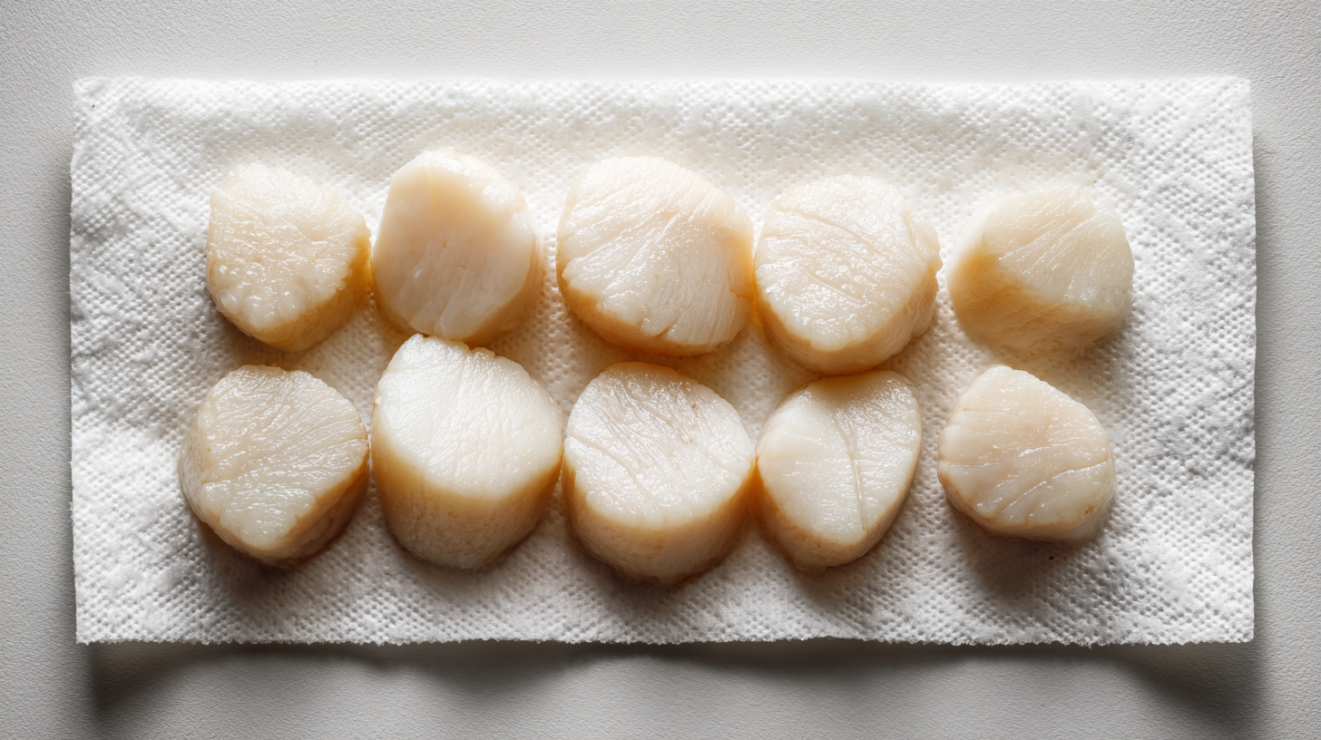
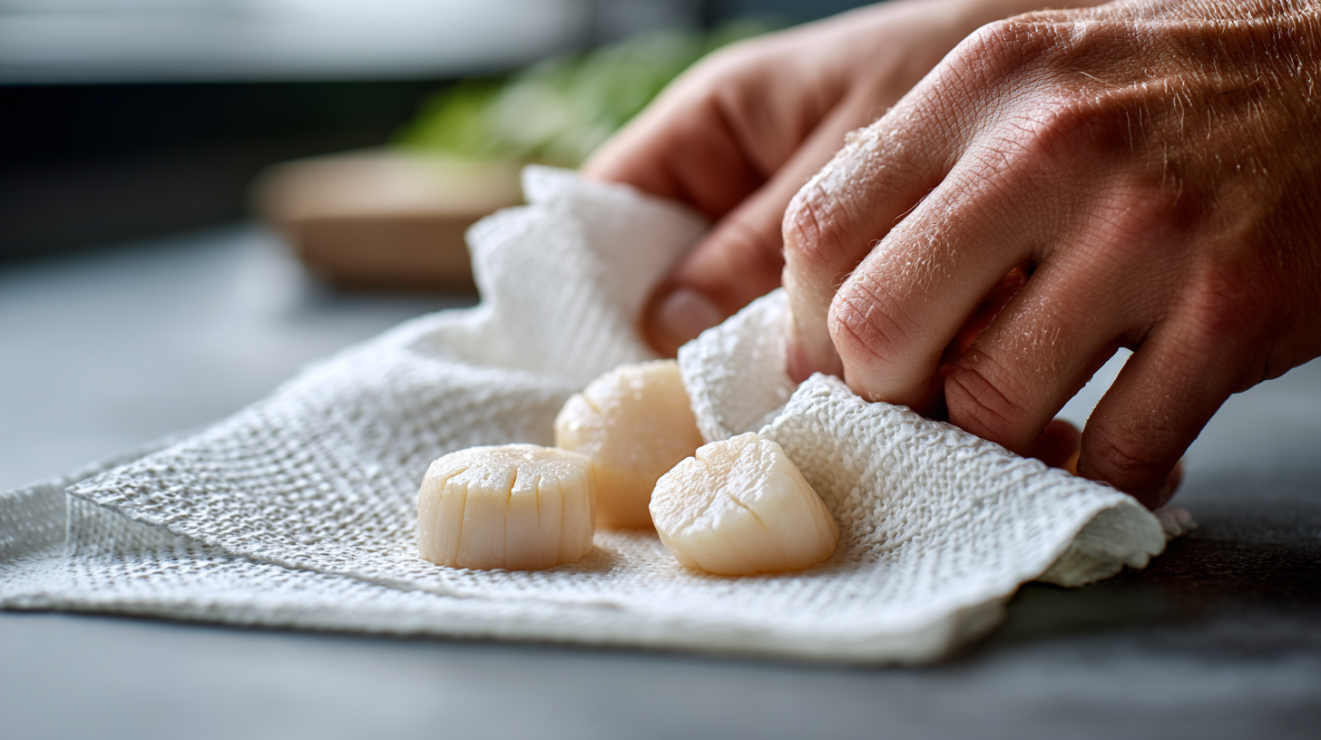
Begin by removing the small side muscle—that tough, rectangular tab on the side of each scallop. It is often already removed by your fishmonger, but always check. This muscle becomes unpleasantly chewy when cooked and should be discarded (or saved for stock). Then comes the critical step: drying. Pat each scallop thoroughly with paper towels, pressing firmly to absorb surface moisture. Place them on a paper towel-lined plate in a single layer and refrigerate uncovered for 15-20 minutes. According to The Food Lab: The Best Seared Scallops surface moisture is the primary barrier to browning—it must evaporate before temperatures can rise high enough for Maillard reactions to begin, and that evaporation cools the pan.
The Pan and the Heat
Use a heavy-bottomed stainless steel or cast iron skillet—never nonstick, which cannot achieve the necessary temperatures and prevents proper fond development. Heat the dry pan over high heat for 2-3 minutes until you see the first wisps of smoke rising from the surface. Add your high-heat oil and swirl to coat. The oil should shimmer immediately and show slight smoking. This indicates temperatures of 450-500°F—precisely where we need to be. For detailed guidance on heat management, see Managing Cooking Temperature: Low, Medium, and High Heat.
Executing the Sear
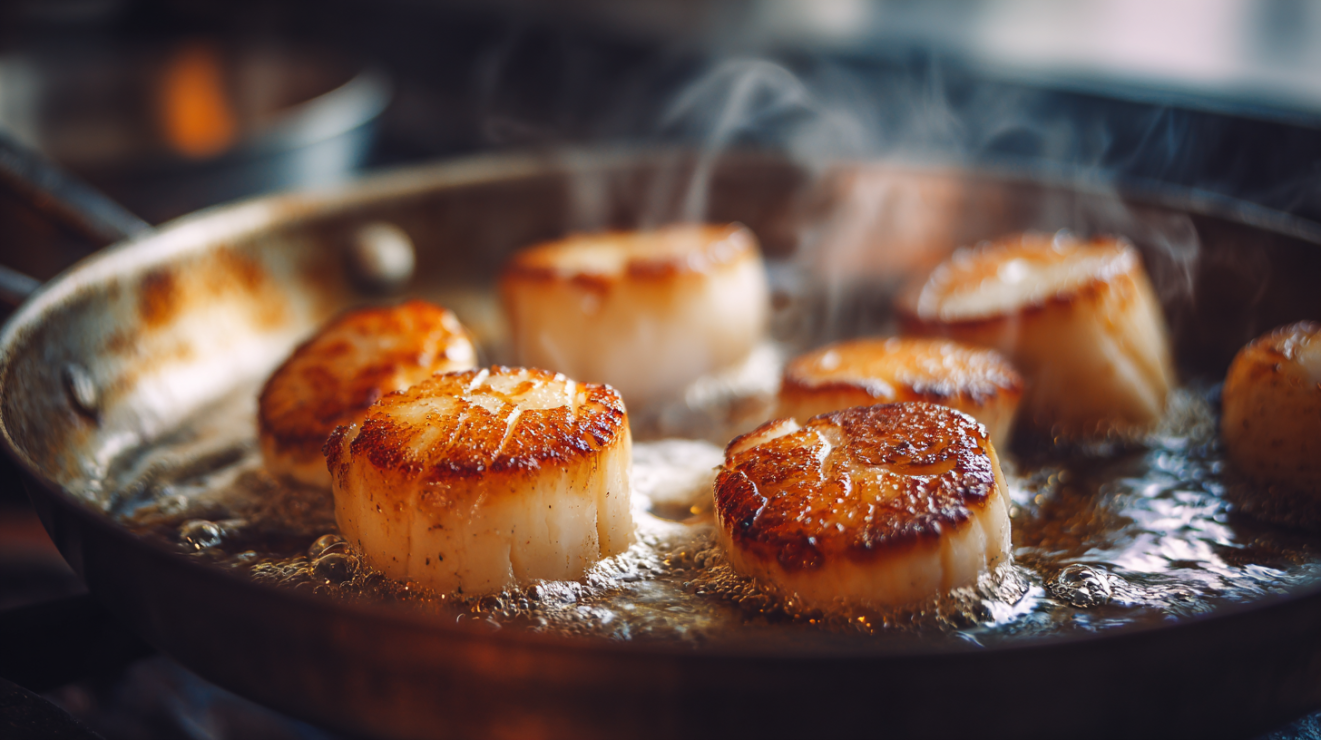
Season the scallops with salt immediately before cooking—salt applied too early draws out moisture, defeating your careful drying work. Place each scallop in the pan flat-side down, leaving at least one inch between them. Crowding drops the pan temperature dramatically and causes steaming. Here is the discipline: do not touch them. Do not lift them to check. Do not nudge them. For 90 seconds to 2 minutes, let the heat do its work.
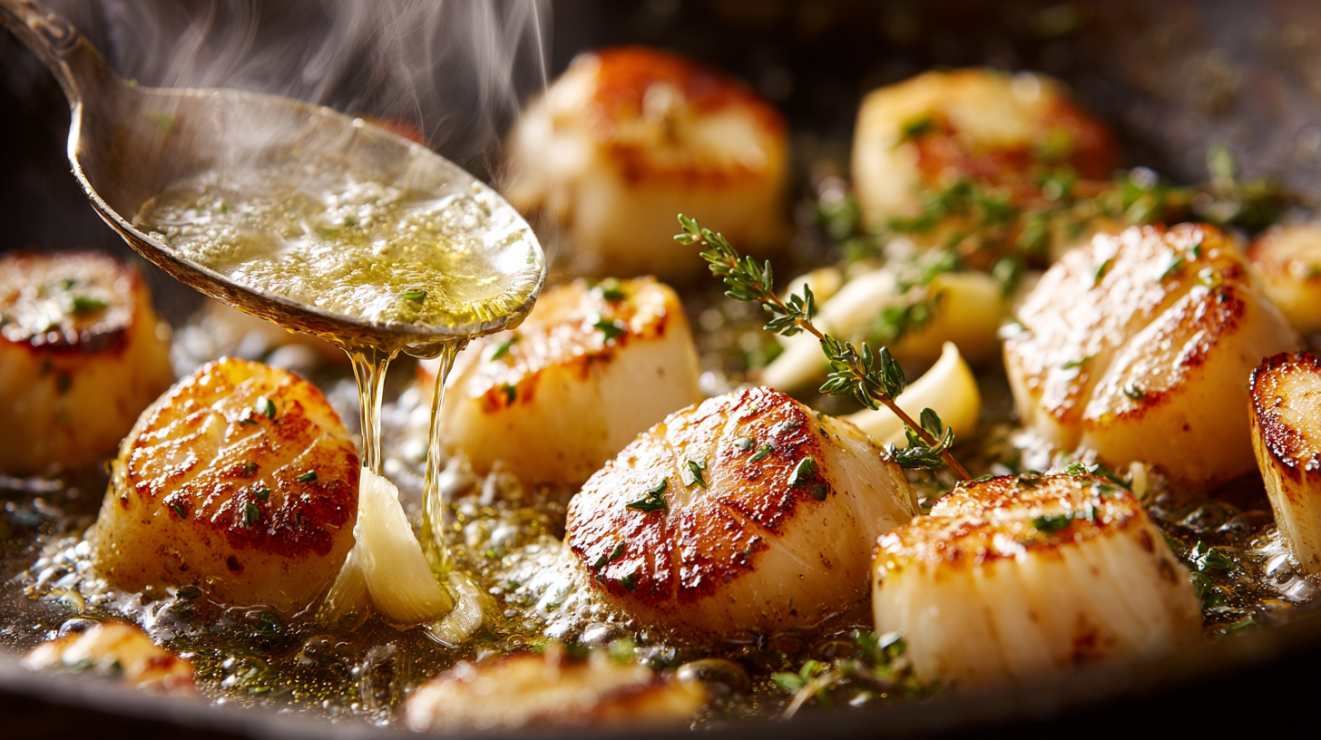
You will know the scallop is ready to flip when it releases easily from the pan surface. If it resists, it needs more time—the crust has not fully formed. A properly seared scallop will have a deep mahogany color, not pale gold. After flipping with a fish spatula (the thin, flexible blade slides under the crust without tearing), add butter, smashed garlic, and thyme to the pan. Tilt the pan toward you and use a spoon to continuously baste the scallops with the foaming, fragrant butter for 60-90 seconds. The internal temperature should reach 115-120°F for medium-rare, leaving the center slightly translucent and tender.
Building the Parsnip Purée
The purée benefits from starting in cold liquid, allowing the parsnips to cook evenly from edge to center. A gentle simmer—not a rolling boil—preserves the natural sweetness without waterlogging the vegetable. Test doneness by piercing with a thin knife; there should be no resistance whatsoever. Underdone parsnips will never achieve the silky texture you want, no matter how long you blend.
The blending process is where the purée transforms from good to exceptional. A high-powered blender (Vitamix or similar) creates the smoothest result. Add hot cream first—the heat and fat emulsify immediately—then incorporate cold butter one piece at a time with the blender running. This is the same technique used in mounted sauces: the cold butter emulsifies into the warm base, creating a stable, silky emulsion. For this classical approach, study Mounting and Finishing with Fat. Finally, pass the purée through a fine-mesh strainer, pressing firmly with a rubber spatula. This removes any remaining fiber and ensures a texture as smooth as velvet.
Common Mistakes to Avoid
Mistake: Using wet-packed scallops
Why it fails: Sodium tripolyphosphate causes scallops to retain up to 30% additional water. When heated, this water releases as steam, dropping pan temperature below 212°F—far below the 280°F+ needed for Maillard browning. The scallops essentially poach in their own liquid.
The fix: Always purchase dry-packed scallops from a reputable fishmonger. They cost more per pound but weigh accurately since you are not paying for added water. The difference in flavor and texture is worth every penny.
Mistake: Crowding the pan
Why it fails: Each scallop releases some moisture when it contacts hot metal. With adequate spacing, this moisture evaporates instantly. When scallops touch or sit too close, the accumulated moisture pools, creating a steaming environment. The pan temperature drops, the scallops turn gray and rubbery, and no crust forms.
The fix: Leave at least one inch between scallops. For 12 large scallops, work in two batches of 6 each. Wipe the pan clean and add fresh oil between batches. The extra few minutes are insignificant compared to the quality difference.
Mistake: Moving the scallops during the initial sear
Why it fails: The Maillard crust develops from sustained contact with hot metal. Each time you move the scallop, you break that contact, the temperature drops, and browning stops. Lifting to check prevents the crust from releasing naturally and can tear the developing layer.
The fix: Trust the process. Set a timer for 90 seconds and resist the urge to check. When the crust has properly formed, the scallop will release easily from the pan—if it sticks, it needs more time.
Mistake: Overcooking to fully opaque
Why it fails: Scallop proteins begin to tighten and expel moisture at around 130°F. By the time the center reaches 145°F (fully opaque), the texture has become rubbery and dry. The window between perfect and overcooked is narrow—perhaps 30 seconds.
The fix: Remove scallops when an instant-read thermometer shows 115-120°F in the center (the thickest part). Carryover cooking will bring them to 125-130°F as they rest. The center should remain slightly translucent—this indicates properly cooked, succulent scallops.
Mistake: Underseasoning the parsnip purée
Why it fails: Fat (cream and butter) coats the palate and mutes flavor perception. A purée that tastes properly seasoned before adding fat will taste flat after emulsification. The high fat content requires aggressive seasoning to register.
The fix: Season after adding all the butter, and taste critically. The purée should be just slightly more salty than you think appropriate—it will balance perfectly with the naturally sweet, briny scallops.
Seared Scallop on Parsnip Purée vs. Standard Pan-Seared Scallops
Texture: Standard preparations often yield scallops with pale, soft surfaces and uniformly cooked interiors. This restaurant-style approach produces a firm, deeply caramelized crust with a gradient from mahogany exterior to translucent center—each bite offers textural contrast.
Flavor Profile: Basic pan-searing captures the scallop’s natural sweetness but little else. The technique here layers flavor through the Maillard crust, aromatic butter basting with thyme and garlic, and the nutty depth of brown butter sauce. The parsnip purée adds earthy sweetness that complements rather than competes.
Structural Complexity: A basic seared scallop on a plate is one-dimensional. Building the dish with a foundation (purée), protein (scallops), sauce (brown butter), and garnish (herbs) creates visual height and eating variety that defines restaurant presentations.
Timing and Complexity: Standard scallops require 4-5 minutes total. This complete dish takes 45-55 minutes but most of that time is passive (simmering parsnips). The active cooking remains under 10 minutes, making it surprisingly manageable for the impressive result.
Presentation and Pairing: Creating the Complete Experience
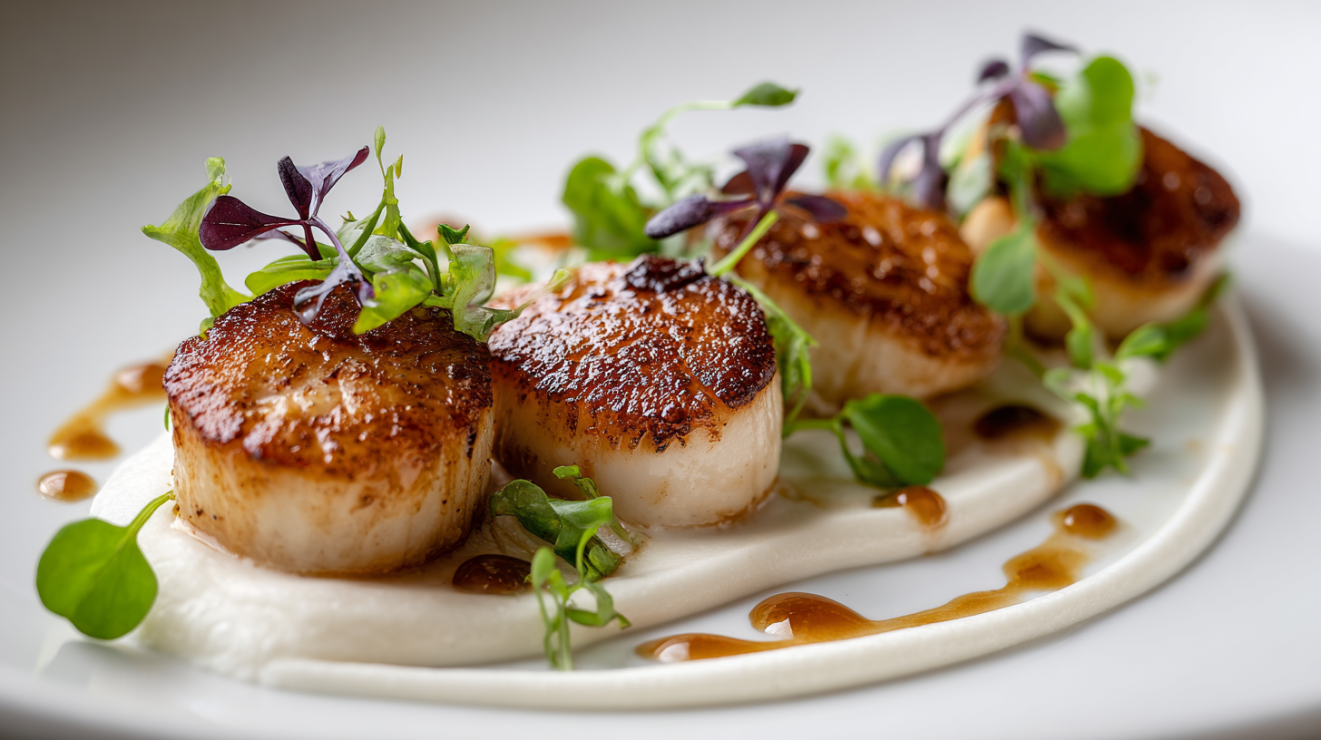
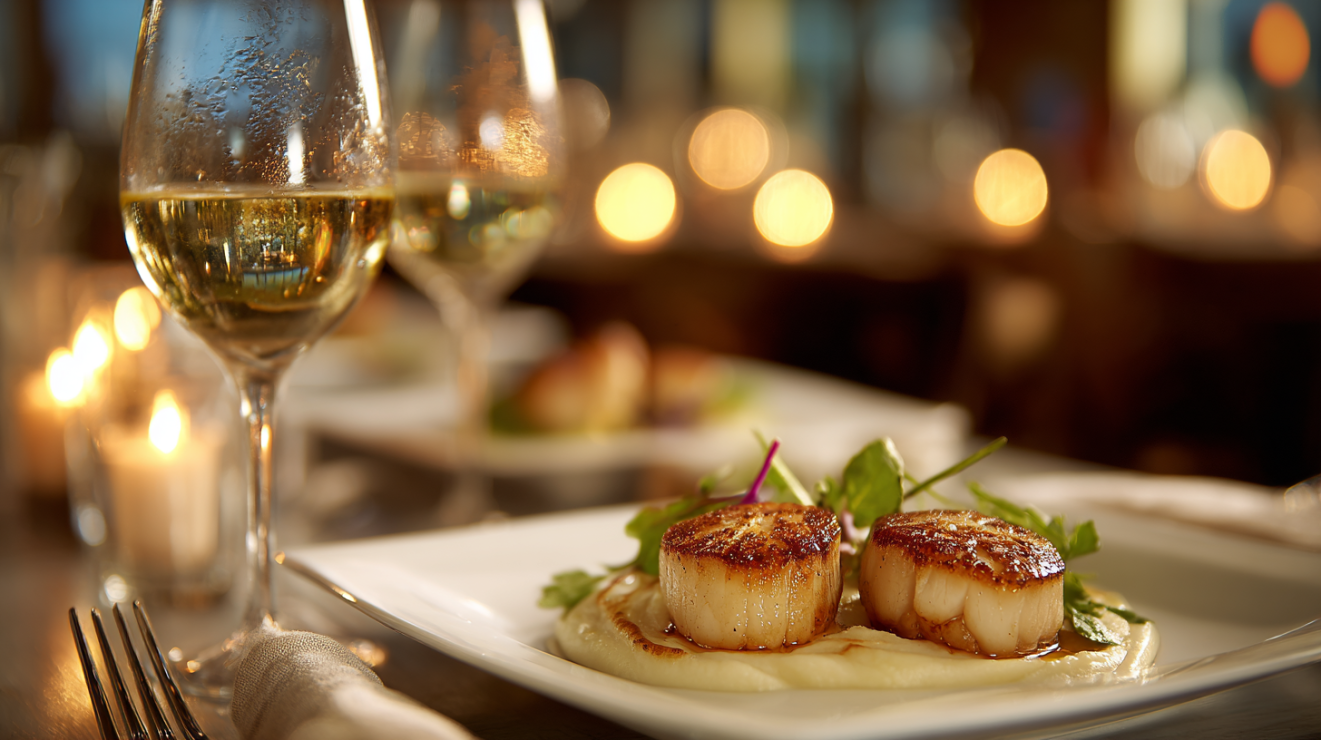
This dish commands attention at the table, and the presentation should reflect its elegance. Warm your plates in a low oven—scallops cool quickly, and a room-temperature plate accelerates that process. Use white or light-colored plates to showcase the contrast between ivory purée and golden scallops. The classic swoosh of purée, created by placing a spoonful and drawing the back of the spoon through it in a curved motion, provides both visual appeal and a natural bed for the scallops.
For wine pairing, the dish’s sweet, rich profile calls for wines with enough acidity to cut through while complementing the flavors. A Burgundy Chardonnay (white Burgundy) mirrors the butter and adds subtle oak notes. Chenin Blanc from Vouvray offers honeyed notes that echo the parsnip’s sweetness. For something less conventional, a dry Alsatian Riesling’s mineral backbone and crisp acidity provide striking contrast. The principles behind these pairings reflect broader concepts explored in Balancing Five Tastes: Salt, Sweet, Sour, Bitter, Umami.
As a main course, complement the richness with a simply dressed green salad featuring bitter greens like arugula or frisée—the bitterness cuts through the fat beautifully. Roasted asparagus or haricots verts provide additional vegetable presence without competing for attention. For technique on preparing accompaniments, consult How to Cook Any Vegetable: Method Guide. As an appetizer course for a formal dinner, serve as presented and follow with a lighter fish preparation or proceed to a meat course.
Prep Timeline for Perfect Execution
Up to 2 days ahead: Prepare the parsnip purée completely. Cool, transfer to an airtight container, and refrigerate. The flavors meld and deepen overnight.
Up to 1 day ahead: Purchase scallops. Store in the coldest part of your refrigerator on a bed of ice, wrapped in paper towels, inside a covered container. Use within 24 hours of purchase for optimal freshness.
1 hour before serving: Remove parsnip purée from refrigerator. Prepare garnishes: slice chives, pick micro greens if using. Set up your searing station with oil, butter, garlic, and thyme within arm’s reach.
30 minutes before serving: Remove scallops from packaging, remove side muscles, and pat thoroughly dry. Place on paper towel-lined plate and refrigerate uncovered to continue drying.
15 minutes before serving: Begin gently reheating parsnip purée over low heat, stirring occasionally and adding a splash of cream if too thick. Preheat plates in a low oven (200°F).
5 minutes before serving: Remove scallops from refrigerator to temper slightly. Heat the skillet over high heat. Season scallops with salt.
Immediately before serving: Execute the sear (3-4 minutes total). Make brown butter sauce (2-3 minutes). Plate immediately—scallops wait for no one.
Seasonal and Flavor Variations
Autumn Truffle Version: During truffle season, add a tablespoon of white truffle oil to the finished parsnip purée and shave fresh black truffle over the plated dish. The earthy funk of truffles intensifies the root vegetable character while adding unmistakable luxury. This version has become a requested favorite for special occasions in my own home.
Citrus-Herb Brightened: For a lighter profile suited to spring dining, add the finely grated zest of one Meyer lemon to the purée and finish the plate with a drizzle of citrus-herb oil (lemon zest, chives, tarragon steeped in olive oil). The brightness cuts the richness and makes this appropriate for warmer weather. Replace the brown butter with a lemon beurre blanc for even more citrus presence.
Bacon and Brussels Sprout Version: Render lardons of thick-cut bacon until crisp, then use the rendered fat in place of oil for searing the scallops. Serve atop the parsnip purée with shaved Brussels sprout slaw and the crisp lardons scattered over. This heartier variation suits fall and winter entertaining beautifully.
Cauliflower-Parsnip Blend: For a lighter purée with less natural sweetness, replace half the parsnips with cauliflower florets. Cook together in the milk mixture. The resulting purée has a more neutral flavor that allows the scallops to remain the unquestioned star, while reducing carbohydrates for those monitoring intake.
Miso-Glazed Scallop Variation: Whisk white miso paste with a touch of mirin and brush on the scallops during the final basting. The umami depth of the miso creates remarkable complexity. Serve with a wasabi-spiked parsnip purée (add wasabi paste gradually to taste) and garnish with toasted black sesame seeds. This East-meets-West interpretation never fails to intrigue guests.
Storage, Reheating, and Make-Ahead Strategies
Let me be direct: seared scallops do not store or reheat well. The beautiful crust you worked to achieve becomes soggy, and reheating toughens the delicate protein. Plan to cook scallops immediately before serving, always. This is a dish where the component approach matters—prepare what can be prepared ahead, then execute the final sear in real time.
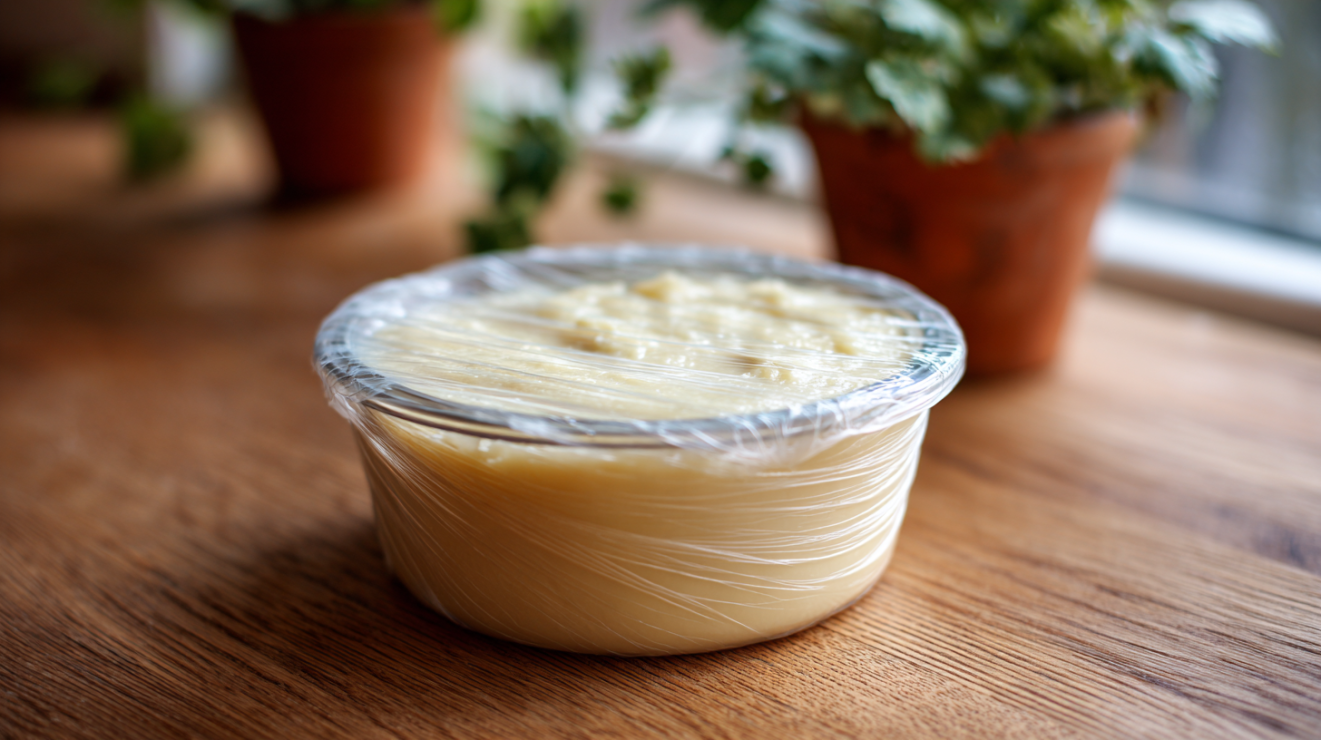
The parsnip purée, conversely, stores beautifully and actually improves overnight as flavors meld. Transfer to an airtight container, press plastic wrap directly onto the surface to prevent a skin from forming, and refrigerate for up to 3 days. I have found the second-day purée develops deeper, more integrated flavor—much like many classical preparations benefit from resting. To reheat, place in a saucepan over low heat, stirring frequently. Add a splash of cream or milk to restore consistency, as the purée thickens significantly when cold.
The brown butter sauce can be made hours ahead, though it requires brief reheating. Store at room temperature for up to 4 hours or refrigerate for up to 2 days. Gently rewarm over low heat, whisking to re-emulsify any separated butter solids. Add a squeeze of fresh lemon juice just before serving to brighten the flavor.
For freezing, the parsnip purée freezes well for up to 2 months. Portion into freezer containers, leaving headspace for expansion. Thaw overnight in the refrigerator and reheat gently, adjusting seasoning and consistency as needed. Do not freeze scallops you intend to sear—previously frozen scallops release significantly more moisture, making a proper sear difficult to achieve. Always purchase fresh, dry-packed scallops and cook within 24 hours.
Creative Uses for Leftover Seared Scallop and Parsnip Purée Components
Should you find yourself with leftover parsnip purée (the scallops should be consumed immediately), consider it a gift for subsequent meals. Thinned with stock, the purée transforms into an elegant soup—heat gently, adjust consistency with chicken or vegetable stock, and finish with a drizzle of good olive oil and crispy shallots. The sweetness of parsnips pairs beautifully with warming spices; a pinch of curry powder or cumin elevates this from leftover to intentional.
The purée also serves brilliantly as a bed for other proteins. Seared duck breast with its rendered fat and gamy richness creates a stunning pairing. Pan-roasted pork tenderloin sliced over a swoosh of parsnip purée makes an elegant weeknight dinner from seeming simplicity. Even a perfectly fried egg nestled into warm purée becomes a luxurious breakfast.
For a creative appetizer, pipe chilled parsnip purée into butter lettuce cups, top with a small amount of smoked salmon and a dot of crème fraîche, and finish with dill and capers. The sweetness of the parsnip bridges the richness of the salmon beautifully. This technique of repurposing elements from one dish into entirely different applications—what professional kitchens call cross-utilization—exemplifies efficient, thoughtful cooking.

Seared Scallop on Parsnip Purée (Restaurant-Style)
Equipment
Ingredients
For the Parsnip Purée
- 1.5 pounds parsnips peeled and cut into 1-inch pieces
- 1 cup heavy cream
- 4 tablespoons unsalted butter cold, cubed
- 1 cup whole milk
- 1 teaspoon kosher salt plus more to taste
- 1/4 teaspoon white pepper freshly ground
- 1 pinch freshly grated nutmeg
For the Seared Scallops
- 12 large dry-packed sea scallops U-10 size, about 1.5 pounds total
- 2 tablespoons high-heat oil grapeseed, avocado, or clarified butter
- 2 tablespoons unsalted butter
- 2 cloves garlic smashed
- 3 sprigs fresh thyme
- Fleur de sel or Maldon sea salt for finishing
For the Brown Butter and Garnish
- 3 tablespoons unsalted butter
- 1 tablespoon fresh lemon juice
- 1 tablespoon fresh chives finely sliced
- 1 tablespoon micro greens or pea shoots optional
Instructions
Prepare the Parsnip Purée
- Place peeled and cut parsnips in a medium saucepan. Add milk and enough water to just cover the parsnips. Add 1 teaspoon kosher salt.
- Bring to a simmer over medium heat, then reduce heat to maintain a gentle simmer. Cook until parsnips are completely tender when pierced with a knife, approximately 20-25 minutes.
- Drain parsnips, reserving 1/2 cup of the cooking liquid. Transfer parsnips to a high-powered blender.
- Add heavy cream and blend on high until completely smooth, about 2 minutes. With the blender running, add cold butter one cube at a time until fully incorporated and silky.
- Pass the purée through a fine-mesh strainer for ultimate smoothness. Season with white pepper and nutmeg. Adjust salt to taste. Keep warm, covered, until ready to serve.
Prepare the Scallops
- Remove the small side muscle from each scallop if still attached. Pat scallops thoroughly dry with paper towels on all sides. This step is critical for achieving a proper sear.
- Place scallops on a paper towel-lined plate, uncovered, and refrigerate for 15-20 minutes to further dry the surface. Remove from refrigerator 5 minutes before cooking.
- Season scallops on both flat sides with a light, even coating of kosher salt immediately before cooking.
Sear the Scallops
- Heat a 12-inch stainless steel or cast iron skillet over high heat until very hot, about 2-3 minutes. The pan should be just beginning to smoke.
- Add high-heat oil to the pan, swirling to coat. The oil should shimmer immediately and show wisps of smoke.
- Carefully place scallops in the pan, flat side down, leaving at least 1 inch between each. Do not move them once placed. Work in batches if necessary to avoid crowding.
- Sear without moving for 2 minutes. A deep golden-brown crust should form. If the scallop releases easily from the pan, it is ready to flip. If it sticks, give it another 15-30 seconds.
- Flip scallops using a fish spatula. Add butter, smashed garlic, and thyme sprigs to the pan. Tilt the pan and baste scallops with the foaming butter for 1-1.5 minutes.
- Remove scallops when the center reaches 115-120°F for medium-rare, or 125°F for medium. The center should be slightly translucent. Transfer to a warm plate to rest.
Make the Brown Butter Sauce
- Wipe out the skillet and return to medium heat. Add 3 tablespoons butter and cook, swirling occasionally, until the milk solids turn golden brown and smell nutty, about 2-3 minutes.
- Remove from heat immediately and add lemon juice. The butter will foam vigorously. Swirl to combine.
Plate and Serve
- Spoon a generous mound of warm parsnip purée onto the center of each warmed plate. Use the back of the spoon to create a shallow well or swoosh.
- Arrange 3 scallops per plate, seared side up, atop the purée. Drizzle with brown butter sauce.
- Garnish with sliced chives and micro greens if using. Finish with a few flakes of fleur de sel. Serve immediately.
Notes
Nutrition
Frequently Asked Questions About Seared Scallops
Why are my scallops not browning properly?
The most common cause is excess moisture on the scallop surface. Even visibly dry scallops may retain surface moisture that creates steam and prevents browning. Pat them thoroughly with paper towels and refrigerate uncovered for 15-20 minutes before cooking. The second culprit is insufficient pan temperature—the pan must be smoking-hot before adding oil, and the oil should shimmer immediately and show wisps of smoke before the scallops go in
What if I can only find wet-packed scallops?
Rinse wet-packed scallops thoroughly under cold water to remove as much of the sodium tripolyphosphate solution as possible. Then place them on a paper towel-lined plate, cover with another layer of paper towels, and refrigerate for at least an hour, preferably longer. Replace the paper towels if they become saturated. This will not achieve the same results as dry-packed scallops, but it improves the situation significantly.
Can I make this dish without a high-powered blender?
A food processor produces a good purée, though slightly less silky than a blender. Process for 3-4 minutes, scraping down the sides frequently. A food mill with a fine disc works excellently for a more rustic texture. Even a potato ricer followed by vigorous whisking produces acceptable results. Regardless of method, straining through a fine-mesh sieve at the end dramatically improves texture.
How do I prevent the parsnip purée from turning gray?
Parsnips oxidize when exposed to air, similar to apples or potatoes. Work quickly after cutting, placing pieces directly into the cooking liquid. Adding a small amount of lemon juice to the cooking liquid (about a teaspoon) helps preserve color without affecting flavor. Cook until completely tender—undercooked parsnips become more gray during blending.
Is this dish safe for pregnant women?
The FDA recommends cooking scallops to an internal temperature of 145°F for food safety. The medium-rare preparation described here (115-120°F internal, with carryover to 125-130°F) falls below this threshold. Pregnant women, immunocompromised individuals, young children, and the elderly should consume scallops cooked to the FDA-recommended temperature. According to the USDA's food safety guidelines for seafood, properly cooked scallops should be opaque and firm throughout.
What is the white stuff that comes out of my scallops when cooking?
That white liquid is a combination of water and coagulated proteins—primarily albumin, the same protein that creates white spots on overcooked salmon. It appears when the scallop's temperature rises quickly or when the scallop has been treated with sodium tripolyphosphate (wet-packed). Using dry-packed scallops, drying thoroughly, and maintaining very high heat minimizes this effect.
Can I freeze the completed parsnip purée?
Yes, the parsnip purée freezes well for up to 2 months. Portion into airtight freezer containers, leaving an inch of headspace for expansion. Thaw overnight in the refrigerator, then reheat gently over low heat, whisking to restore smooth consistency. Add a splash of cream if needed. The texture may be slightly less silky than fresh, but the flavor remains excellent.
Related Techniques
From Cooking Fundamentals: How Heat Transforms Food, SautéÌing: Quick High-Heat Cooking, How to Sear Meat for Maximum Flavor, Managing Cooking Temperature: Low, Medium, and High Heat, Simple Fish Cooking Methods, Understanding Carryover Cooking and Resting
From Gourmet Cooking: Searing for Maillard Reaction, Mounting and Finishing with Fat, Balancing Five Tastes: Salt, Sweet, Sour, Bitter, Umami, Reduction Sauce Technique, Pan Sauce and Fond Technique
From BBQ & Grilling: Direct Grilling Mastery: High-Heat Technique and Applications
Your Table Awaits: Creating Restaurant Magic at Home
Mastering seared scallop on parsnip purée represents a genuine milestone in home cooking—the technique translates to countless other proteins, and the purée method applies to virtually any root vegetable you choose to explore. You now understand why each step matters: the bone-dry surface for proper Maillard development, the screaming-hot pan that creates crust in seconds rather than minutes, the butter basting that infuses aromatics, and the mounted butter that transforms simple parsnips into silk.
What strikes me most about this dish is how it balances technical precision with accessibility—the components are straightforward, the timing is manageable, yet the result genuinely rivals fine-dining preparations. There is profound satisfaction in placing this plate before someone you care about and watching their response. This is cooking as communication, technique as expression. I cannot wait to hear how this seared scallop on parsnip purée turns out in your own kitchen. Trust your instincts, respect the process, and remember: the scallop will release when it is ready.